
Category: Full-Size SUV Built for Adventure
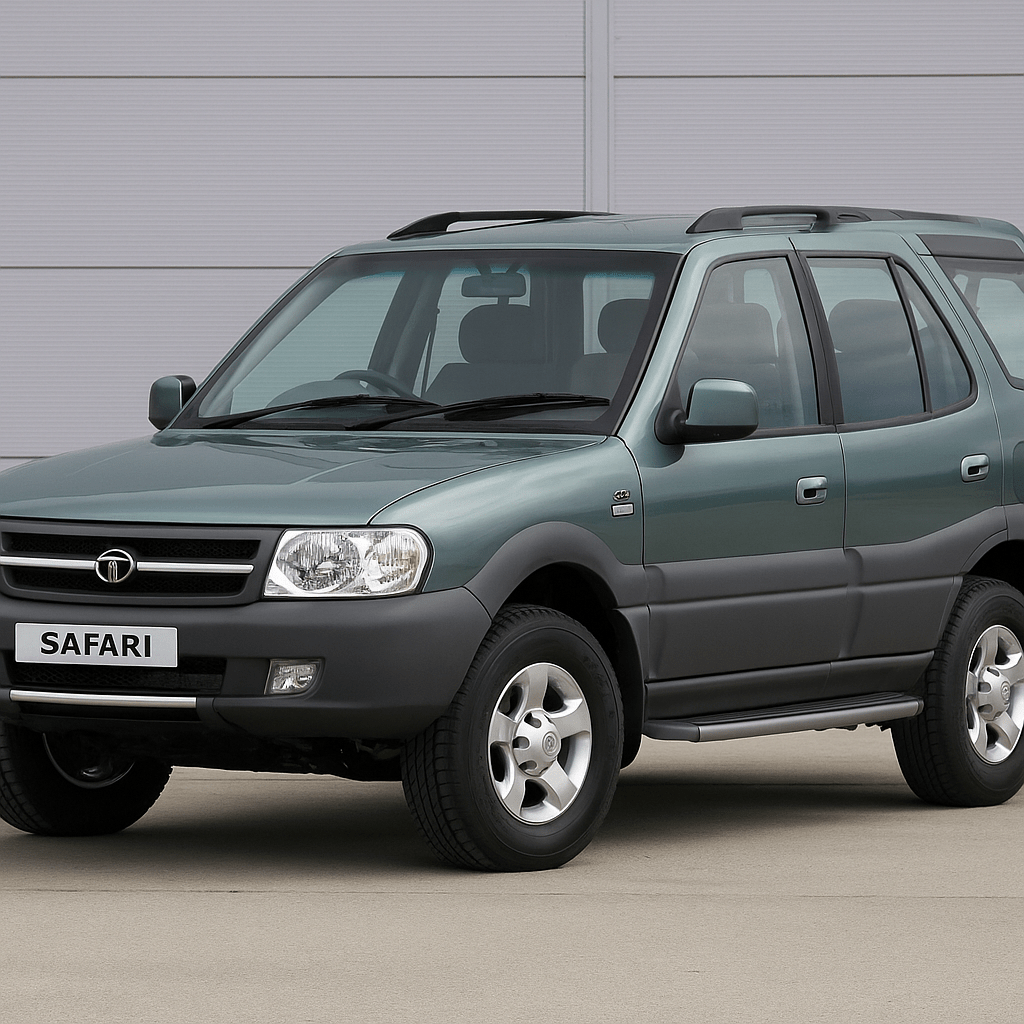
The Tata Safari, launched in 1998, marked the birth of a new category in the Indian automobile market—a modern, lifestyle-oriented SUV built in India, for India. At a time when the SUV scene was either rugged and barebones (like the Gypsy) or prohibitively expensive (like imported Pajeros), the Safari broke ground as the first true Indian SUV that looked the part and walked the talk.
It was more than just a large vehicle—it was a statement. Aimed at the aspiring urban youth and adventure seekers, the Safari stood out with its commanding presence, feature-rich interior, and genuine off-road ability. It was the first SUV that made off-roading look aspirational, not just agricultural.
—
Design: Muscular, Modern, and Made for the Wild
The Tata Safari was designed to turn heads—boxy, tall, and purposeful, it carried unmistakable road presence. With its high ground clearance, large glasshouse, and tail-mounted spare wheel, the Safari had all the visual cues of a true blue off-roader.
Inside, the cabin was among the most spacious in its class, with features like reclining rear seats, a commanding driving position, and an overall ambience that felt premium for its time. Compared to the utilitarian vehicles Indians were used to, the Safari felt world-class and youth-focused.
—
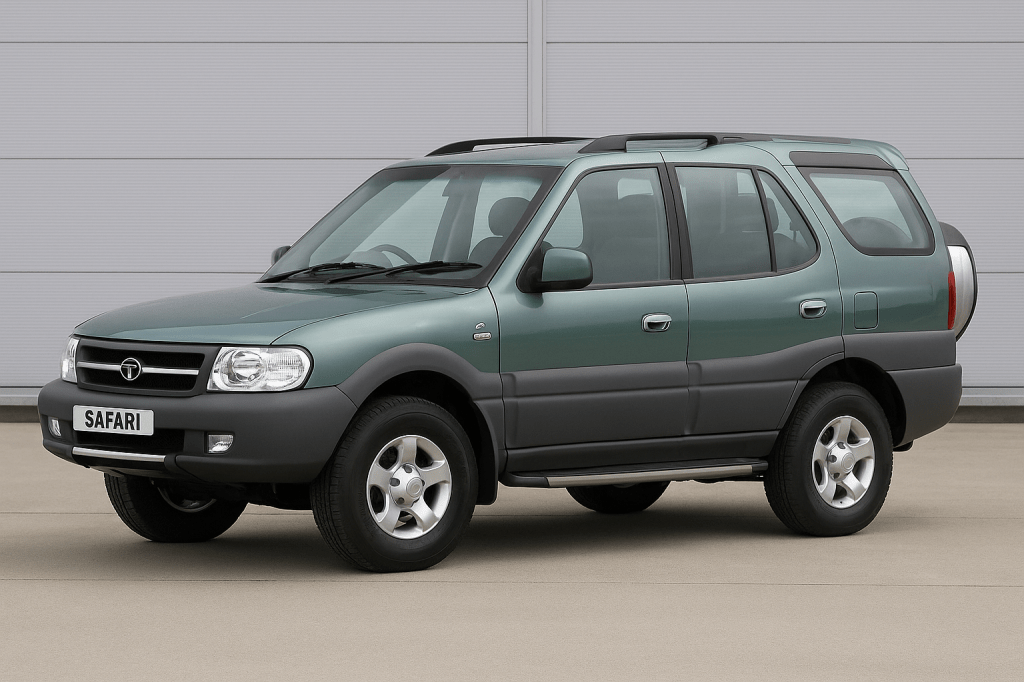
Engine & Performance: Torque, Trail, and Touring Power
Under the hood, the original Tata Safari featured a 2.0L turbocharged diesel engine (borrowed from Peugeot), with specs that were modest on paper, but tuned for practical Indian conditions:
Engine: 1,948cc Turbocharged Diesel
Power Output: 87 BHP @ 4,300 RPM
Torque: 186 Nm @ 2,000 RPM
Transmission: 5-speed manual
Drive Type: Rear-wheel drive (with optional 4×4)
While not a high-revving powerhouse, the engine delivered a wide torque band, ideal for off-roading, highway touring, and bad-road resilience. The optional shift-on-fly 4×4 system and ladder-on-frame chassis gave it legitimate go-anywhere capability—a rarity at the time.
Suspension was tuned for comfort, especially the 5-link coil spring rear setup, offering a smoother ride compared to leaf-sprung rivals. Yes, the engine felt underpowered on highways, but the Safari was never about 0–100 sprints—it was about confidence on any terrain.
—
Why It Was Special: A Trendsetter for a Generation
The Safari wasn’t just a product—it was a symbol of aspiration. In an era dominated by sedans and small hatchbacks, Tata Motors dared to dream big. The Safari was the first SUV that Indian youth could aspire to own without breaking the bank.
From MTV Roadies to Ladakh road trips, it quickly became a pop-culture icon, paving the way for SUVs to be seen as cool, not just capable. It redefined what a modern Indian SUV could be.
—
Key Competitors (at the Time)
When the Safari launched, it didn’t have many direct competitors, but some adjacent rivals included:
Mahindra Armada / Scorpio (launched later in 2002) – more rugged but less refined
Maruti Gypsy – off-road capable but spartan
Toyota Qualis – more of an MPV but rivalled for practicality
Mitsubishi Pajero (imported) – far more expensive, different segment
The Safari stood alone as the only large, comfortable, affordable SUV with off-road capability and presence.
—
🔧 Ignition Garage Verdict
> “The Tata Safari wasn’t just Tata’s boldest move—it was India’s first true SUV lifestyle icon. It married capability with charisma at a time when no other vehicle dared. While its engine felt modest by today’s standards, its design, presence, and rugged spirit made it a trailblazer. A legend, not just for what it was—but for what it started.”
⭐ Rating: 8/10
🎯 Best for: Off-road road trips, SUV lovers, collectors of Indian automotive history
🛠️ Icon Factor: 🔥🔥🔥🔥🔥
 Ignition Garage