
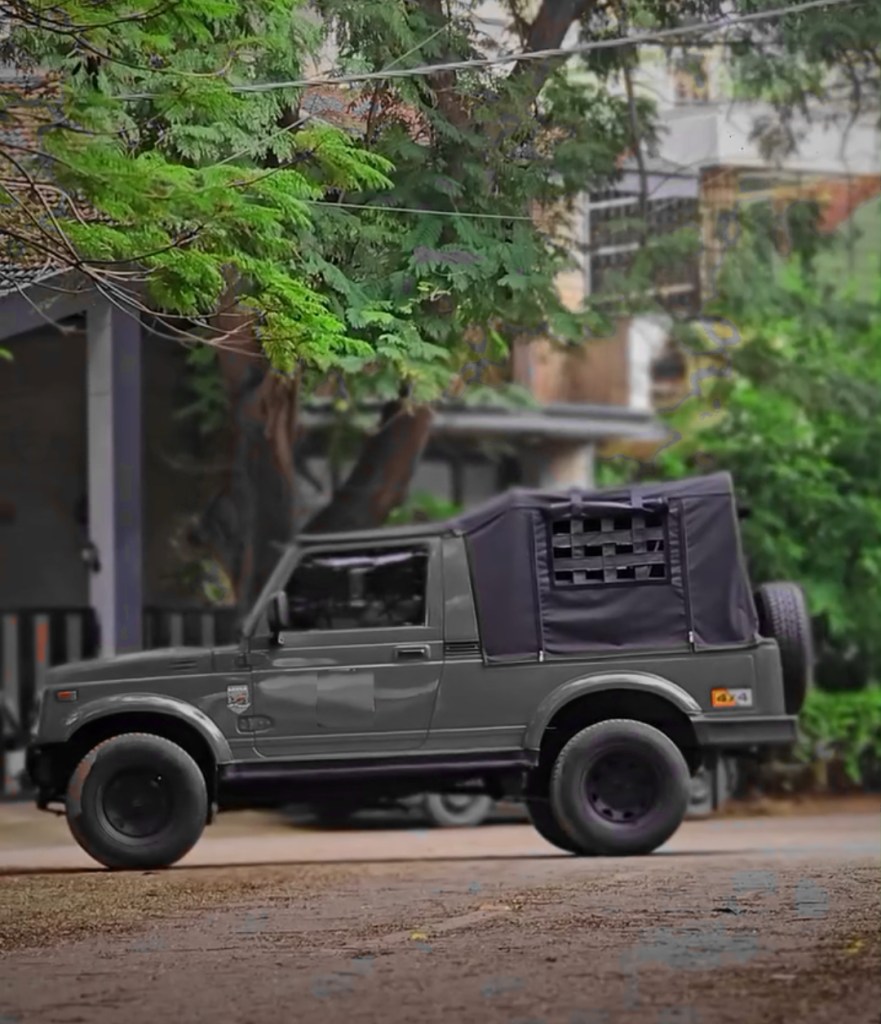
The Maruti Suzuki Gypsy holds a unique place in the Indian automobile history, not just as a civilian vehicle but also as a rugged and reliable companion for the Indian Army. Introduced in 1985, the Gypsy became an icon, representing simplicity, toughness, and unparalleled off-road capabilities. While it was discontinued in 2019, the Gypsy’s legacy remains strong, with enthusiasts continuing to celebrate its unique characteristics and functionality.
In this article, we will dive into the details of the Gypsy, from its engine specs to its off-road abilities, cult following, and why it’s considered one of the best off-road vehicles ever produced in India.
—
1. Gypsy’s Origin and Use in the Indian Army
The Maruti Suzuki Gypsy was originally introduced as a compact 4×4 off-road vehicle and quickly became the go-to vehicle for military use. The Indian Army adopted the Gypsy for its ability to handle difficult terrains and harsh conditions. It became a key part of the army’s logistics, transport, and surveillance operations, used for patrolling the borders and traversing the rugged landscapes of India’s difficult regions, including hilly terrains, deserts, and the dense forests.
The Gypsy was also valued for its simplicity, ruggedness, and reliability. Its compact size allowed it to be easily maneuvered in narrow or difficult paths, and its lightweight design made it suitable for long-distance travel across varied landscapes. Over the years, the Gypsy gained the reputation of being the “Army’s trusted companion”, often associated with adventure, toughness, and endurance.
—
2. Engine Specifications and Performance
Under the hood, the Maruti Suzuki Gypsy was powered by several engine variants over the years. The most iconic engine found in the Gypsy was the 1.3-liter, 4-cylinder petrol engine. This engine delivered around 80 bhp of power, providing ample muscle for its off-road capabilities, especially in challenging conditions.
Engine Specs:
Engine Type: 1.3-liter, 4-cylinder, petrol
Power Output: 80 bhp
Torque: 103 Nm
Fuel Type: Petrol
Fuel Tank Capacity: 40 liters
The engine was coupled with a 5-speed manual transmission and was designed to deliver a steady performance even on rough roads, hills, and sand dunes.
—
3. Transmission, Gear System, and FWD/RWD
The Gypsy featured a 5-speed manual gear system and was available in both 2WD (two-wheel drive) and 4WD (four-wheel drive) configurations. This made the vehicle highly adaptable for a variety of road conditions. The 4WD option provided better traction, making it ideal for off-road enthusiasts and military use. The low-range transfer case in the 4WD model enabled the Gypsy to crawl over challenging terrains like rocks and steep hills with ease.
Transmission: 5-speed manual
Drive System: Available in 2WD and 4WD
Front-Wheel Drive (FWD): Standard for basic models, but 4WD was the more rugged option.
—
4. Suspension and Brakes
For a vehicle like the Gypsy, suspension and brakes were designed to handle the rough and unpredictable terrains it was often subjected to. The suspension system was basic but extremely effective in providing a smooth ride, even on off-road trails. The leaf spring suspension system helped maintain stability and durability, allowing the Gypsy to carry heavy loads and navigate rough paths.
Suspension:
Front: Independent coil spring suspension
Rear: Leaf spring suspension
This setup provided excellent shock absorption, especially during off-road driving.
Brakes:
The Gypsy was equipped with disc brakes in the front and drum brakes in the rear. This combination was adequate for both on-road and off-road driving, offering reliability, although not as advanced as some modern systems.
—
5. Tyres and Fuel Aspects
The Maruti Suzuki Gypsy was fitted with tough, rugged tyres, designed to handle difficult terrain. The tyres, generally 15-inch, were built for durability, offering better grip on muddy, sandy, and rocky surfaces.
Tyre Size: 7.00 x 15 inches (commonly)
Fuel Efficiency: The Gypsy, while known for its toughness and off-road capabilities, wasn’t the most fuel-efficient vehicle in the market. With a petrol engine, its mileage typically ranged from 10 to 12 km/l, making it acceptable for short and medium-distance travel but less ideal for long highway trips compared to more fuel-efficient cars of the time.
—

6. Body Type and Chassis
The Gypsy was built on a ladder-frame chassis, which contributed to its robustness and off-road strength. The body was constructed from lightweight steel, ensuring durability while maintaining a relatively low curb weight for better maneuverability. This design made the Gypsy exceptionally resilient, able to withstand rugged handling and tough conditions.
Body Type: 2-door SUV (soft top or hardtop variants)
Chassis: Ladder frame for high durability
The hardtop variant provided more security and comfort, while the soft top variant was lighter, offering a more open-air experience, which became popular for recreational off-roading.
—
7. Safety Features and Discontinuation
The Maruti Suzuki Gypsy was never particularly known for advanced safety features, as it was designed primarily for off-road and military use. Safety features were minimal, which is in line with the rugged nature of the vehicle. It lacked airbags, ABS, and other modern safety systems seen in today’s cars.
However, its off-road safety was ensured by its high ground clearance, tough body structure, and 4WD system.
As for why the Gypsy was eventually discontinued, the primary reason was the changing market dynamics. Despite its ruggedness, the Gypsy was less practical for daily urban use due to its lack of modern features, lower fuel efficiency, and basic interior. Additionally, with the rise of more advanced SUVs with better comfort, safety, and fuel efficiency (such as the Mahindra Thar and newer models), the Gypsy became less viable in the competitive market. Moreover, its outdated features couldn’t meet the evolving safety norms and stricter emission regulations.
—
8. Cult Following: Why It Stands Out
Despite its discontinuation, the Maruti Suzuki Gypsy enjoys a cult following among off-road enthusiasts, collectors, and former military personnel. The Gypsy’s reliability, simplicity, and off-road prowess have earned it a dedicated fanbase. The vehicle has become synonymous with adventure, toughness, and freedom.
—
9. What Sets the Gypsy Apart from Mahindra Vehicles?
While Mahindra also produced some iconic off-road vehicles like the Mahindra Thar and the Mahindra Scorpio, the Gypsy stood apart with its compact size, lighter build, and better handling on narrow trails and tough terrain. Mahindra vehicles, though excellent in off-road abilities, are often bulkier and designed with a more rugged aesthetic, while the Gypsy’s smaller frame and nimble handling made it ideal for quick turns and off-road precision. The Gypsy’s simplicity also allowed for easy repairs and maintenance, making it a favorite among DIY off-roaders.
—
Conclusion: The Enduring Legacy of the Maruti Suzuki Gypsy
The Maruti Suzuki Gypsy may no longer be in production, but its impact on the off-road community and its role as a trusted military vehicle cannot be overstated. With its rugged design, off-road capabilities, and durable engine, it has earned its place as one of the most beloved off-road vehicles in India. Although it was discontinued due to the changing market and evolving consumer preferences, the Gypsy’s legacy as a true off-road king will live on for years to come, continuing to inspire enthusiasts and collectors alike.
Whether for its simplicity, its use in the military, or its unmatched off-road capabilities, the Gypsy remains a symbol of adventure, toughness, and durability in the Indian automotive scene.
 Ignition Garage