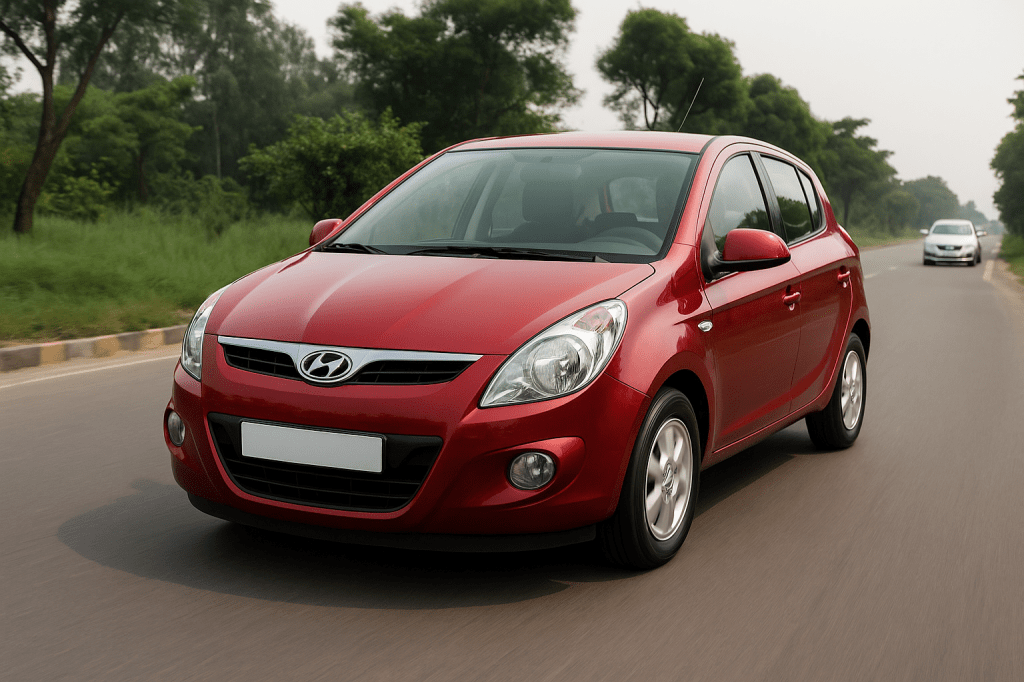
The Hyundai i20, launched in India in 2008, marked the beginning of a new era for premium hatchbacks. Aimed at the upper end of the hatchback segment, the i20 was designed to offer more than just basic mobility. It promised style, premium features, and solid performance, making it a direct competitor to the likes of the Maruti Suzuki Swift and Honda Jazz. In this article, we’ll take a deep dive into the first-generation Hyundai i20, exploring its engine, design, interior, and overall driving experience while comparing it to its competitors and identifying the target market it catered to.
—
A New Beginning: The i20’s Entry into the Market
The Hyundai i20 was Hyundai’s strategic entry into the premium hatchback market, a space that was beginning to see a rise in consumer demand for more features and higher levels of sophistication. When it was launched, the i20 immediately stood out for its modern design, high build quality, and features that were not typically seen in cars of its class at the time.
Target Market:
The i20 was targeted at the urban, tech-savvy, and young professional demographic. It appealed to customers looking for a stylish yet practical vehicle with premium features, aiming at people who were stepping up from entry-level hatchbacks like the Maruti Suzuki Swift or Ford Figo.
Competitors:
Maruti Suzuki Swift: Known for its sporty driving dynamics and affordability.
Honda Jazz: A spacious and practical alternative with a reputation for reliability.
Ford Fiesta: Competing in terms of performance and driving engagement.
—
Engine: A Solid Performer for City and Highway Drives
The first-generation Hyundai i20 came with a variety of engine options aimed at offering a balance of performance and fuel efficiency.
1.2L Petrol Engine:
Power: 83 bhp
Torque: 114 Nm
Transmission: 5-speed manual
1.4L Diesel Engine:
Power: 90 bhp
Torque: 220 Nm
Transmission: 6-speed manual
The petrol engine was aimed at those who were looking for a smooth drive with good fuel efficiency, while the diesel engine was perfect for those seeking extra torque and power, especially for highway driving. The 1.4L diesel was particularly appealing for its low-end torque, making it suitable for long-distance commuters.
Ignition Take:
The i20 offered a great balance between power and efficiency, with the diesel engine providing better torque for highway cruising while the petrol engine offered a smooth city commute.
—
Gear System: Smooth and Reliable Shifts
The Hyundai i20 came with two gearbox options depending on the engine:
1. 5-Speed Manual Transmission: Found in the 1.2L petrol variants, this gearbox offered smooth shifts and precise clutch action, ideal for city driving.
2. 6-Speed Manual Transmission: Available with the 1.4L diesel, the 6-speed transmission was aimed at offering better highway cruising with more comfortable rev ranges.
The gear system in the i20 was smooth, reliable, and easy to operate, making it a good choice for both city commuters and highway cruisers.
Ignition Take:
Hyundai nailed the gear system in the i20. It was easy to drive, especially in stop-and-go city traffic, but still offered great highway performance with the 6-speed gearbox on the diesel variant.
—
Suspension, Brakes, and Tyres: Comfort and Stability
Suspension:
Front: MacPherson strut suspension, offering a smooth ride and handling.
Rear: Torsion beam axle, ensuring stability and comfort on rough roads.
Brakes:
Front: Disc brakes
Rear: Drum brakes
The brake system offered reliable stopping power, especially in city conditions, though some enthusiasts may have preferred disc brakes all around.
Tyres:
The i20 came equipped with 185/65 R15 tyres, offering a good balance between comfort and road grip, with alloys available on higher variants.
Ignition Take:
The suspension setup of the i20 provided a comfortable and stable ride, which was particularly advantageous for longer trips and for tackling Indian roads. While the braking system was adequate, it could have benefited from disc brakes on the rear for better overall stopping power.
—
Design: Stylish, Modern, and Premium
The i20 stood out with its modern and premium design, a stark contrast to its competitors in the hatchback segment.
Front Design:
The bold hexagonal grille, sleek headlamps, and wide stance gave the i20 an elegant and confident look on the road.
The chrome accents further added to its premium appeal, distinguishing it from other hatchbacks.
Side Profile:
The i20’s smooth and flowing lines gave it a sophisticated look, with a sloping roofline and stylish alloy wheels (on higher variants).
Rear Styling:
The rear had sharp tail-lamps and a clean, well-defined bumper, contributing to the overall sporty and modern appearance of the car.
Ignition Take:
The i20 was designed to appeal to those looking for a premium, stylish hatchback. Its design was fresh and contemporary, attracting buyers who sought a step-up in terms of aesthetics and build quality.
—
Interior: Premium, Spacious, and Feature-Packed
The interior of the Hyundai i20 was its trump card, offering a premium experience for both the driver and passengers.
Dashboard:
The dashboard was clean and well-organized, with a centrally located 2-DIN music system. The use of quality materials made the cabin feel premium and well-built.
Seating:
The front seats were comfortable with adequate support, and the rear seats were spacious enough for three adults, making it one of the more practical cars in its segment.
Storage:
The i20 offered plenty of storage options, including large door pockets, a glovebox, and a central armrest with storage.
Boot Space:
The i20 offered a generous 285 liters of boot space, making it ideal for long trips or carrying luggage for a family.
Ignition Take:
The interior of the i20 felt a cut above the competition, with a well-thought-out design, premium materials, and plenty of space for passengers and luggage. It provided a sense of comfort and sophistication, which helped it stand out in the premium hatchback category.
—
Safety Features: A Step Towards Better Protection
While the first-generation Hyundai i20 was not as loaded with safety features as some modern cars, it still offered some key features that added a sense of security:
Dual Front Airbags: Provided protection for both the driver and front passenger in case of a frontal crash.
ABS with EBD: Enhanced braking performance and stability, especially under heavy braking or slippery conditions.
Rear Parking Sensors: Available in the top variants, helping the driver park the car with ease in tight spots.
Despite these safety features, the i20’s build quality was still a concern for some buyers, as the lightweight design didn’t offer the same level of crash protection as some of its competitors.
Ignition Take:
The i20 did improve on the safety front compared to many hatchbacks of its time, but it still lagged behind some rivals in terms of overall crash protection and safety features.
—
Advantages of the Hyundai i20
Premium Design: Elegant and stylish, appealing to those looking for a more upscale hatchback.
Spacious Interior: Roomy cabin and generous boot space.
Good Fuel Efficiency: Both petrol and diesel variants offered excellent fuel economy.
Comfort and Convenience: Packed with features such as a touchscreen infotainment system, rear AC vents, and comfortable seating.
—
Disadvantages of the Hyundai i20
Safety Concerns: The build quality was not as robust as some competitors, and it lacked advanced safety features.
Rear Seat Space: Although spacious for two passengers, the rear seat can feel a bit cramped for three adults on long journeys.
—
Ignition Garage Verdict:
The first-generation Hyundai i20 was a game-changer in the Indian market. It successfully blended style, performance, and features, offering an attractive alternative to the Maruti Suzuki Swift and Honda Jazz. While it may not have excelled in terms of safety, it more than made up for it with its premium feel, solid performance, and modern design. Today, the i20 remains one of the most popular hatchbacks in India, evolving with new iterations but always retaining its core appeal as a stylish and practical vehicle for modern buyers.
Stay tuned to Ignition Garage for more in-depth analyses and takes on automotive legends.
 Ignition Garage