
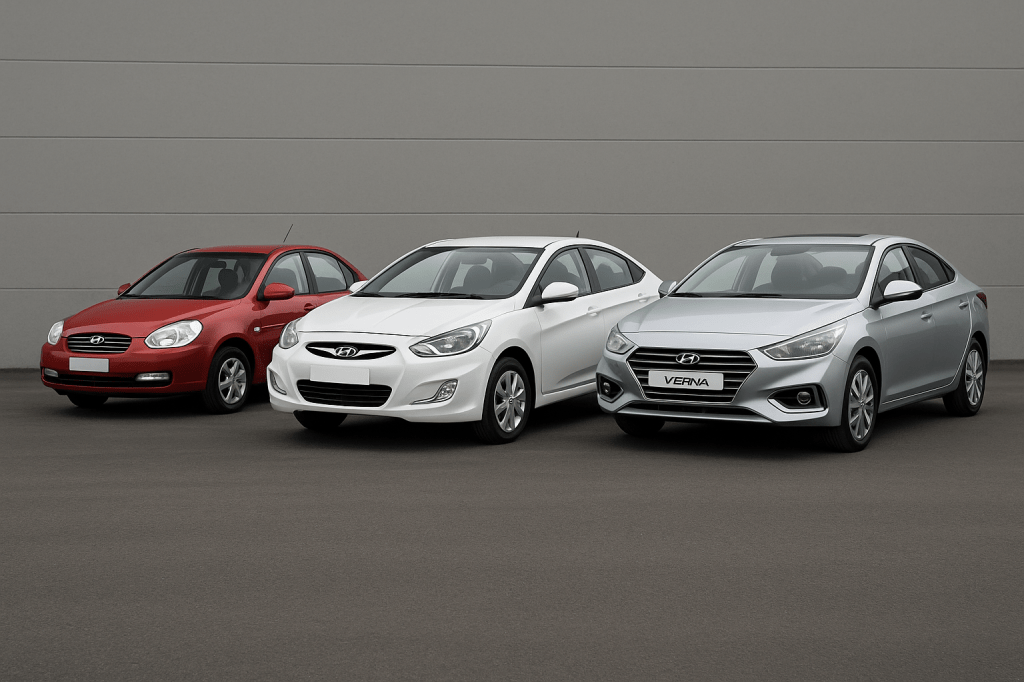
The Hyundai Verna, introduced to the Indian market in 2006, redefined the mid-size sedan segment with its sleek design, advanced features, and exceptional performance. Over the years, Verna has evolved through multiple generations, setting benchmarks in terms of style, comfort, and technology, while continuing to appeal to a wide audience—from families to young professionals. Let’s delve deeper into what makes the Hyundai Verna a standout in its class.
—
1. Entry into the Market
Hyundai entered the mid-size sedan segment with the Verna to compete against established players like the Honda City, Maruti Suzuki SX4, and Toyota Corolla. It was launched as a successor to the Hyundai Accent, aiming to capture the attention of buyers looking for a premium sedan with advanced technology and superior driving dynamics.
—
2. Variants and Generations
The Verna debuted in multiple trims, catering to diverse preferences and budgets. Over the years, it has undergone significant updates:
1. First Generation (2006-2010): Introduced with both petrol and diesel engines, this model was known for its robust build and impressive diesel performance.
2. Fluidic Verna (2011): Marked the beginning of Hyundai’s “Fluidic Sculpture” design philosophy, giving the Verna its bold, aerodynamic looks.
3. New-Age Verna (2017): Focused on adding more features, better safety, and improved comfort.
4. Current Verna: Embodies Hyundai’s latest design philosophy with sharp creases, a wider stance, and cutting-edge technology.
—
3. Engine Options and Performance
The Verna has always been recognized for its powerful and refined engine options, tailored for both performance enthusiasts and fuel-conscious drivers.
Petrol Engines:
1.4L (107 PS, 135 Nm): Balanced for efficiency and daily use.
1.6L (123 PS, 151 Nm): Offered better power for spirited driving.
Diesel Engines:
1.4L (90 PS, 220 Nm): Ideal for long-distance efficiency.
1.6L (128 PS, 260 Nm): A powerhouse offering class-leading torque and performance.
Both engines came paired with a 5-speed manual or 4-speed automatic gearbox (in earlier models), later upgraded to 6-speed manual and automatic options. This ensured smooth shifts and a responsive driving experience.
—
4. Gearbox and Transmission
The Verna’s gear systems were among the best in its class. The 6-speed manual transmission provided a precise and smooth shifting experience, while the automatic options catered to urban drivers prioritizing convenience.
—
5. Suspension and Ride Quality
The Verna’s suspension setup included MacPherson struts in the front and a torsion beam rear suspension, offering a comfortable and stable ride. While earlier models were criticized for softer suspension that compromised high-speed stability, later versions addressed this with a more balanced tuning.
—
6. Braking and Safety
The Verna set a new benchmark in safety, offering:
Disc brakes on all four wheels (higher trims).
Advanced safety features like ABS, EBD, six airbags, and ESP in later models.
ISOFIX child seat mounts, reversing cameras, and parking sensors for added convenience and safety.
—
7. Tyres and Wheels
The Verna featured 15-inch steel wheels in the base variants and 16-inch alloy wheels in the higher trims, paired with tubeless radial tyres for enhanced grip and durability.
—
8. Fuel Efficiency and Mileage
Fuel economy was another strong point for the Verna:
Petrol Variants: Delivered an average of 16-17 km/l, making it suitable for city commutes and highway drives.
Diesel Variants: Known for exceptional efficiency, offering around 21-24 km/l in real-world conditions.
—
9. Boot Space and Practicality
With a 465-liter boot, the Verna was perfect for long trips, accommodating luggage comfortably. Its practical cabin layout, with plenty of storage spaces, ensured convenience for daily use.
—
10. Interior Design and Features
The Verna’s interiors were a perfect blend of luxury and practicality:
Premium Upholstery: The use of high-quality materials and plush seats elevated the cabin experience.
Infotainment System: Touchscreen displays with Apple CarPlay, Android Auto, and Bluetooth connectivity in later models.
Automatic Climate Control: Ensured cabin comfort in all weather conditions.
Storage Spaces: Included door pockets, a cooled glovebox, and a center armrest storage compartment.
—
11. Design and Aesthetics
Hyundai’s “Fluidic Sculpture” design philosophy gave the Verna an edge over competitors with its sleek and aerodynamic silhouette. Features like:
Projector headlamps and LED DRLs in newer models.
Chrome-accented front grille and door handles for a premium feel.
A coupe-like rear profile, enhancing its sporty appeal.
—
12. Competitors in the Segment
The Verna faced stiff competition from:
Honda City: Known for its reliability and premium interiors.
Volkswagen Vento: A solid contender with German engineering and build quality.
Skoda Rapid: Delivered strong performance and a premium experience.
Despite this, the Verna consistently stood out for its feature-packed variants, diesel engine performance, and Hyundai’s strong after-sales network.
—
13. Discontinuation and Successors
While older Verna models were discontinued to make way for updated generations, its consistent evolution ensured it remained relevant in the market. The introduction of BS-VI norms further refined its engines, ensuring compliance with the latest standards.
—
14. Final Verdict
The Hyundai Verna isn’t just a sedan; it’s a symbol of Hyundai’s ability to blend style, performance, and comfort. Whether you’re a family-oriented buyer or a performance enthusiast, the Verna delivers on all fronts. Its off-the-chart feature list, robust engines, and refined ride quality continue to make it one of the most desirable sedans in India.
Stay tuned with Ignition Garage for more detailed reviews and retrospectives!
 Ignition Garage