
Ignition Garage Exclusive Review
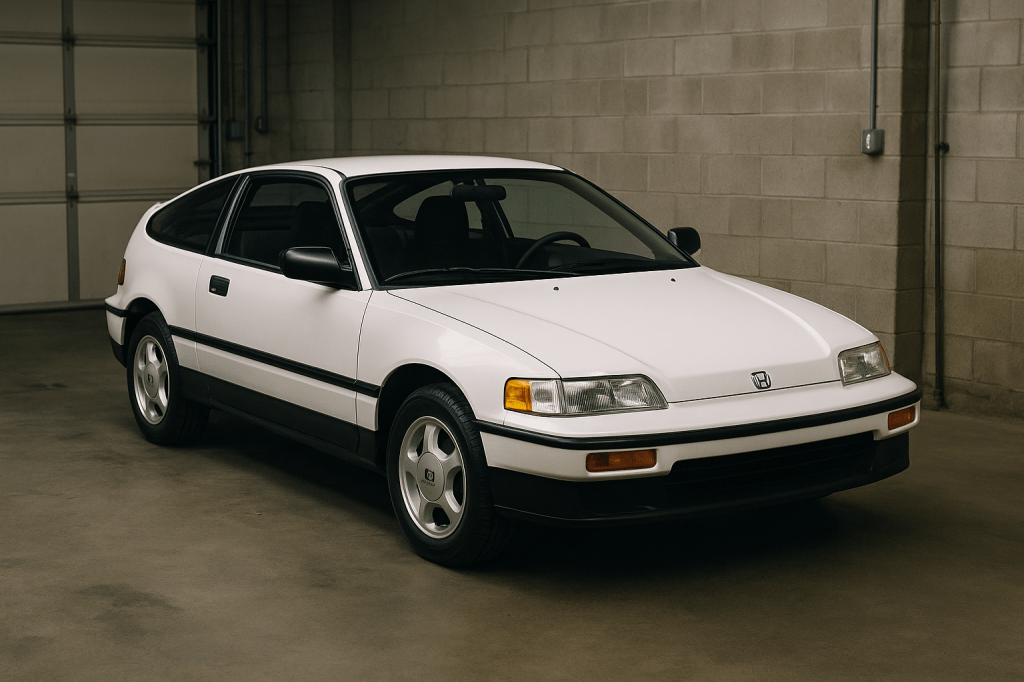
Overview
The 1991 Honda CRX (Civic Renaissance Model X) is a front-wheel-drive, two-seater hatchback that carved its name into automotive history through a near-perfect blend of lightweight engineering, razor-sharp handling, and bulletproof reliability. Even three decades later, the CRX commands respect, admiration, and a cult following around the world—including a rising subculture in India.
—
Engine & Performance
At the heart of the 1991 Honda CRX lies Honda’s legendary D-series engine—known for its high-revving nature and VTEC magic (in the SiR variant). Here’s a breakdown:
CRX DX / HF (USDM Spec)
Engine: D15B2/D15B6
Displacement: 1.5L
Power: 92–105 HP
Fuel Economy: Up to 50 mpg (HF trim – High Fuel efficiency)
CRX Si (USDM)
Engine: D16A6
Power: 108 HP @ 6000 rpm
Torque: 100 lb-ft @ 5000 rpm
CRX SiR (JDM / EDM) – The real beast
Engine: B16A DOHC VTEC
Displacement: 1.6L
Power: 160 HP @ 7600 rpm
Redline: 8200 rpm
0–100 km/h: ~7.0 seconds
Transmission: 5-speed manual (close-ratio)
VTEC engaged at ~5500 rpm, giving a second wind of power and sound.
The B16A is where Honda’s engineering truly shined. One of the first mass-produced naturally aspirated engines to make 100 HP per liter, it became the standard for high-revving fun. Even by today’s standards, this is a powertrain that excites both in urban sprints and on track days.
—
Chassis & Handling
The CRX’s most beloved trait is its lightweight chassis, weighing between 900–1000 kg depending on trim. This, coupled with a fully independent suspension (double wishbone front and rear), gives it kart-like agility and surgical cornering precision.
Steering: Hydraulic rack-and-pinion, extremely responsive
Brakes: Front disc, rear drum (SiR models had rear discs)
Suspension tuning: Firm but daily-drivable
Track behavior: Oversteer tendency under aggressive inputs, easily correctable
Racers and tuners love the CRX for its endless mod potential—from suspension and brake upgrades to B-series and even K-series engine swaps.
—
Design & Styling
The 1991 CRX is a masterclass in ’80s-meets-’90s Japanese design—sharp, low-slung, and utterly purposeful.
Body Style: Two-door coupe/hatchback
Wheelbase: 90.6 inches
Overall Length: 157.1 inches
Weight Distribution: Front-heavy, but manageable
Aerodynamics: Surprisingly efficient for the era
Colour Options (International & Indian Imports)
Frost White
Milano Red
Granada Black Pearl
Barbados Yellow
Tahitian Green
Flint Black Metallic
Phoenix Blue Pearl (limited editions)
In India, most CRXs arrived through gray market imports, often with swapped engines and aftermarket kits. Despite their rarity, you can spot a few at tuner meets or JDM events, mostly in metro cities like Bangalore, Delhi, and Mumbai.
—
Reception in India
While never officially launched in India, the CRX gained a cult underground following:
Tuning Culture: B16 swaps, turbo builds, and stance mods are common.
Track Days: Popular at MMRT (Chennai), Kari Speedway, and BIC track events.
Community: Enthusiast clubs on Facebook, Instagram, and even closed WhatsApp groups keep the legacy alive.
Parts Availability: Challenging, but enthusiasts often source via Japan or local fabricators.
Many CRX owners in India pride themselves on DIY builds and clean JDM aesthetics, with a focus on OEM+ looks and period-correct modifications.
—
Verdict — Ignition Garage
The 1991 Honda CRX is more than just a car—it’s a time capsule, a tuner’s canvas, and a purist’s dream. For Indian enthusiasts, it’s an elusive gem that combines nostalgia with genuine performance.
Our Rating: 9.2 / 10
✅ Pros
Lightweight and agile
Legendary Honda engine reliability
High-revving VTEC fun
Timeless JDM styling
Endless tuning potential
❌ Cons
– Hard to find in India
– Parts scarcity
– Rear seat? What rear seat?
 Ignition Garage