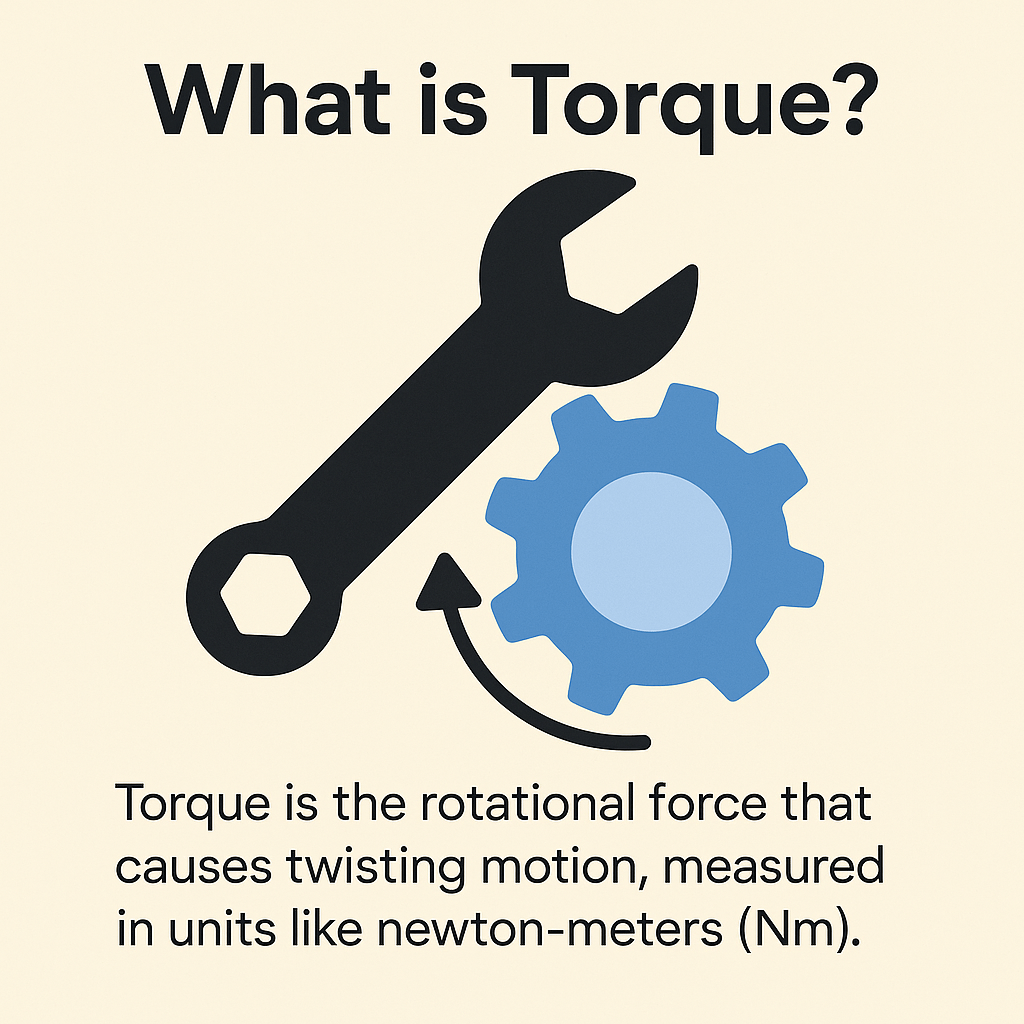
Torque

🔧 What is Torque in Cars?

Torque is the rotational force produced by the engine and applied to the wheels.
Imagine using a wrench: the harder you twist, the more torque you’re applying.

In cars, torque is what gets you moving—it’s responsible for acceleration, towing, climbing, and pulling power.


⚙️ Torque Action – How It Works

Torque is measured in Nm (Newton-meters) or lb-ft (pound-feet).

It’s generated by the engine’s crankshaft and multiplied by the gearbox to drive the wheels.

More torque = more pulling power, especially at low speeds.


🚛 Torque in Diesel Engines

✅ High torque at low RPM
✅ Great for towing, climbing, off-roading
✅ Common in trucks, SUVs, and utility vehicles

Why?

Diesel engines have longer strokes and higher compression ratios

This results in stronger force per combustion cycle, generating more torque

Typically, peak torque arrives around 1,500–2,500 RPM


🔧 Example: Tata Safari diesel
– Lots of torque down low → great for off-roading and hill climbs


🏎️ Torque in Petrol Engines

✅ Usually produce less torque, but at higher RPMs
✅ Smoother, faster-revving
✅ Better for high-speed acceleration and racing

Petrol engines are often paired with higher-revving characteristics (like VTEC)

Torque builds gradually and peaks at higher RPMs (e.g., 4,000–6,000 RPM)


🔧 Example: Honda City VTEC
– Low torque early, but explosive power when the RPMs rise


🧭 Why Torque Matters

🚗 Everyday Driving

Gets your car moving from a stop

Helps during overtaking

Improves fuel efficiency when balanced properly


🚙 Off-Roading

High low-end torque helps crawl over rocks, mud, inclines

You want torque available at low speeds → more control, less wheelspin


🏁 Racing

Torque aids mid-range power delivery

In drag racing: instant torque = faster 0–100 times

Combined with horsepower, torque determines how quickly you can push through gears


🛻 Towing & Hauling

Torque is crucial for vehicles like trucks, vans, and pickups

More torque = better load-pulling capability


🔄 Torque vs Horsepower

Torque = how much work the engine can do (pulling force)

Horsepower = how fast it can do that work (speed + power over time)


👉 You feel torque in your back when the car pulls hard
👉 You see horsepower as the speed keeps climbing


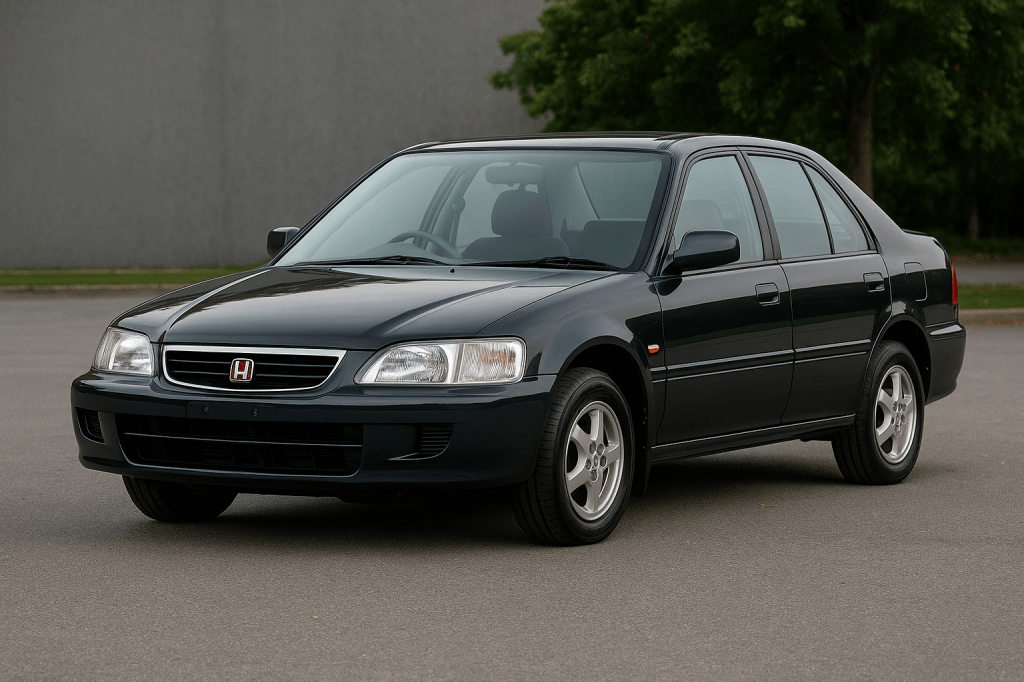
Honda City Type 2 VTEC – The OG Pocket Rocket

Category: Performance Sedan with Everyday Usability

In the early 2000s, when India’s sedan segment was crowded with practical but uninspiring options, Honda launched a game-changer — the City Type 2 VTEC. It wasn’t just an upgrade; it was a performance revolution in a family sedan’s skin.

With this car, Honda introduced Indian enthusiasts to VTEC magic — a high-revving, naturally aspirated engine that woke up past 5,000 RPM and delivered a raw, engaging driving experience unlike anything else in its class.

易 What Is VTEC & Why It Mattered

VTEC (Variable Valve Timing and Lift Electronic Control) was Honda’s performance innovation — a technology that altered camshaft profiles at high RPMs to boost power without compromising efficiency at lower revs.

In the City Type 2:

You’d drive smoothly in traffic until ~5,500 RPM.

Then, the “VTEC kick” would hit, and the engine would surge to its redline with an aggressive roar.

It was the closest thing to a JDM sports sedan India had ever seen.

Engine & Performance Specs

Spec Detail

Engine 1.5L SOHC VTEC Petrol
Displacement 1,493 cc
Power 106 BHP @ 6,800 RPM
Torque 132 Nm @ 4,600 RPM
Transmission 5-speed manual
Redline 7,100 RPM
0–100 km/h ~10 sec
Top Speed ~185 km/h

 The VTEC kicked in around ~5,500 RPM, and that’s when the character changed. The engine note sharpened, acceleration surged, and the car begged to be pushed harder. It was addictive.

️

How to Spot a VTEC from a Regular City

Honda made the VTEC version stand out from the regular City Type 2 (1.3L or non-VTEC 1.5L iDSI) in subtle but distinct ways:

Twin exhaust tips – a telltale VTEC signature

14-inch alloy wheels (5-spoke) – factory stock

Rear spoiler (optional) – clean OEM add-on

Chrome badging: ‘VTEC’ on the boot

Slightly sportier stance – due to suspension tweaks

✨ Why It’s Special: A Tuner’s Dream & Collector’s Gem

The City VTEC developed a cult following for good reason:

Tunable, bulletproof D15B7 series engine

Lightweight chassis + high-revving power = excellent power-to-weight

Ideal for swaps, turbos, and NA builds

Rare in stock form today – most are either modified or extinct

One of the few Indian cars that aged like fine JDM wine

The reliability, ease of upgrades, and emotional driving feel made the VTEC a JDM legend born on Indian soil.

壘 Key Competitors (Period Correct)

Mitsubishi Lancer 1.5 – better handling, less power

Ford Ikon 1.6 Rocam – torquey but rough

Hyundai Accent – smooth but uninspiring

Maruti Baleno 1.6 – powerful but heavier

None delivered the VTEC’s raw thrill at high RPMs. It was the true driver’s sedan of the early 2000s.

茶 Ignition Garage Verdict

> “The City Type 2 VTEC wasn’t just a fast sedan—it was a movement. It gave India its first taste of Japanese-engineered performance with real-world usability. Lightweight, rev-happy, and mechanically pure, the VTEC is still a dream car for enthusiasts who know what driving is really about.”

⭐ Rating: 9/10
 Best for: JDM lovers, collectors, and weekend redliners
 VTEC Kick Factor: 
溺 Cult Score: Legendary

🔥 ICE CARS: The Beating Heart of Car Culture


By Ignition Inc | Raw Torque. Real Talk.


In a world sprinting towards silence and screens, the ICE car — the Internal Combustion Engine beast — still howls back. And at Ignition Garage, we don’t just drive ICE cars, we live them.


🛠️ What is an ICE Car, Anyway?


An ICE car runs on petrol or diesel, igniting fuel inside cylinders to produce mechanical power. That boom inside the engine block — it’s not just science; it’s soul. Whether it’s a rev-happy inline-four or a thundering V8, this is what forged the roads before batteries took over.


🚗 The Real Driving Experience


Power delivery in an ICE car isn’t sterile — it’s raw, physical, alive.
From the throttle response to gear changes, there’s mechanical honesty in every push, every pull. Turbos spool. Pistons scream. You feel the revs climb, and the car talks back.

💬 “You don’t just drive an ICE car. You connect with it. You tame it.”

Whether it’s a low-end torque monster or a top-end revver, ICE cars reward driver skill, not just throttle taps.


🎯 Why We Still Love ICE


ICE isn’t just tech — it’s culture.

🛣️ The midnight tunnel runs.
🛠️ Wrenching weekends with busted knuckles.
🔊 That first cold-start of the day.

These cars have personality, imperfection, and presence. Each engine note is a signature. Each ride has character.

And the cult following? Massive. From JDM tuners and Euro sleepers to desi rally warriors and resto-mod legends, ICE fandom is tribal — passionate, global, and loyal to the crankshaft.


⚔️ ICE vs EV – The Divide


Sure, EVs are clean, quick, and quiet.
But ask a real gearhead: where’s the soul?

EVs glide.
ICE cars growl.

EVs are efficient.

ICE cars are emotive.


EVs are about the destination.
ICE? Always about the journey.


✅ Advantages of ICE Cars

🔧 Easier and cheaper to repair in India

⛽ Fuel is still widely available

💥 Instant throttle joy (no software-lagged acceleration)

🧰 A massive modding and tuning ecosystem

🛣️ Long-range and reliable on-road service


❌ Disadvantages? Fair Game

🌍 Higher emissions

🧃 Fuel costs are rising

🛠️ Regular maintenance required (filters, oil, spark plugs)

🚦 Traffic = inefficiency = heat + fuel waste


But for those who care more about feel than figures, ICE wins — hands down.


🏁 Why ICE Still Matters in 2025


In the era of digitized mobility, ICE cars are the last defenders of mechanical freedom. They remind us that driving isn’t just transportation — it’s expression, rebellion, and love.

So until the last piston stops punching and the final turbo stops spooling —
We at Ignition Inc will keep ICE alive.

Because real driving isn’t silent.
It’s loud.
It’s imperfect.
It’s ICE.


🧯#KeepItCombustion | #IgnitionGarage | #PetrolheadPride | #ICEvsEV | #DriveTheDifference | #RawPowerReigns | #OldSchoolForever | #RealCarsHaveEngines

🇯🇵 What is JDM ?


– The Real Meaning Behind the Badge

JDM = Japanese Domestic Market
It’s not just a buzzword or a decal.
It means vehicles and parts made specifically for the Japanese market — not just “any Japanese car.”

Here at Ignition Garage, we don’t throw the term around casually. If it’s not built for Japan, it’s not JDM.


🔍 What Makes a Car Truly JDM?

✅ Right-hand drive
✅ Built for the Japanese market
✅ Factory-tuned or specced differently than export models
✅ Often limited runs, stricter emissions, lighter builds

For example:

A Honda Civic Type R (EK9) made in Japan for Japan = True JDM

A USDM Civic Si? Great car, but not JDM


🔧 Why JDM Cars Hit Different

Because Japan built cars with soul, not software.

Rev-happy NA engines

Lightweight, minimalist design

Raw feedback — no fake engine noise, no lifeless steering

Legendary reliability, even when thrashed


🔥 Icons That Built the JDM Legacy

Nissan Skyline GT-R (R32-R34) – Godzilla status earned

Toyota Supra (JZA80) – 2JZ. Enough said.

Mazda RX-7 (FD3S) – Rotary royalty

Honda Integra Type R (DC2) – The greatest FWD chassis ever

Subaru Impreza WRX STI (GC8) – Rally-bred, AWD madness

Mitsubishi Evo (I–IX) – The street-legal stage car


And plenty more — Pulsars, Silvias, Altezzas, Soarers, Chasers, you name it.


🚧 The Indian JDM Reality

Bringing or owning a JDM in India? Not easy.

✔️ Import duties + RTO stress
✔️ Parts are rare, expensive, and often shipped from UAE or Japan
✔️ Cops won’t always “understand” your car
✔️ But the head-turns, rev-matches, and meetups? Priceless

Still, our scene is growing. Cities like Mumbai, Bangalore, Kochi, and Hyderabad are seeing clean, functional JDM builds hit the streets — and we’re here for it.


🧠 JDM Isn’t Just A Car — It’s A Culture

It’s about:

Respecting specs

Building with purpose

Driving with emotion

Keeping the engine real, the mods tasteful, and the revs high


💬 So… What JDM Build Is Your Dream?

Tag your favorite. Drop your dream setup.
Let’s make sure India never misses out on real car culture.


Ignition Garage
Home of the forgotten builds, real specs, and the raw ICE soul.

#JDMIndia #IgnitionGarage #CarCultureIndia #TrueJDM #TunerLifeIndia #RHDOnly #ImportSceneIndia #90sLegends #JDMAddict #AutoEnthusiastsIndia #SpecTalk #JDMSceneIndia

🔧 Build or Buy: Is It Still Worth Restoring a 90s JDM in India?


The 90s gave us some of the most iconic driver’s cars ever built — analog, raw, and designed for people who love the road.
But in India, owning or restoring one of these machines is not just a passion — it’s a mission.

So here’s the real question:
Is it still worth restoring a 90s JDM or classic import in 2025?


💸 Sticker Shock Is Real

You could pick up an EG Civic or Toyota Corona for peanuts 10 years ago.
Today? Even a shell with no papers can run ₹1.5–2 lakh.
A clean import with RTO clearance? ₹5–10L+, depending on the model.

Now add:

Engine rebuild or swap

Body and paintwork

Suspension, wheels, tyres

Sourcing original parts from Japan or UAE

RTO clearance headaches if it’s not originally Indian-registered


You’re staring down ₹8–15L easily for a full restoration — and that’s without going turbo or aftermarket crazy.


❤️ So Why Do It?

Because for us — it’s not about trends.
It’s about keeping real car culture alive.

That stock Accord VTEC you saved? That’s the OG performance sedan in India.
That Nissan Laurel or Toyota Mark II you’re building? That’s you putting Indian roads on the map of global JDM culture.

These cars have soul.
You feel every gear. Every vibration.
You’re connected — not isolated by screens and software.


🔧 When It’s Worth It (in India)

You love the platform and story behind the car

You’re ready for the hunt — parts, paperwork, patience

You have access to good FNGs (friendly neighborhood garages) or resto shops

You don’t mind standing out — or waiting 6 months for a bumper from Japan


⚠️ When It’s Not Worth It

You want resale value — forget it

You think it’ll drive like a new i20 N Line — it won’t

You don’t have time for RTO, import docs, or project delays

You’re only in it for clout — these cars will humble you, fast


🏁 Final Take

In India, restoring a 90s JDM or forgotten classic is not for everyone.
But for those who get it — it’s a legacy you’re preserving.
You’re keeping the spirit alive, in a country where car culture is still building its voice.

And when that NA engine revs high on an empty stretch of tarmac, it’s all worth it.


Ignition Inc.
India’s car culture — raw, rare, and still roaring.

HOT HATCHES IN INDIA – Ignition Garage Series

Small bodies. Big hearts. No compromises.
India may be sedan-obsessed and SUV-hungry, but every once in a while, a pocket rocket slips through—built for speed, cornered with rage, and tuned for the real ones.
We’re putting the spotlight on the best hot hatches ever to scorch Indian tarmac.

Welcome to the series that revs with purpose.

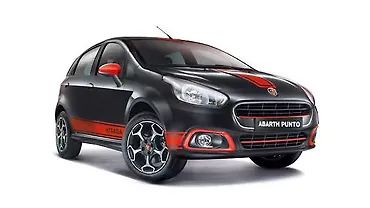
Abarth Punto – Italian Rage in a Hatch

Engine: 1.4L Turbocharged T-Jet, 145 PS, 212 Nm

Transmission: 5-speed manual

0–100: ~8.8 sec

Colour Pops: Absolute Red, Hip Hop Black, White with contrast highlights

Specials: Sport-tuned suspension, all-wheel disc brakes, 16-inch Scorpion alloys

Reception: Loved by purists. Missed by the mainstream.

Status now: Rare. Respected. Underestimated.

The only true pocket rocket from Fiat on Indian soil. It barked, it gripped, it flew under the radar.

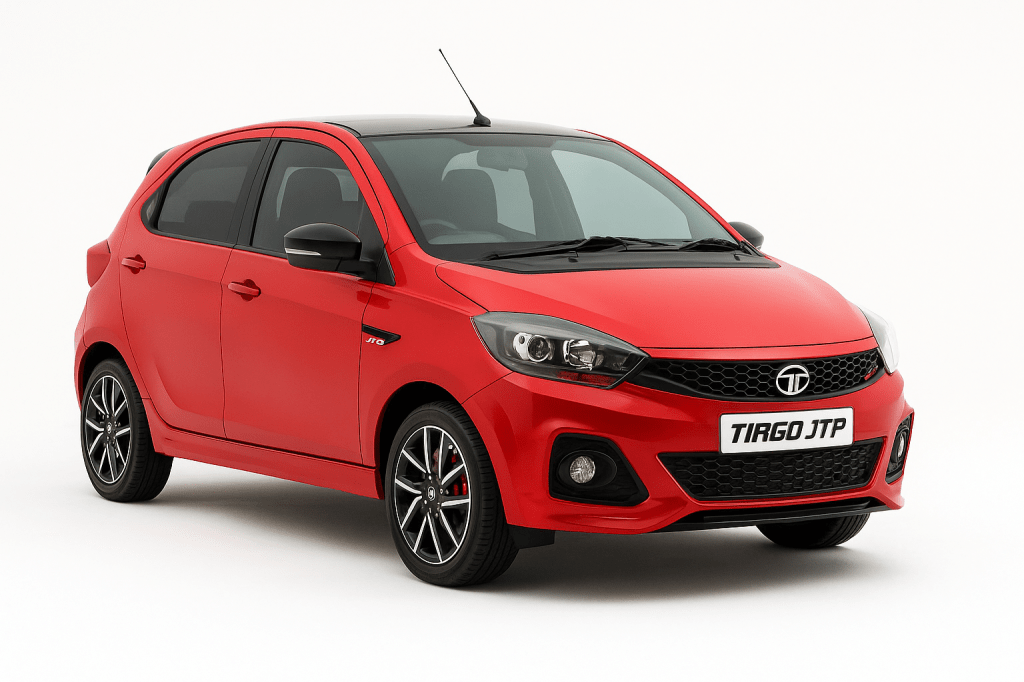
Tiago JTP – Indian Grit with Coimbatore Twist

Engine: 1.2L Turbo Revotron, 114 PS, 150 Nm

0–100: ~9.9 sec

Features: Lowered suspension, custom bumpers, dual exhaust, JTP-branded interiors

Colours: Bold Red, Pearlescent White

Reception: Misunderstood gem. Sales low. Performance high.

Now? Cult classic. Enthusiasts still chasing one.

Built in Coimbatore, tuned by Jayem, it was India’s best-kept secret.

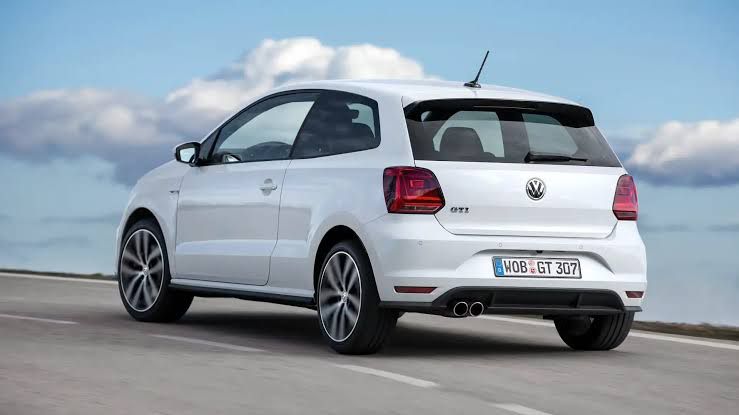
⚡ Volkswagen Polo GTI – Euro Heat, Limited Strike

Engine: 1.8L TSI, 192 PS, 250 Nm

Transmission: 7-speed DSG

0–100: 7.2 sec

Features: 3-door hatch, launch control, GTI badging, all-disc brakes

Colours: Flash Red, Pure White, Carbon Steel

Reception: Loved by speed freaks. Too pricey for the rest.

Import status: Limited run, ~99 units

Now: Unicorn territory.

The only hot hatch in India that could humble bigger cars on the highway.

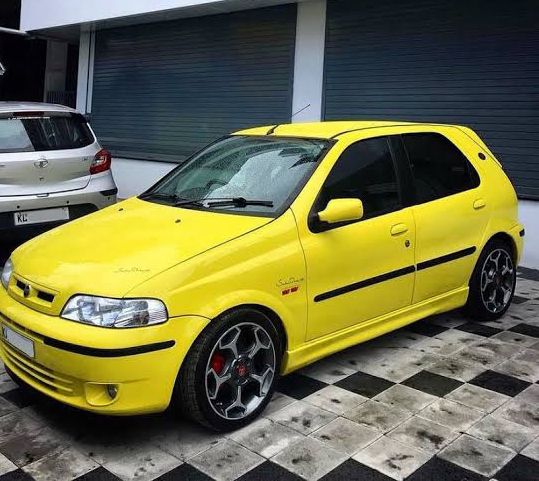
Palio 1.6 / S10 – Fiat’s Original Firestarter

S10

Engine: 1.6L DOHC Petrol, 100 PS

S10 Edition: 500 units signed by Sachin Tendulkar

Reception: Way ahead of its time. Built like a tank.

Colours: S10 in Canary Yellow

Now: Nostalgic gold. Car enthusiasts still hunt for clean ones.

Ask the OGs—this was India’s first taste of raw hatchback power.

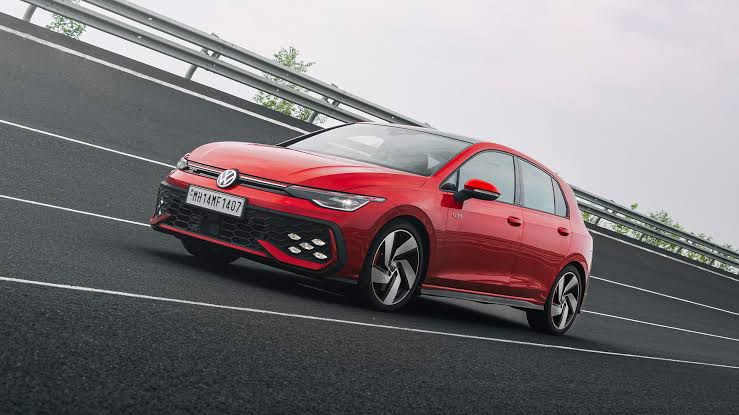
Volkswagen Golf GTI – The Legend Might Arrive

Expected Engine (Global): 2.0L TSI, 245 PS

0–100: ~6.3 sec

Tech: Digital cockpit, IQ lights, DCC adaptive chassis

India Buzz: Rumoured entry, CKD possibility

Reception (Expected): Serious enthusiasts already counting down

Colours (Global): Lapiz Blue, Kings Red, Deep Black Pearl

The Golf is the godfather of hot hatches. If it enters India, it’ll change the segment.

ECU: The Brainiac of Your Car

Imagine this: your car’s engine, brakes, fuel system, and every other component used to run around shouting instructions at each other like an unruly classroom. Chaos, right? Enter the Electronic Control Unit (ECU), the nerdy class monitor that organizes the madness into a symphony of mechanical perfection.

Before the ECU showed up, cars were like cavemen grunting through carburetors and manual adjustments. But in the 1970s, when emissions regulations tightened and the world cried, “We want cleaner cars!”, engineers turned to computers. They developed the ECU—a tiny genius that could think, calculate, and optimize.


What Exactly Is an ECU? (And Why Should You Care?)

The ECU is like your car’s CPU, a mini-computer designed to manage various systems. From engine performance to fuel economy, it’s the control freak that keeps everything in check. Without it, your car would be as clueless as a chicken with a map.


How Does the ECU Work?

It’s not rocket science… well, actually, it kind of is. Here’s the breakdown:

1. Sensors Gather Data: Your car is loaded with sensors—monitoring everything from engine temperature to oxygen levels in the exhaust. These sensors send data to the ECU faster than you can say, “Check engine light.”


2. The ECU Processes Data: The ECU analyzes the inputs and makes real-time decisions, like adjusting fuel injection, controlling air intake, or retarding spark timing. Think of it as your car’s version of multitasking.


3. Outputs the Commands: Based on its calculations, the ECU sends precise instructions to components like the engine, transmission, and fuel system to optimize performance.


In short: Sensors talk to the ECU, the ECU thinks, and the car listens. A perfect little hierarchy.


Types of ECUs: A Family of Overachievers

1. Engine Control Module (ECM): The boss of engine performance. It handles everything from fuel injection to ignition timing. Without it, your car’s engine would be as confused as a cat in a dog park.


2. Transmission Control Module (TCM): Shifts gears smoother than a jazz saxophonist. It ensures your car accelerates and decelerates like a pro.


3. Body Control Module (BCM): Lights, wipers, power windows—this is the drama-free control center for your car’s creature comforts.


4. ABS Control Unit: We already talked about this star performer. It handles braking dynamics with ninja-like precision.


5. Airbag Control Unit: Watches over crash sensors like a hawk and deploys airbags faster than you can scream, “Oh no!”


A Day in the Life of an ECU

Let’s say you start your car on a chilly morning. The ECU gets busy:

It adjusts the fuel-air mixture because it knows the engine’s cold.

It monitors oxygen levels in the exhaust and tweaks performance for efficiency.

You press the gas pedal, and it calculates how much fuel to inject for smooth acceleration.

Hit a pothole? The ECU coordinates the suspension system to absorb the shock.


This little computer does it all while sipping just a trickle of electricity.


Advantages of ECUs: Why Your Car Needs This Nerd

1. Precision Performance: ECUs ensure that every drop of fuel and spark of energy is used efficiently, boosting power and economy.


2. Lower Emissions: Thanks to ECU control, cars pollute less, keeping you and the planet happy.


3. Real-Time Diagnostics: That “Check Engine” light? It’s the ECU telling you what’s wrong, saving you from endless guesswork.


4. Better Safety: From airbags to ABS, ECUs play a huge role in keeping you alive when things go sideways.


5. Adaptability: Want more power? Flash your ECU with performance tuning software, and voilà—instant horsepower upgrade!


The First Car With an ECU: Breaking Ground

The award for the first mass-market car with an ECU goes to the 1968 Volkswagen Type 3. It used the Bosch D-Jetronic system for fuel injection, proving that Germans are obsessed with precision engineering. This was the dawn of cars that could think instead of just run.


Can You Drive Without an ECU?

In theory, yes—if you own a vintage car with no computers. But modern cars? Forget it. Without an ECU, your engine won’t start, your gears won’t shift, and your car will essentially be a $20,000 paperweight.


Final Thoughts: The ECU’s Reign

Think of the ECU as the unsung hero of your car. It doesn’t get the glory, but without it, you’d be stuck in the automotive Stone Age. From the humble beginnings of the VW Type 3 to today’s advanced ECUs that can predict weather patterns (okay, not really), this little computer has come a long way.

So next time you’re driving, give a mental high-five to your ECU—the brainiac making sure your ride is smooth, efficient, and downright smart.

Tata Motors – Driving India’s Automotive Dream.


Tata Motors, a part of the legendary Tata Group, began its journey in 1945 as TELCO (Tata Engineering and Locomotive Company), focused on building locomotives. But it wasn’t long before the company turned its vision to roads, mobility, and national progress. What started as a commercial vehicle venture evolved into one of India’s largest and most respected automotive manufacturers.

The brand made its passenger vehicle debut in the early ’90s with icons like the Tata Sierra and Tata Estate, followed by the rugged Sumo. But it was in 1998, with the launch of the Indica, that Tata truly changed the game—introducing India’s first indigenously developed car. It was more than a car; it was a statement of intent, showing that Indian engineering could deliver on both scale and aspiration.

Tata Motors continued to innovate—launching the Nano, the world’s most affordable car, and entering the premium segment with a bold move in 2008: the acquisition of Jaguar Land Rover. This not only expanded Tata’s global footprint but also brought world-class design, technology, and engineering into its ecosystem.

Today, Tata Motors is at the forefront of India’s electric revolution, with vehicles like the Nexon EV, Tigor EV, and upcoming innovations across passenger and commercial segments. Its current lineup—including the Nexon, Harrier, Safari, Altroz, and Punch—blends safety, style, and smart technology, consistently earning top safety ratings and strong market presence.


From building for India to building for the world, Tata Motors represents innovation, resilience, and a homegrown legacy that keeps moving forward.

Driving Through Time: The Evolution of Car Manufacturers in India

The Indian automotive industry has undergone a remarkable transformation over the past century, evolving from a nascent market reliant on imports to a robust manufacturing hub with a diverse array of domestic and international players. This journey reflects India’s economic growth, policy shifts, and changing consumer preferences.

Early Beginnings: Pre-1940s

The advent of automobiles in India dates back to the late 19th century, with the first car appearing on Indian roads in 1897. During this period, automobiles were luxury items imported for the elite, and there was no indigenous manufacturing.

The Formative Years: 1940s-1960s

The 1940s marked the inception of India’s automotive manufacturing. Hindustan Motors, established in 1942, began producing models based on Morris designs, notably the iconic Ambassador. Premier Automobiles followed in 1944, assembling vehicles modeled after Dodge and Plymouth. Mahindra & Mahindra commenced operations in 1945, focusing on assembling Jeep CJ series vehicles under license.

The License Raj Era: 1960s-1980s

During the License Raj, the Indian government imposed stringent regulations on industrial production, including the automotive sector. This period was characterized by limited competition and outdated models, with Hindustan Motors and Premier dominating the market. The lack of innovation led to stagnation in the industry.

Liberalization and Entry of Maruti Suzuki: 1980s

A significant turning point came in the early 1980s with the establishment of Maruti Udyog Limited, a joint venture between the Indian government and Suzuki Motor Corporation of Japan. The introduction of the Maruti 800 in 1983 revolutionized the Indian car market by offering an affordable, fuel-efficient, and reliable vehicle, effectively mobilizing the middle class.

Post-Liberalization Boom: 1990s-2000s

The economic liberalization of 1991 opened the floodgates for foreign investment, leading to the entry of several global automotive giants:

Hyundai Motor India: Entered in 1996 and quickly gained popularity with models like the Santro, becoming the second-largest car manufacturer in India.

Tata Motors: Although established in 1945, Tata Motors made a significant impact in the passenger vehicle segment with the launch of the Indica in 1998, India’s first indigenously developed car.

Ford India: Entered in 1995, introducing models like the Ikon and Fiesta, catering to the growing demand for sedans.

General Motors India: Re-entered in 1994, offering models under the Opel and later Chevrolet brands, such as the Astra and Tavera.

Honda Cars India: Established in 1995, gained a reputation for premium sedans with the City and Accord models.

Toyota Kirloskar Motor: Entered in 1997, known for reliable models like the Qualis, Innova, and Corolla.


The Last Four Decades: 1984-2024

The past 40 years have witnessed exponential growth and diversification in the Indian automotive industry:

1980s: Dominated by Maruti Suzuki’s rise, introducing modern manufacturing practices and customer-centric approaches.

1990s: Economic liberalization led to increased competition, better quality vehicles, and a focus on exports.

2000s: Advancements in technology, safety standards, and the introduction of compact SUVs catered to evolving consumer preferences.

2010s: Emphasis on environmental concerns led to the adoption of stricter emission norms (BS-IV to BS-VI) and a gradual shift towards electric mobility.

2020s: The industry is focusing on sustainability, with increased investment in electric vehicles (EVs), hybrid technology, and the development of infrastructure to support green mobility.


Recent Developments

In recent years, the Indian automotive landscape has continued to evolve with significant developments:

Hyundai Motor India: In 2024, Hyundai Motor India sought regulatory approval for its IPO on the Mumbai stock market, potentially marking the largest IPO in India. Hyundai holds a 15% market share with an 820,000-unit annual production capacity and plans to introduce its first locally produced EV next year.

Tata Motors: With a 14% market share, Tata Motors leads in EV sales with models like the Nexon and Punch and a total production capacity of over 1 million units.

Mahindra & Mahindra: Known for its high-revenue SUVs, Mahindra holds an annual capacity of approximately 588,000 units and plans to launch new electric SUVs in early 2025.


Conclusion

The Indian automotive industry has transformed from a modest, regulated market to a dynamic and competitive arena, attracting global manufacturers and fostering domestic innovation. Over the past 40 years, policy reforms, economic liberalization, and changing consumer preferences have driven this evolution. Today, India stands as one of the world’s largest automotive markets, with a diverse range of manufacturers contributing to its growth and development.


The Handbrake Chronicles: Your Car’s Backup Hero

Picture this: You’re parked on a steep hill. The car is off, the gear is in neutral, and gravity is plotting against you. Who’s holding your ride in place? Not the gears, not the wheels, but the unsung hero—the Handbrake.

Often overlooked, sometimes abused (cue the boy racers pulling drifts), the handbrake, or parking brake, is a critical system in your car. It’s simple, reliable, and designed to ensure your car doesn’t roll away when you’re not paying attention. Let’s take a deeper dive into what makes this humble mechanism so essential.


What Is a Handbrake, Exactly?

The handbrake is a secondary braking system designed to keep your car stationary. While your regular brakes are hydraulic and controlled via the pedal, the handbrake uses mechanical action, cables, or even electronics (in modern cars) to hold the vehicle in place. It’s your car’s version of a parking buddy that never fails.


Types of Handbrakes: Which One Do You Have?

Over the years, handbrakes have evolved from purely mechanical systems to tech-savvy electronic devices. Here are the three main types:

1. Lever-Type Handbrake (Traditional Hero)

Found between the driver and passenger seats.

Operated by pulling a lever, which engages the brake via cables.

Reliable and simple but not the most elegant solution.


2. Electronic Parking Brake (The New-Age Brainiac)

A button replaces the lever. Just press it, and the system activates electronically.

Common in modern cars and offers advanced features like auto-hold.

Downsides? It’s more expensive to fix, and some enthusiasts think it lacks “soul.”


3. Foot-Operated Parking Brake (The Lone Ranger)

Found in some American and luxury cars. Activated by pressing a pedal near the driver’s footwell.

Functional but feels a bit out of place in sporty or compact cars.


How Does the Handbrake Work?

The magic of the handbrake lies in its mechanical simplicity (or smart electronics, in newer models). Here’s how it works:

1. Mechanical Handbrakes:

When you pull the lever, it tightens a cable connected to the rear brakes.

This locks the wheels, preventing them from moving.

In drum brakes, the cable activates a secondary brake shoe; in disc brakes, it clamps the brake pads.


2. Electronic Parking Brakes (EPB):

Sensors and actuators replace cables.

When you press the button, the ECU tells the rear brakes to lock.

These systems also disengage automatically when you accelerate.


When Should You Use the Handbrake?

Most drivers think the handbrake is only for parking, but it’s got a few more tricks up its sleeve:

1. Parking on Hills: It’s your first line of defense against gravity. Always use it, no matter how flat the road seems.


2. Emergency Stops: In rare cases of brake failure, you can use the handbrake to slow down—but it won’t be smooth.


3. Drifting: Not recommended unless you’re on a closed track (and know what you’re doing). Pulling the handbrake disengages the rear wheels, allowing you to slide.


Common Handbrake Mistakes

1. Forgetting to Use It: Leaving your car in gear isn’t enough, especially on inclines. Gravity always wins.


2. Driving With It On: You’ll hear the warning beep (in modern cars), but ignoring it can damage your rear brakes.


3. Overpulling the Lever: Yanking the lever like you’re in a tug-of-war isn’t necessary. Most systems work with a moderate pull.


4. Not Using It Regularly: If you don’t engage the handbrake often, the cables can corrode, and the system might fail when you actually need it.


Advantages of the Handbrake

Simple and Reliable: Mechanical handbrakes have fewer failure points compared to hydraulic brakes.

Independent System: Even if your main braking system fails, the handbrake can hold the car.

Versatile: Works in emergencies, for parking, and even in motorsport.


Disadvantages of the Handbrake

Limited Stopping Power: It’s not designed for high-speed braking, so don’t expect miracles.

Wear and Tear: Overuse (especially for stunts) can stretch the cables or damage brake components.

Electronic Complexity: Modern EPBs are convenient but costly to repair if they malfunction.


Maintenance Tips for Your Handbrake

1. Use It Regularly: Keeps cables and mechanisms from seizing.


2. Don’t Overstrain: Pull the lever just enough to engage the brakes.


3. Service It Periodically: During routine brake maintenance, ask your mechanic to inspect the handbrake.


Ignition Garage Verdict: Small Component, Big Responsibility

The handbrake might not be the flashiest part of your car, but it’s one of the most important. Whether it’s holding your car on a slope, helping you slide into a drift, or acting as a backup braking system, the handbrake is the ultimate utility player.

So, the next time you park your car, give the handbrake a little extra respect. It may not ask for much, but it works harder than most parts of your car—and doesn’t even need a spotlight to do it.

Design a site like this with WordPress.com
Get started