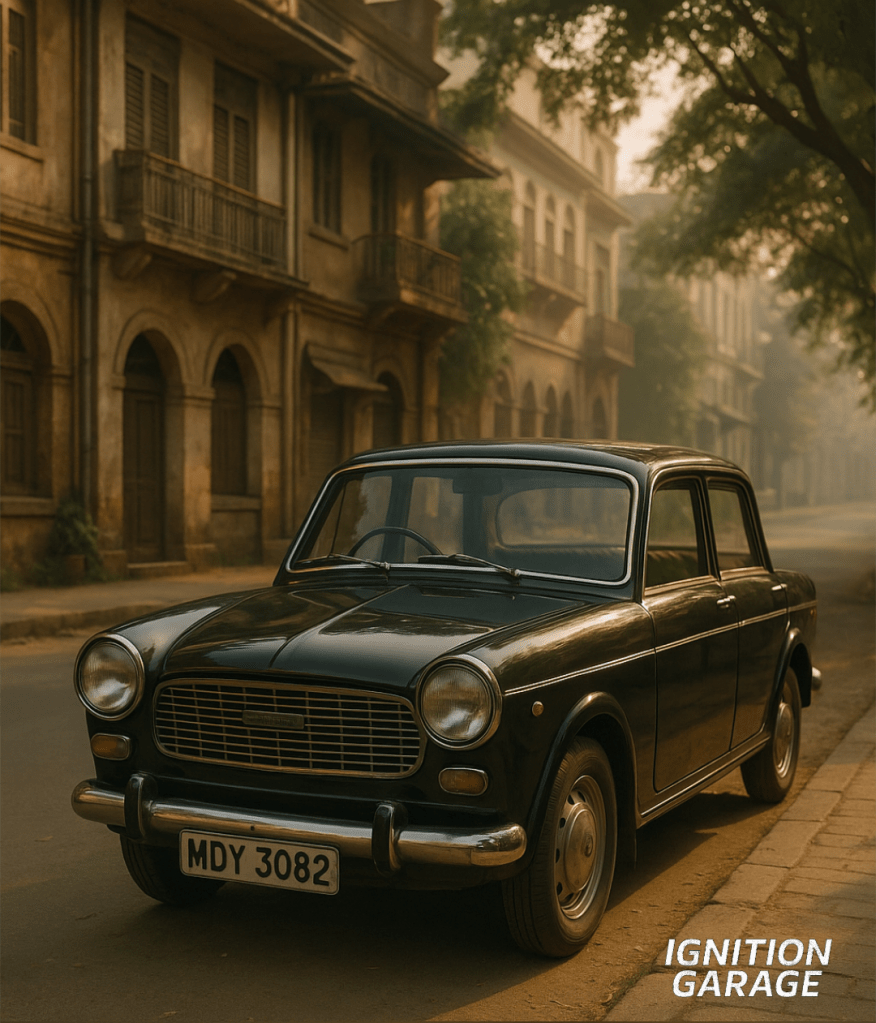
The Premier Padmini remains one of India’s most beloved classics. Known for its stylish European design and urban practicality, it was a favourite among families, taxi operators, and enthusiasts alike.
—
🔶 🛠️ Birth & Origin
Original model: Fiat 1100D (Italy)
Indian production: Launched in 1964 by Premier Automobiles Limited (PAL), Mumbai
Initially badged as Fiat 1100 Delight, later renamed Premier Padmini in 1974 to Indianise branding
Production continued until 2000
—
🔶 ⚙️ Engine & Performance
Engine: 1089cc inline-4 petrol engine
Power: ~40-44 bhp @ 4800 rpm
Torque: ~71 Nm @ 3000 rpm
Transmission: 4-speed manual gearbox with column shifter
Top speed: ~120 kmph
🔧 Mechanical Highlights: ✅ Rear-wheel drive with coil spring suspension at front and leaf springs at rear ✅ Lightweight chassis for nimble city manoeuvring ✅ Excellent fuel economy (~14-16 kmpl)
—
🔶 🎨 Design & Styling
Exterior:
Elegant European styling with clean straight lines
Chrome grille and slim bumper giving a premium look
Compact dimensions perfect for urban roads
Interior:
Minimalist dashboard with simple dials
Thin steering wheel with Premier logo
Comfortable bench seats with ample space for four adults
—
🔶 🚘 Usage & Cultural Impact
Became the quintessential Mumbai taxi for decades, earning the nickname “Kaali Peeli”
Popular among middle-class families for its affordability and style
Featured in countless Bollywood movies, cementing its cultural status
Known for reliability, easy maintenance, and European driving feel
—
🔶 ❤️ Why It’s a Classic Today ✅ Nostalgic connection with Mumbai’s streets ✅ Classic European styling that remains timeless ✅ Easy availability of parts for restoration ✅ Compact size ideal for city classic drives
—
🔶 🔍 Our Verdict The Premier Padmini is an icon of Indian motoring history. Its blend of Italian design and Indian practicality made it a car for everyone. For collectors, it remains a smart classic choice with strong emotional value and ease of ownership.
—
👉 Which golden classic should we feature next? Comment below. 🔖 Follow @goldenclassics for more timeless reviews every week.
The V12 Syndicate – When Engines Were Made Like Orchestras
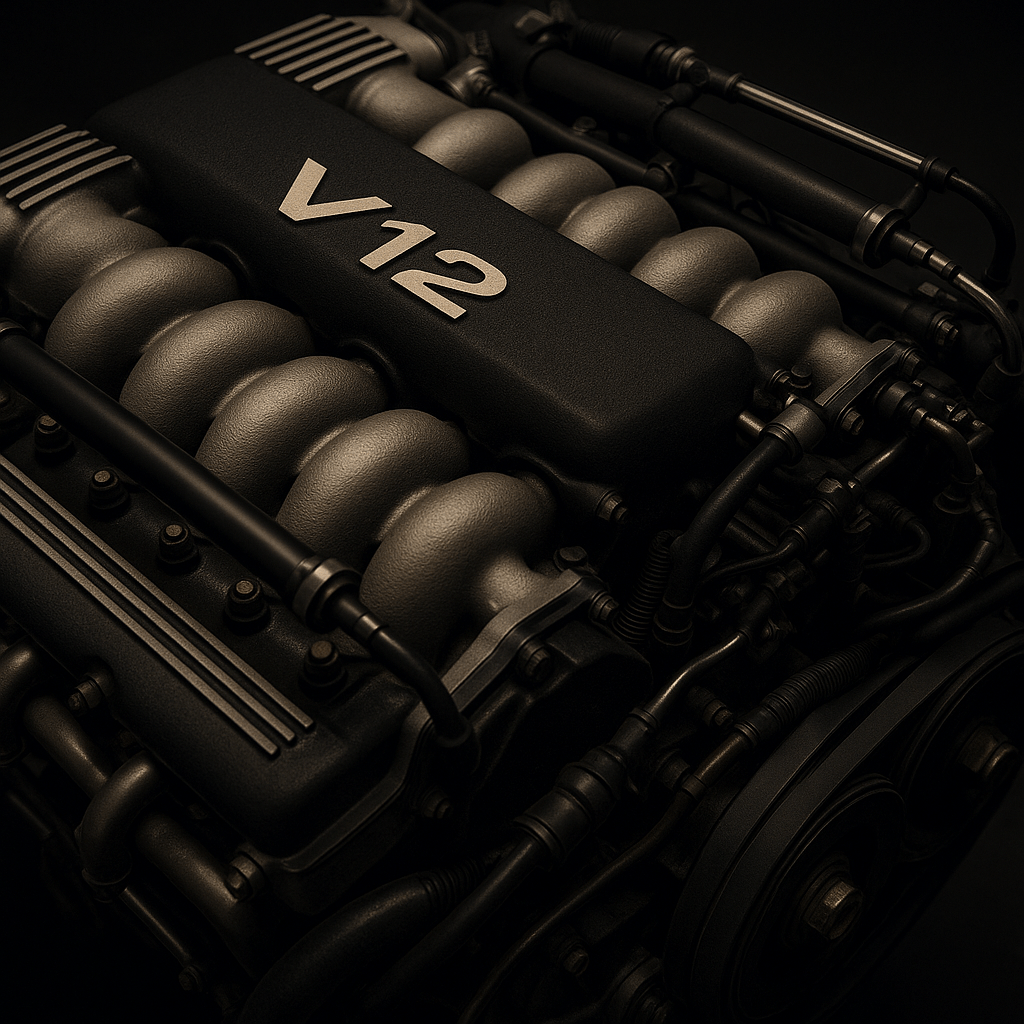
Before EVs whispered onto boulevards and turbo fours dominated spec sheets, the V12 ruled as the ultimate expression of mechanical excellence. Twelve cylinders arranged in symphonic harmony—refined, sonorous, and uncompromising. The V12 wasn’t just an engine. It was a statement.
—
🔧 A Symbol of Prestige and Performance
Across brands and borders, the V12 became the “kingmaker engine”—reserved for flagships, supercars, and masterpieces. It was never about practicality. It was about perfection.
—
🏁 Iconic Members of the Syndicate
🔸 Mercedes-Benz M120 V12
Models: 600SEL / S600, SL600 (R129)
Specs: 6.0L, ~402 hp
Legacy: Smooth, quiet, endlessly capable. Famously hand-assembled. Found in the ultra-rare CLK GTR and Pagani Zonda C12.
🔸 Ferrari F140 V12
Models: Enzo, 812 Superfast
Specs: Up to 819 hp, 9,500 rpm redline
Legacy: Arguably the greatest modern V12, combining old-school roar with cutting-edge F1-derived tech.
🔸 BMW S70/2 V12
Model: McLaren F1
Specs: 6.1L NA, 627 hp
Legacy: The beating heart of the world’s fastest car (for over a decade). No turbos. Just pure, naturally aspirated brilliance.
🔸 Jaguar V12 (XJ and E-Type)
Specs: 5.3L / 6.0L
Legacy: Sleek, effortless cruising. One of the longest-running V12s in history (1971–1997). British elegance meets brute force.
🔸 Aston Martin V12 (AM11/AM29)
Models: DB7 Vantage, DB9, Vanquish
Specs: Up to 595 hp
Legacy: The soundtrack of James Bond. Deep, raspy, aristocratic fury in a tuxedo.
—
🎼 The Emotional Engine
Why the V12 remains unforgettable:
Inherently balanced – zero secondary vibrations
Linear power delivery with graceful torque curves
Engine note: a crescendo from velvet to violence
Typically paired with long hoods, grand designs, and top-tier craftsmanship
—
🎬 Cultural Spotlight
McLaren F1 – Worshipped as the purest driving machine.
Ferrari Enzo – Named after the founder himself. Enough said.
Will Smith’s 600SEL – Bad Boys 1995 brought German V12 menace to Hollywood heat.
Zonda F – Horacio Pagani’s love letter to the M120, tuned to an operatic scream.
—
🕰️ Where Are They Now?
V12s are nearing extinction due to emissions, weight, and complexity. Hybridization and turbocharging have taken over. Even Ferrari is electrifying. Yet, V12s still hold sacred ground in:
Rolls-Royce Phantom/Ghost
Ferrari 812/Daytona SP3
Lamborghini Revuelto (hybrid V12)
—
🏆 Ignition Verdict: Eternal Flame
The V12 isn’t just an engine spec — it’s automotive art. A declaration that performance can have soul, and sound can stir the spirit. As long as enthusiasts live, so will the legend.
It’s official — the electric age isn’t coming. It’s already here.
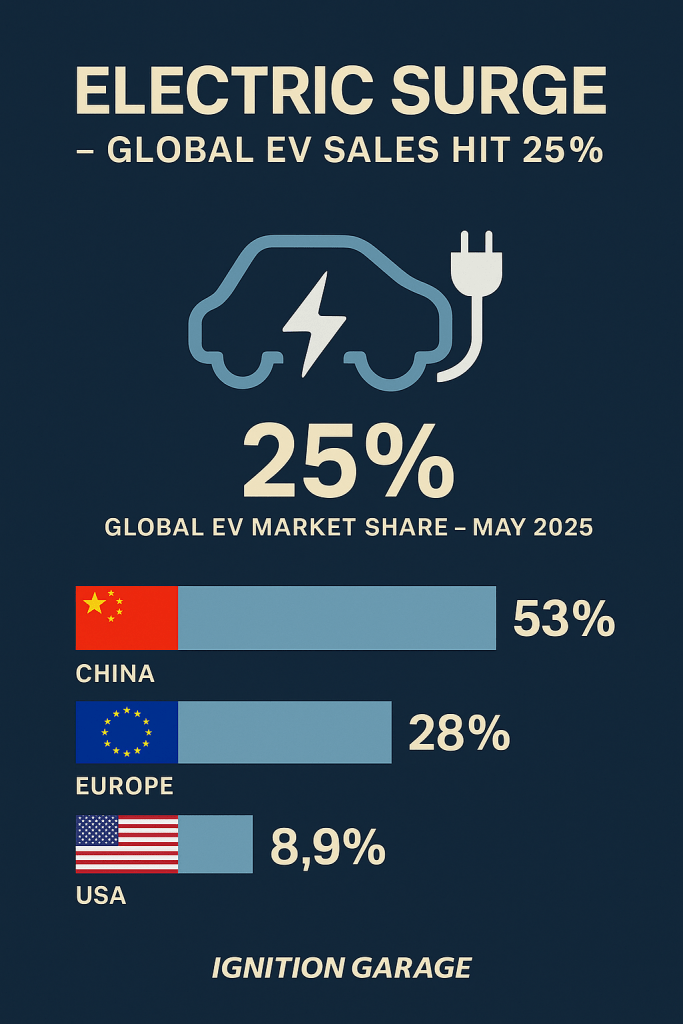
In May 2025, global EV sales crossed the 25% mark, capturing a quarter of all new vehicle sales worldwide, according to the latest auto industry data.
This marks a monumental shift in global automotive behavior, one that’s being driven by policy, price parity, and most of all — consumer demand.
—
📊 The Numbers That Matter
🔋 Global EV Sales Snapshot – May 2025
🌏 Global EV Market Share: 25% (up from 21% YoY)
🇨🇳 China: 53% (up 23%) – EVs are now mainstream
🇪🇺 Europe: 28% (up 34%) – EU incentives drive mass adoption
🇺🇸 USA: 8.9% (slightly down from 9.4%) – Still ICE-dependent
These are not projections — these are sales happening now, showing where the market is shifting in real-time.
—
🇬🇧 Tesla’s UK Comeback
After a slow start to Q1, Tesla rebounded with a 12% YoY increase in UK sales during June 2025. The Model Y and refreshed Model 3 led the surge, with a combination of price cuts, tax benefits, and improved delivery timelines.
> “Tesla has stabilized its UK presence with strategic pricing and consistent supply chains.” – Reuters Automotive Report
Why does this matter? Because Europe is the battleground for EV brands. The UK bounce-back signals Tesla’s continued relevance in the region, despite pressure from BYD, MG, and legacy German rivals.
—
🧭 What’s Fueling This Surge?
✅ Government Incentives: EV tax breaks, CO₂ penalties on ICE, and purchase rebates across Europe and Asia. ✅ Infrastructure Growth: Rapid expansion of charging networks in EU and China. ✅ Technology Maturity: Battery costs are dropping. Range anxiety is shrinking. ✅ Consumer Confidence: EVs now come with real-world range, resale value, and after-sales support.
—
🔮 What’s Next?
More EV-only brands expanding globally (Zeekr, VinFast, Leapmotor)
India and Southeast Asia joining the electrification curve
Performance EVs entering enthusiast spaces (watch out for EV hot hatches!)
Governments pushing ICE bans even harder — 2030 is no longer far
—
🏁 Ignition Garage Take
> “The electric revolution is no longer theoretical — it’s statistical. One in four cars sold is electric. The future isn’t 2035. It’s already parked in your neighbor’s driveway.”
At Ignition Garage, we’ll continue covering:
EV performance comparisons
Long-term EV ownership insights
Transitioning car culture in a post-ICE world
—
🧠 Knowledge Nugget:
EV vs ICE Service Cost On average, EVs cost 30–40% less to maintain over 5 years, mainly due to fewer moving parts and regenerative braking systems.
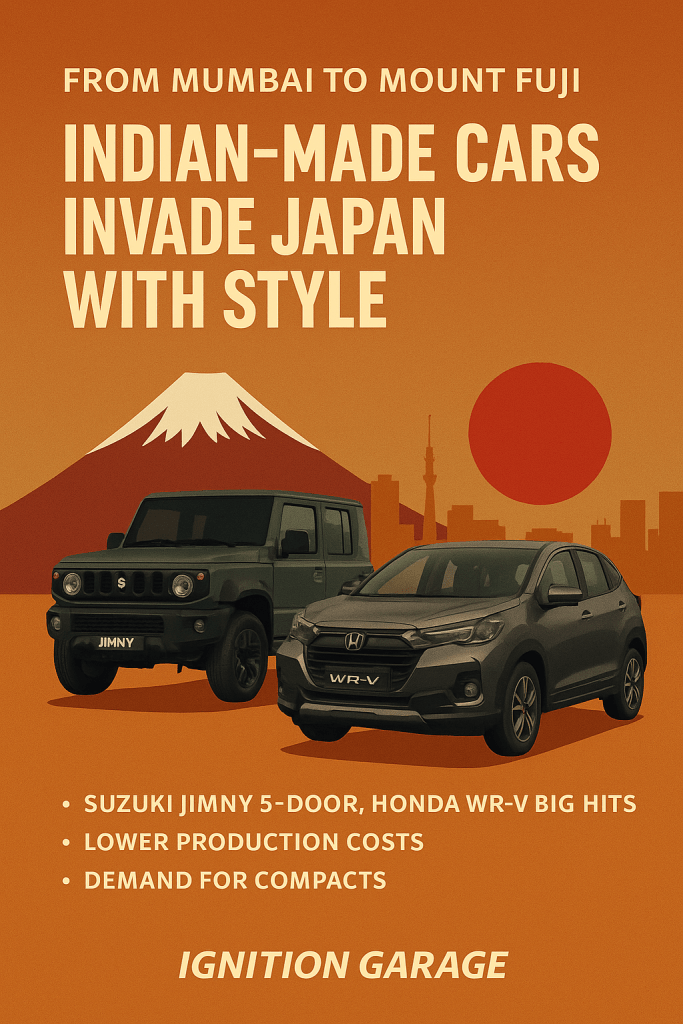
“From Mumbai to Mount Fuji – Indian-Made Cars Invade Japan with Style”
🔧 ⚙️ When the Flow Reverses
In a stunning twist of global automotive dynamics, India is now exporting more cars to Japan than ever before. Yes — the country once seen as a small car consumer is now building them for one of the most advanced and mature car markets in the world.
And the best part? They’re loving it.
🇯🇵 🔄 🇮🇳 JAPAN WELCOMES INDIAN CRAFTSMANSHIP
From being an automotive importer to becoming an export powerhouse, India’s car manufacturing hubs in Gujarat, Haryana, Tamil Nadu, and Maharashtra are now producing export-spec models for brands like Suzuki, Honda, Toyota, and Hyundai — many of which are now on sale in Japan itself.
This isn’t just global business. It’s a reputation shift.
🚙 ⭐ HOT EXPORTS TO JAPAN RIGHT NOW:
🟢 Suzuki Jimny 5-Door (Made in India, Loved in Tokyo)
Built in Gurugram, the 5-door Jimny is now finding fans in Japan’s adventure-loving crowd.
Japanese buyers see it as the “budget G-Wagen alternative”, with real 4×4 cred.
Bonus: It’s not sold elsewhere in Japan. India gets it, builds it, and ships it back.
> “Japanese customers are crazy for the practicality + cuteness + go-anywhere charm of the Indian Jimny 5-door.” – Nikkei Auto Trends
🔵 Honda WR-V (India’s Crossover Makes the Leap)
The WR-V might not be a household name in Europe or the U.S., but in India and now Japan, it’s seen as a perfectly balanced urban SUV.
Spacious, reliable, and efficient — exactly what Japan’s suburban buyers look for.
The newer version, refreshed and re-engineered in India, has been praised for its interior space-to-size ratio and ride quality.
> With Japanese buyers increasingly favoring compact crossovers over sedans, India-made WR-Vs have found a sweet spot.
📊 WHY JAPAN IS TURNING TO INDIA
✅ Lower production costs with consistent Japanese quality ✅ Export-spec manufacturing facilities (Maruti Suzuki’s Gujarat plant is world-class) ✅ Demand for compact, fuel-efficient, emissions-compliant vehicles ✅ Trust in Japanese brands – regardless of manufacturing location
Let’s be clear: these are not “cheap exports”. These are smartly built, globally engineered vehicles that meet stringent Japanese standards.
🌏 SHIFTING AXIS OF AUTOMOTIVE POWER
This trend signals a massive vote of confidence in India’s automotive ecosystem. From design-to-delivery, Indian factories now handle it all:
Engineering for global spec
Export packaging
Japanese QC-grade precision
It also opens the door for more R&D and Japan-India joint engineering projects in the near future.
🔮 WHAT’S NEXT?
Rumors suggest that India may soon become the global export base for more Suzuki and Toyota small SUVs, including mild-hybrids and next-gen EVs.
The idea that a car built in India would cruise past cherry blossoms in Kyoto or tackle the icy hills of Hokkaido?
It’s happening.
🏁 IGNITION TAKEAWAY
> “In the 2020s, India stopped being a follower in the car world. It became a builder. A player. A force.”
And now, as the roads of Tokyo and Osaka hum with the sound of Indian-assembled engines, we know this — the future of global motoring might just have a Made in India badge.
📌 Stay tuned with Ignition Garage for more on the cars, cultures, and engineering trends that are shaping tomorrow.
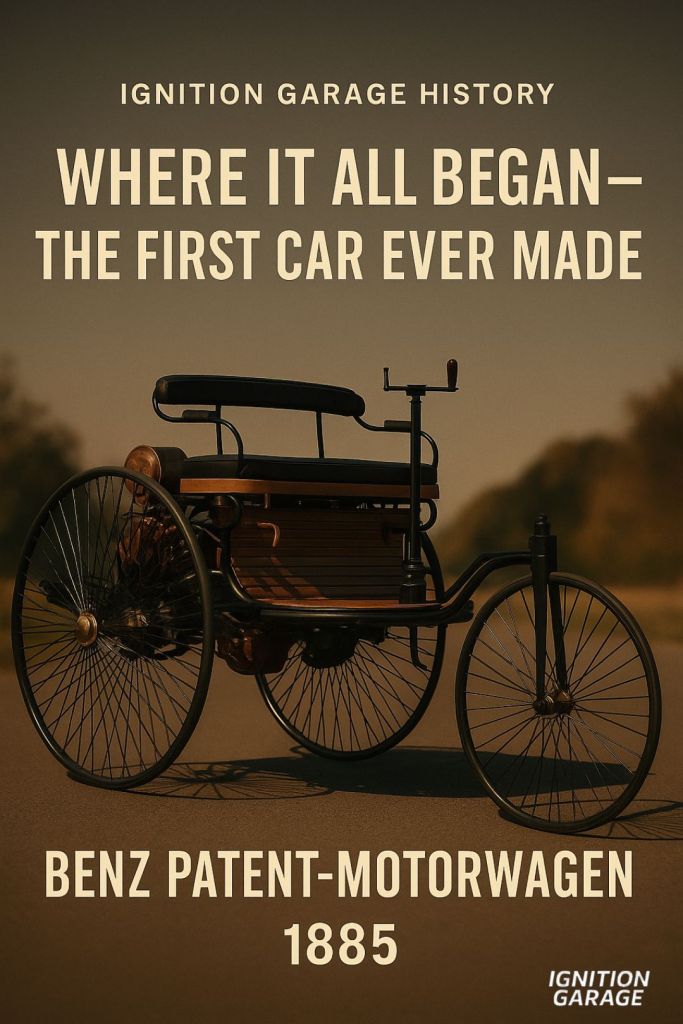
🚗 The Year Was 1885 A German engineer named Karl Benz quietly changed the world forever. While others were dreaming of faster horses, he built something no one had seen before — A self-propelled machine. A three-wheeled contraption powered not by steam or magic… But by the future: a gasoline engine.
🔹 Name: Benz Patent-Motorwagen 🔹 Year: 1885 (patented in 1886) 🔹 Engine: 954cc single-cylinder four-stroke 🔹 Power: 0.75 hp 🔹 Top Speed: ~16 km/h (10 mph) 🔹 Fuel: Ligroin (a type of petroleum)
—
🛣️ Bertha Benz – The Silent Hero In 1888, Bertha Benz, Karl’s wife, took the Motorwagen without permission on a 106 km journey across Germany — the world’s first long-distance car drive. She fixed the car on the road with hairpins and shoe leather. She stopped at pharmacies to refuel. She believed in this machine before the world did.
> Without her, there might never have been a Mercedes-Benz.
—
🛠️ Why It Mattered This wasn’t just a vehicle. It was a challenge to how the world moved. Every Porsche, Ferrari, and Mercedes you admire today — it all started here.
—
🏁 From a single piston to a roaring V12 — The car has come a long way. But this humble three-wheeler is where the engine of history began to turn.
—
📸 Want to see a modern tribute to the Benz Patent-Motorwagen? Swipe ➡️ or head to @ignitiongarage for more automotive legends.
—
🔖 Follow @ignitiongarage for more deep dives into car culture, history, and machines that moved the world.
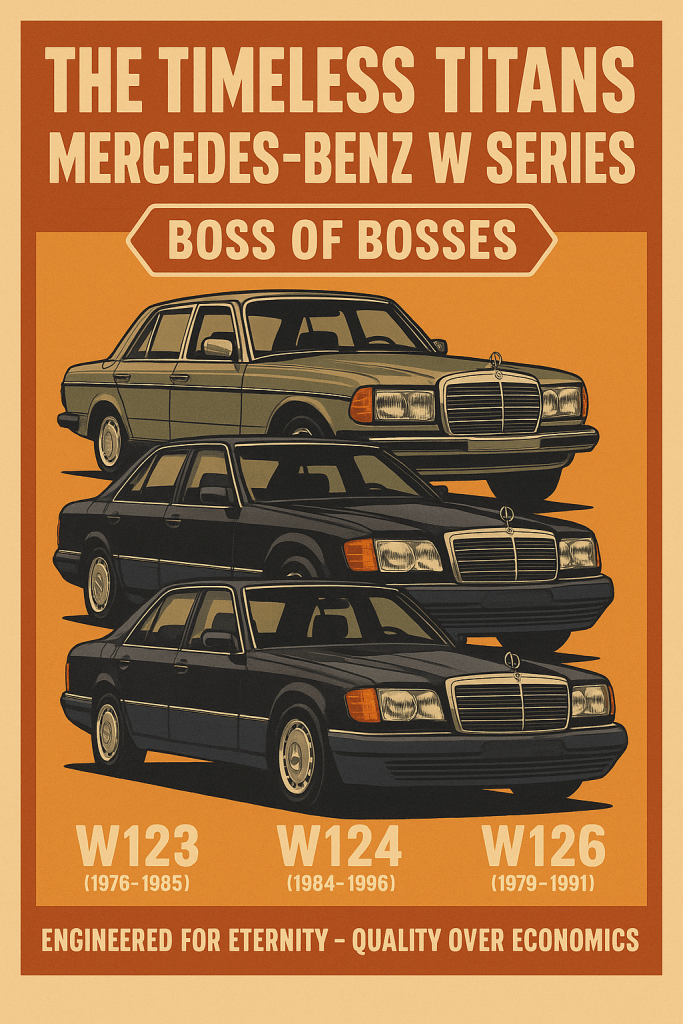
The Timeless Titans – Mercedes-Benz W Series (Boss of Bosses)
Introduction
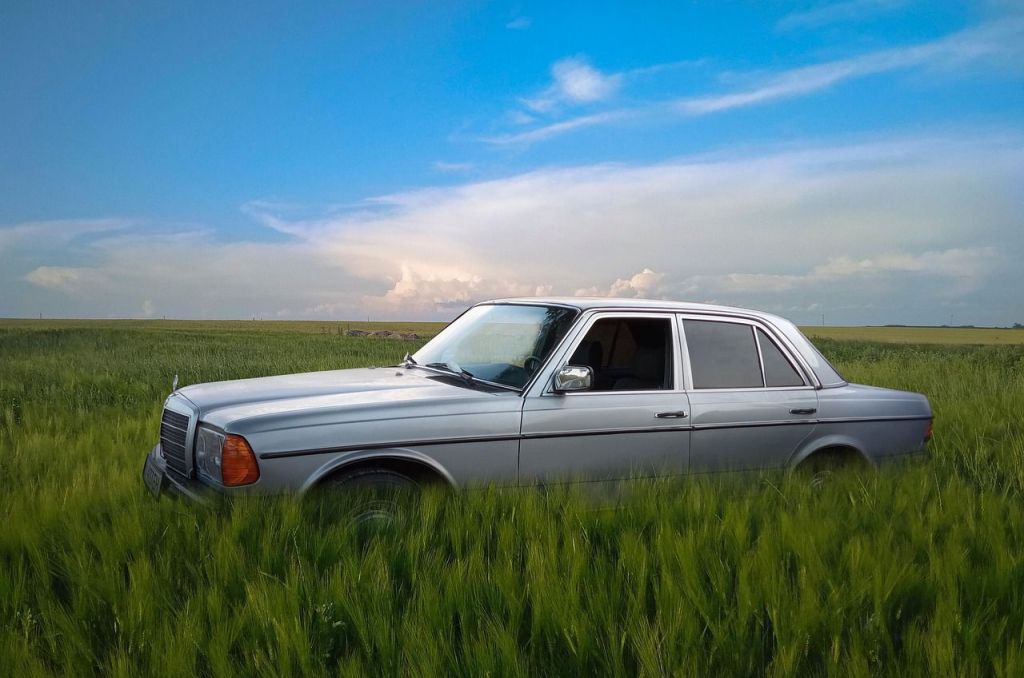
When we talk about the greatest sedans ever built, one name dominates with unshakable respect – the Mercedes-Benz W Series. A lineage that blended aristocratic elegance with bulletproof engineering. Cars that became synonymous with success, power, and an unspoken aura of command wherever they rolled.
From the classic W123, to the modern legends W124 and W126, these cars weren’t just machines – they were statements of status, authority, and timeless German excellence.
🔶 🛠️ The Birth of a Legend
The W Series nomenclature started as Mercedes-Benz’s internal chassis coding system. But for enthusiasts, “W” became an identity for indestructible Mercs – cars engineered to outlive their owners.
Diesel: 2.0L OM615 2.4L OM616 3.0L OM617 five-cylinder diesel (up to 125 hp NA and Turbo)
🔸 Design Aesthetics:
Boxy elegance with heavy chrome, iconic square dual headlamps (round for base models), and an upright commanding grille.
🔸 Interior & Steering:
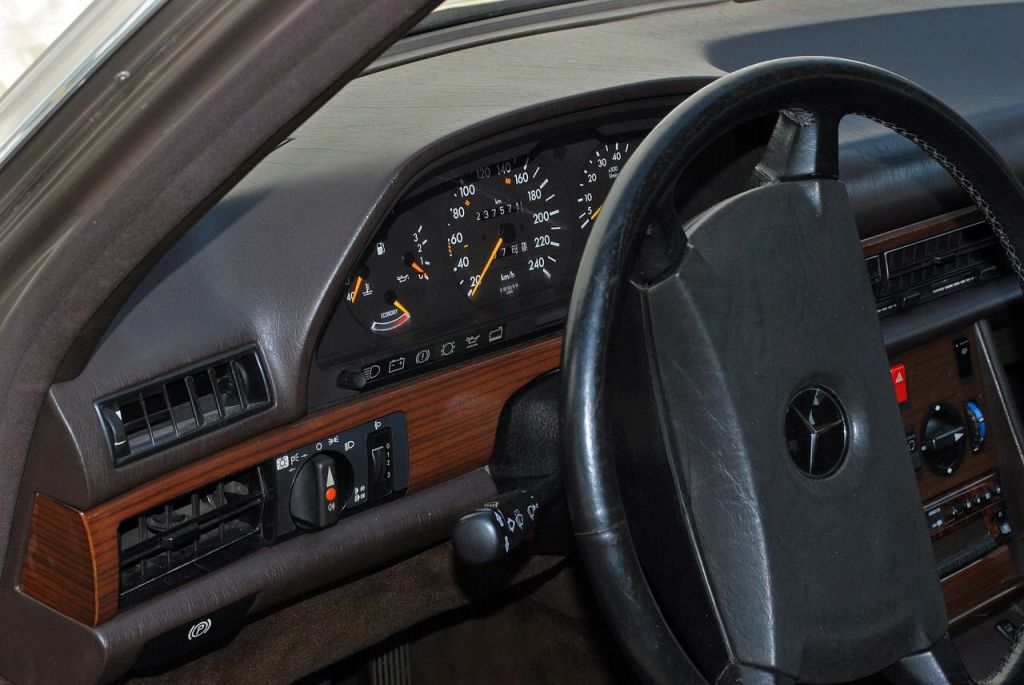
Classic Mercedes steering with robust tactile feel
Wood grain dashboard panels
Deep cushioned seats with MB-Tex upholstery lasting decades
Ergonomic driver-focused layout
🔸 Premium Features:
✅ Single large windshield wiper with eccentric sweep (covers 86% of glass) ✅ Headlamp wipers (optional) for snow/dirt ✅ Automatic climate control ✅ Power windows, central locking, sunroof in higher trims
🔸 Build Quality & The Elephant Story:
> There exists a viral video where a wild elephant steps onto a W123 bonnet near a jungle road. 🐘 The elephant presses its forelegs onto the hood, bending it down to suspension limits. 🚗 When it steps off, the car springs back to original form with minimal damage. Bonnet didn’t crumple irreversibly. Suspension absorbed the weight shock. Panel gaps remained aligned.
💡 This is engineering for eternity. No modern luxury sedan could survive such an encounter.
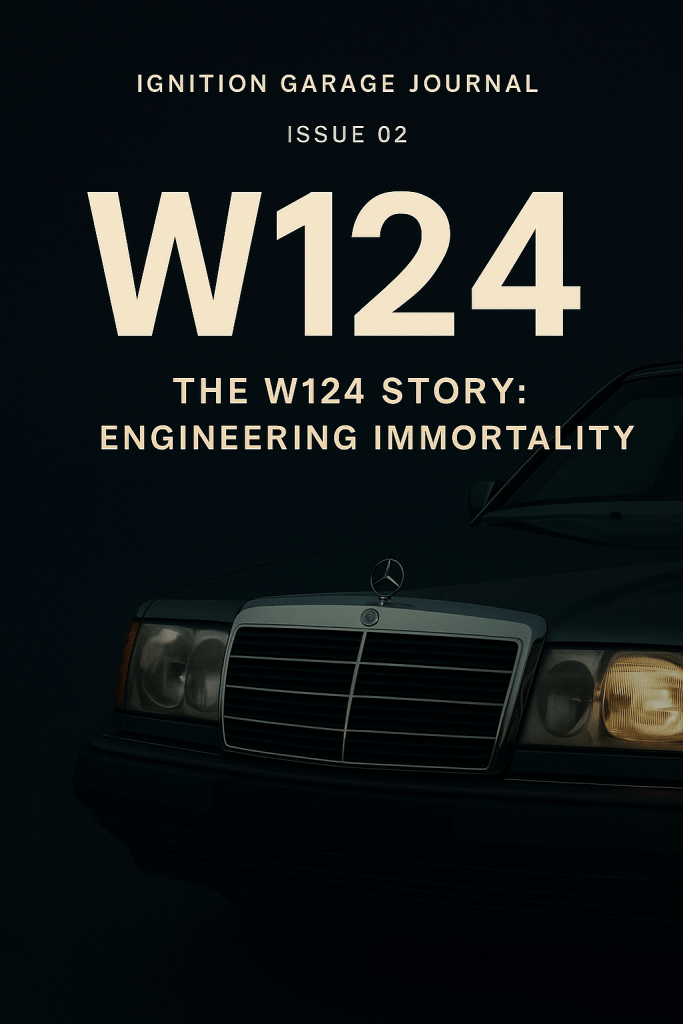
W124
⚙️ W124 (1984-1996)
🔸 Variants:
Sedan, coupé, convertible, wagon, limousine
AMG tuned monsters like 300E AMG Hammer and E500 (co-developed with Porsche)
🔸 Engine Options:
Petrol: 2.0L to 4.2L V8 (E420) Legendary 5.0L V8 (E500) producing 322 hp
Diesel: From 2.0L I4 to 3.0L I6
🔸 Design Aesthetics:
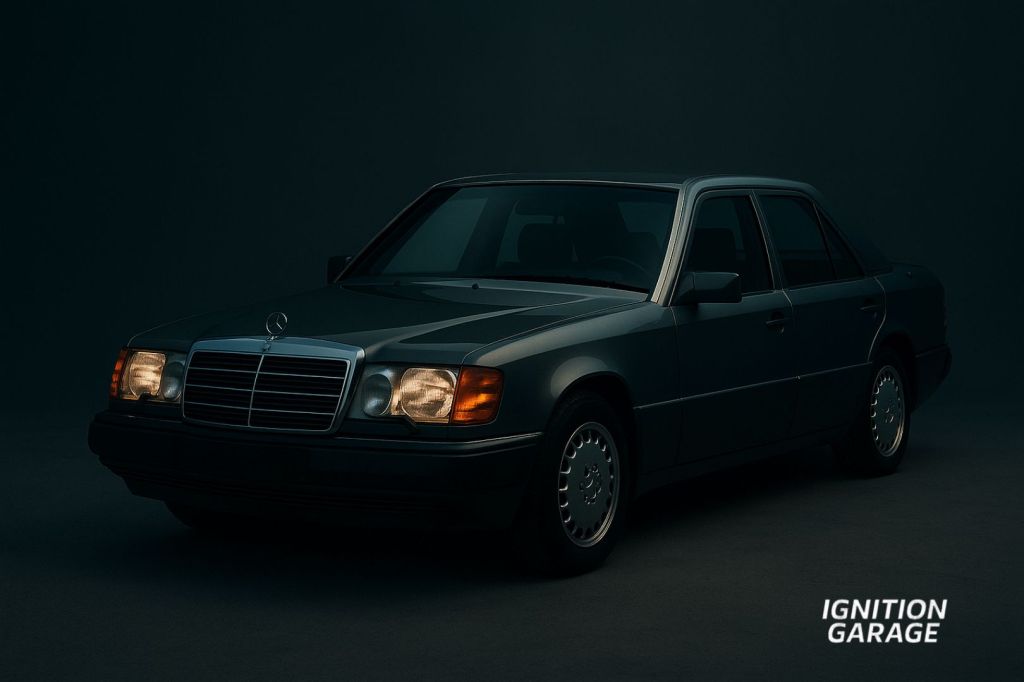
Smoother aerodynamics, flush headlamps, integrated bumpers, and timeless executive proportions.
🔸 Interior & Steering:
Sculpted dashboard with advanced crash safety
Optional orthopaedic seats, rear headrests, burl walnut trim
Represented ultimate prestige as the boardroom on wheels.
🔸 Engine Options:
Inline-6 and V8 petrols
5.6L V8 (560 SEL) with 275 hp
Diesel inline-6 in select markets
🔸 Design Aesthetics:
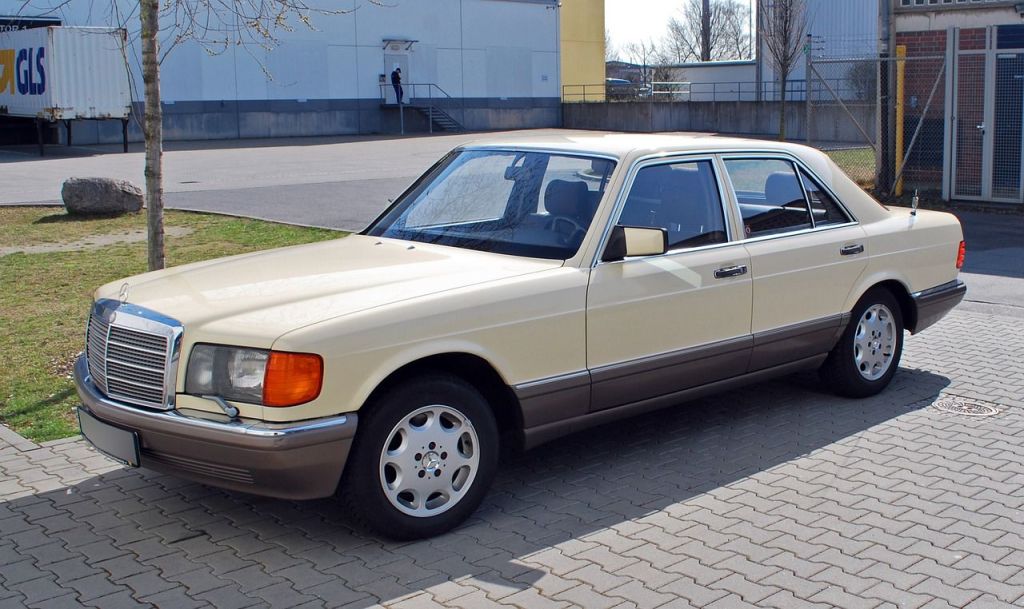
Long, sleek lines with integrated bumpers, minimal chrome, and powerful road presence.
🔸 Interior & Steering:
Thick padded leather steering
Reclining rear seats with footrests (optional)
Full wood trim on console and doors
Advanced driver information cluster
🔸 Premium Features:
✅ Double-pane window glass for noise insulation ✅ Self-leveling hydropneumatic suspension ✅ Rear passenger airbags (optional) ✅ ABS and traction control – groundbreaking for the era
🔶 💪 Build Quality – Engineering Immortality
✅ Built not for planned obsolescence but for multi-generational use ✅ Mechanical simplicity combined with robust metallurgy ✅ Heavy gauge steel body panels, solid frames, and hydraulic systems designed for longevity
No wonder the W Series is still running as daily drivers, classic taxis, or collector’s cars worldwide today.
—
🔶 🕶️ Cultural Impact – The Aura of the Boss
✅ Mafia Choice: Silent intimidation on wheels ✅ Diplomatic Staple: Favoured by leaders worldwide ✅ Movie Icon: Used in mafia films, political thrillers, Bollywood, and documentaries symbolising power
> Even today, a W123 or W126 cruising down the street turns heads more than most modern luxury cars. Its aura says – “I am the king. I don’t need to scream to prove it.”
🏆 Final Verdict
“If cars could be called immortal, the W Series Mercs would be their king.”
No matter how many sedans come and go, the aura of a W123 under a streetlight, a W124 cruising the Autobahn, or a W126 rolling into a five-star driveway remains unmatched.
🔶 💡 Why The W Series Stands Unbeaten
✅ Engineered for eternity – quality over economics ✅ Design language that never ages ✅ Safety and comfort ahead of its time ✅ Emotional connection with owners, collectors, drivers, and history itself
—
👉 Which W Series Mercedes-Benz is your all-time favourite? Tell us below.
🔖 Follow @ignitiongarage for more journals on timeless machines, legends, and the engineering that moved the world.
When Hyundai Motor Company, South Korea’s second-largest automaker, entered the Indian market in the mid-90s, the automobile landscape was heavily dominated by Maruti. Yet, Hyundai came not just to compete—but to set new benchmarks.
Their vision was clear: deliver world-class cars with modern styling, refined engineering, and unmatched features at accessible prices.
In 1996, Hyundai Motor India Ltd. (HMIL) was incorporated. By 1998, Hyundai’s first Indian production facility was operational in Sriperumbudur, Tamil Nadu. And then came the car that changed everything…
—
🌟 The Santro Revolution (1998)
🛞 Model: Hyundai Santro 🧱 Body Style: Tall-boy hatchback ⚙️ Engine: 1.0L and 1.1L petrol engines 🚀 USP: Headroom, practicality, peppy performance, and value
When Hyundai launched the Santro in 1998, it took the Indian hatchback market by storm. Designed for the urban Indian family, the Santro was modern, compact, and stylish, yet surprisingly spacious inside.
The “Tall-Boy” design, power steering, fuel injection (vs carburetors), and solid build won the hearts of Indian consumers. Backed by Shah Rukh Khan’s iconic endorsement, Santro quickly became a household name.
—
🚘 Expanding the Lineup: Accent and the Sedan Aspirations
Following the Santro’s blockbuster success, Hyundai introduced the Accent in India. It was aimed at the growing middle class aspiring to own a mid-size sedan with international flair.
🔹 Hyundai Accent (1999 onwards)
Petrol and diesel engine options
Smooth suspension and refined styling
Preferred by executives and fleet markets alike
The Accent carved its niche as a reliable, classy sedan at a time when options were limited to the Maruti Esteem and the Opel Corsa.
It was followed by launches like Elantra and Sonata (more premium), further solidifying Hyundai’s presence across segments.
—
🛠️ Build Quality and Reliability
One of Hyundai’s biggest assets has been its refined build quality. Unlike competitors, Hyundai cars were:
Solidly built with minimal panel gaps
Equipped with fuel-injection engines early on
Designed with driver and passenger comfort in mind
Offered features previously unseen in segments (power windows, airbags, music systems)
Even early models like the Santro and Accent are still running reliably across India today—a testament to Hyundai’s long-term engineering.
—
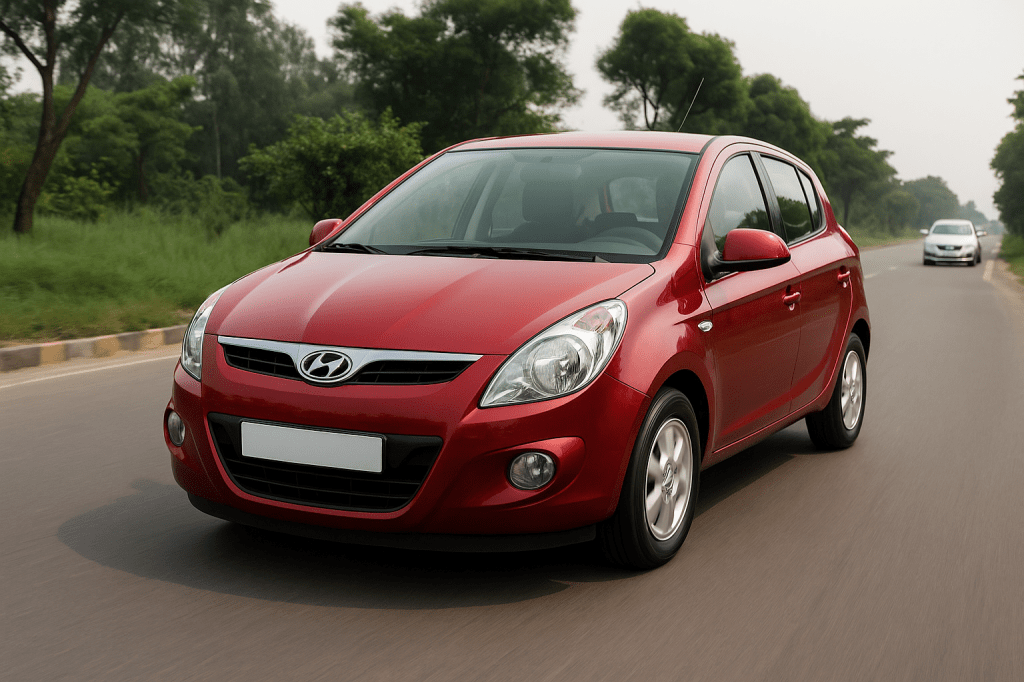
🌀 The Hatchback Evolution – i10, i20, Grand i10
Hyundai kept evolving its hatchback game:
i10 – Replaced the Santro as the stylish urban runabout
i20 – Became the premium hatchback benchmark with segment-first features
Grand i10 – Hit the sweet spot between affordability and premium appeal
Hyundai’s interior quality, design language, and refinement made it the go-to brand for modern hatchbacks.
—
🏆 SUV Gamechanger – The Creta Reigns Supreme
In 2015, Hyundai dropped a bombshell with the Creta.
✅ Petrol, diesel, and now turbo and EV powertrains
✅ Dominates the compact SUV segment to this day
The Creta single-handedly changed Hyundai’s image from a hatchback-focused brand to a dominant SUV player. It became the aspirational car for Indian families looking for style, space, and sophistication.
Hyundai followed up with models like the Venue, Tucson, Alcazar, and Exter—all helping it secure a massive chunk of India’s growing SUV market.
✅ Known for innovation, value, and feature-rich models
Hyundai is no longer just a competitor. It’s a trendsetter. Whether it’s introducing connected cars, iMT transmissions, or EVs like the Ioniq 5, Hyundai continues to push the envelope.
—
🌐 The Brand Perception – Youthful, Premium, Progressive
Hyundai has built a reputation as a trustworthy, innovative, and future-ready brand.
Preferred by first-time buyers and premium upgraders alike
Loved by urban drivers for their style and features
Supported by a massive service network and high resale value
From the humble Santro to the feature-loaded Creta and Ioniq, Hyundai’s journey has been nothing short of transformative.
—
🏁 The Ignition Garage Verdict
> “From the Tall-Boy to the Tech King, Hyundai’s story in India is one of vision, value, and relentless innovation. A brand that didn’t just adapt to India—it helped define the modern Indian driving experience.”
—
🏷️ What’s Your Favorite Hyundai?
Tell us below which Hyundai model stole your heart – the retro Santro, the stylish i20, or the mighty Creta?
🛠️ Follow @IgnitionGarage for more stories from India’s automotive evolution.
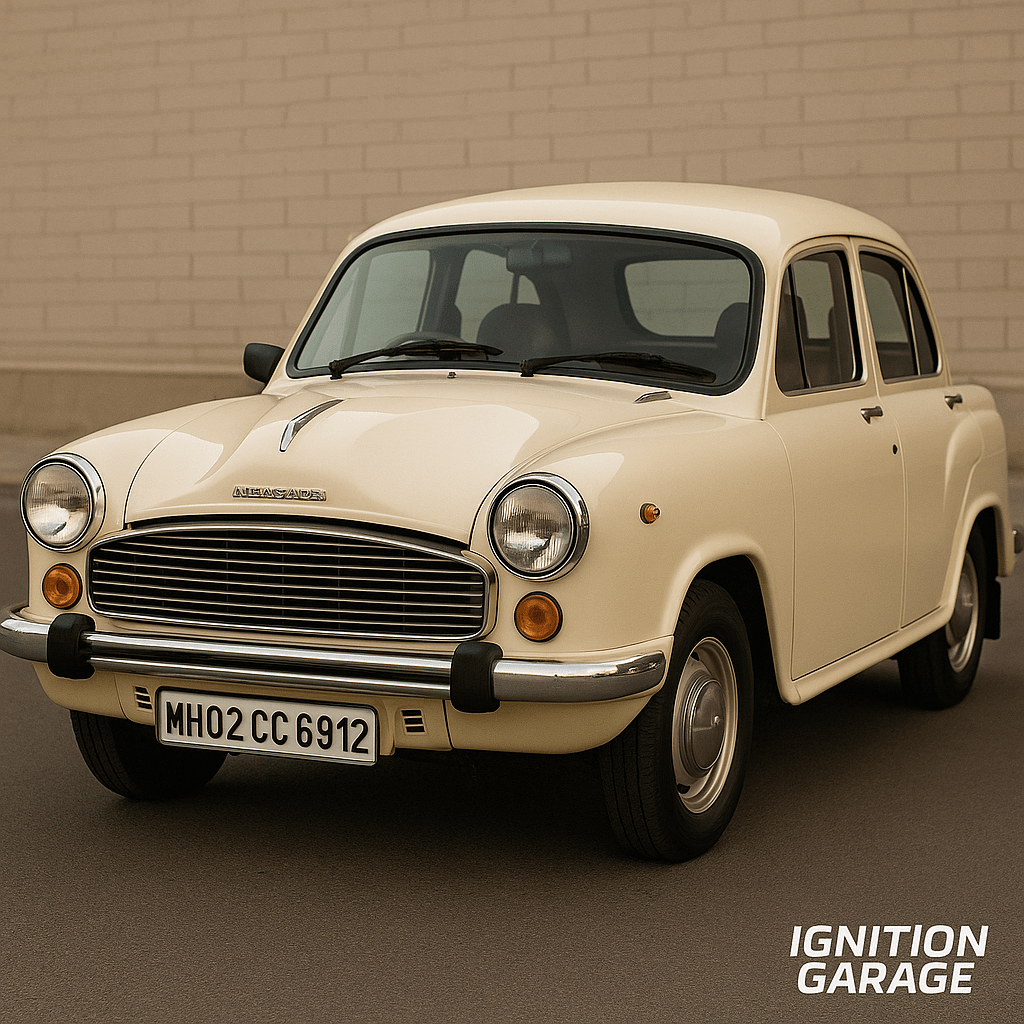
No classic series is complete without the Hindustan Ambassador, fondly called “Amby.” From politicians to families, this car was synonymous with prestige, comfort, and durability for over five decades in India.
—
🔶 🛠️ Birth & Origin
Based on: Morris Oxford Series III (UK)
Indian Production: Began in 1958 by Hindustan Motors, West Bengal
Designed originally by Sir Alec Issigonis as Morris Oxford; localized production brought it to Indian roads with minimal design changes
—
🔶 ⚙️ Engine & Performance
1. Mark I to Mark IV (1958-1990s):
Engine: 1489cc BMC B-series petrol engine
Power: ~50-55 bhp
Gearbox: 4-speed manual, column shifter
Rear-wheel drive with leaf spring suspension
2. Ambassador Nova (1990s):
Updated interiors, grille, and minor styling changes
3. Ambassador Classic & Grand (2000s):
Engine options included 1.8L Isuzu petrol and diesel engines
Power improved to 75-85 bhp for Isuzu petrol
Diesel versions widely used as taxis due to fuel efficiency
🔧 Mechanical Highlights: ✅ Rugged chassis that handled bad roads with ease ✅ Simple engine layout for easy maintenance ✅ Excellent ride comfort due to soft suspension
—
🔶 🎨 Design & Styling
Exterior:
Rounded curves with a commanding road presence
Iconic front grille that evolved across models
Thick doors with sturdy metal construction
Interior:
Spacious cabin with ample rear legroom
Bench seats in early models; later changed to bucket front seats
Minimalistic dashboard with centrally placed speedometer
—
🔶 🚘 Usage & Cultural Impact
Nicknamed “The King of Indian Roads”
Used by Prime Ministers, Chief Ministers, and civil services as official cars
Taxi fleet icon across Kolkata and North India
Became a cultural symbol of Indian resilience and timeless design
—
🔶 ❤️ Why It’s a Classic Today ✅ Legendary comfort, especially rear seat ride quality ✅ Nostalgic aura for anyone who grew up in India ✅ Easy to restore with widely available parts ✅ Strong emotional connection across generations
—
🔶 🔍 Our Verdict The Hindustan Ambassador is more than a car – it’s an emotion. A moving fortress with unmatched comfort, it defined an era where journeys were slow, steady, and full of conversations. For classic collectors, it remains a practical vintage with daily usability.
—
👉 Which golden classic should we feature next? Comment below. 🔖 Follow @goldenclassics for more timeless reviews every week.
These are not just cars—they were trendsetters, segment creators, or bold experiments. Some became icons, others failed but changed the game. Let’s explore the impact of each.
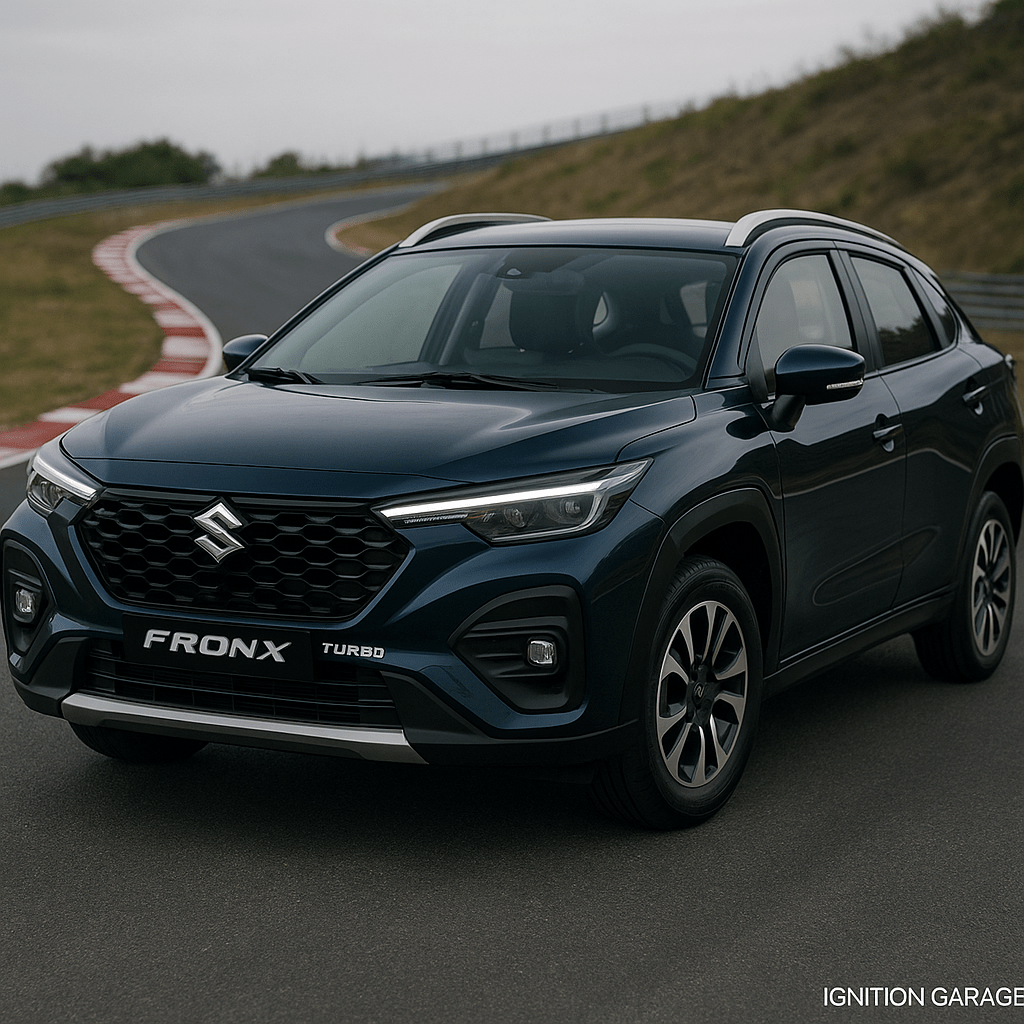
Rising demand for SUV styling in a hatchback-sized package.
Introduced a new segment with turbo petrol options, bold looks, compact footprint.
Legacy: This will be the next big battleground in Indian auto.
—
🔚 Conclusion
The Indian car market is unique—it’s not just about specs, but about aspiration, perception, and adaptability. Some cars failed commercially but made the market ready for future hits. Others became icons overnight. Together, they shaped the auto landscape we see today.
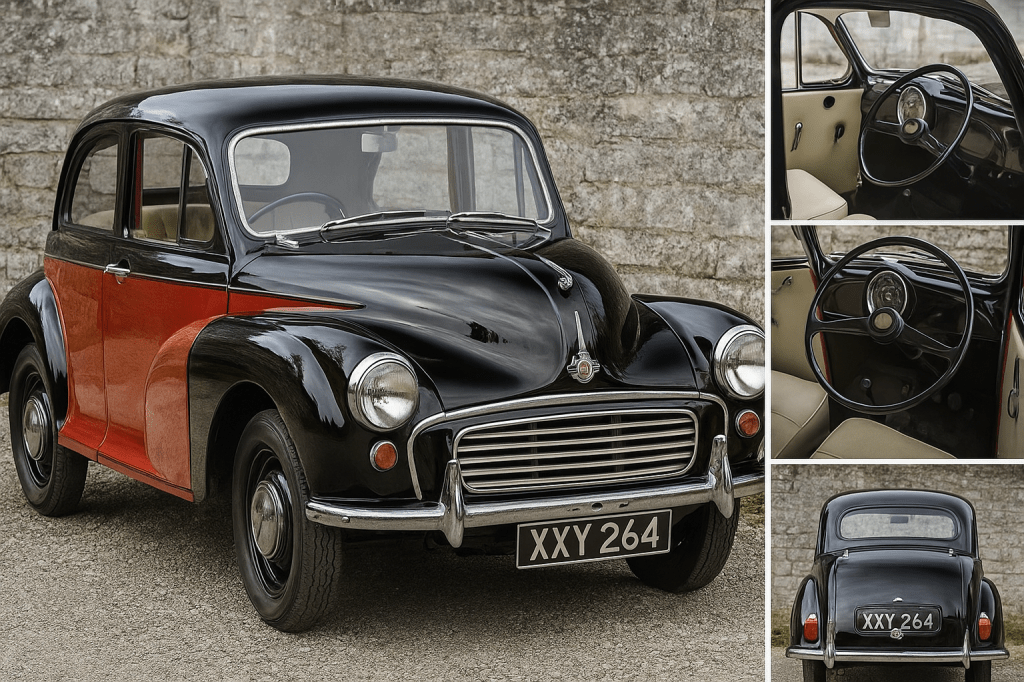
The Morris Minor was launched in 1948 at the Earls Court Motor Show, London. Designed by Sir Alec Issigonis, it was Britain’s first truly modern small car – practical, economical, and stylish, becoming an instant classic.
—
🔶 🛠️ Birth & Vision
Project Name: “Mosquito” during development
Vision: Issigonis aimed to build a car that was affordable yet refined, unlike cramped small cars of the era.
Innovations:
Wider body for stability
Rack and pinion steering for precise control (a first in its segment)
Independent front suspension for smoother ride quality
🔶 ⚙️ Engine & Performance
1. Series MM (1948-1953):
918cc side-valve inline-4
Top speed ~100 kmph
27.5 bhp output
4-speed manual gearbox
2. Series II (1952-1956):
Upgraded to 803cc OHV engine
Slightly improved torque for city use
3. Morris Minor 1000 (1956 onwards):
948cc OHV engine
~37 bhp
Top speed improved to 115 kmph
Better acceleration and highway usability
🔧 Mechanical Highlights:
Rear-wheel drive layout
Durable chassis with monocoque construction
Excellent fuel economy (~16-18 kmpl)
🔶 🎨 Design & Styling
Exterior:
Rounded fenders and bulbous bonnet
Split front grille (early models) giving a cheerful “face”
Large windows for visibility, rare for its era
Two-door and four-door versions available, along with convertible and estate (‘Traveller’) variants
Interior:
Minimalist dashboard with centrally mounted speedometer
Thin-rimmed steering wheel
Comfortable seating for four adults despite compact dimensions
Simple controls – true to Issigonis’ philosophy of practicality
🔶 🚘 Usage & Cultural Impact
Became Britain’s first car to sell over 1 million units, making it a historic achievement.
Popular with families, government officers, and small business owners.
Exported worldwide – in India, it inspired later models like Hindustan Ambassador (derived from Morris Oxford) and built trust in British automotive engineering.
Known for ease of maintenance, making it ideal for long-term ownership.
🔶 ❤️ Why It’s a Classic Today ✅ Robust build quality – many survive in excellent condition ✅ Easily available parts for restoration ✅ Elegant retro styling that never ages ✅ Drives like a true vintage with direct steering feel and nostalgic mechanical feedback
🔶 🔍 Our Verdict The Morris Minor is a timeless icon – not just a car, but a revolution that redefined practicality with style in the post-war era. For enthusiasts, it remains a gateway into classic car ownership with its simplicity, availability of parts, and undeniable charm.
👉 Which golden classic should we cover next? Comment below. 🔖 Follow @goldenclassics for more timeless reviews every week.
 Ignition Garage