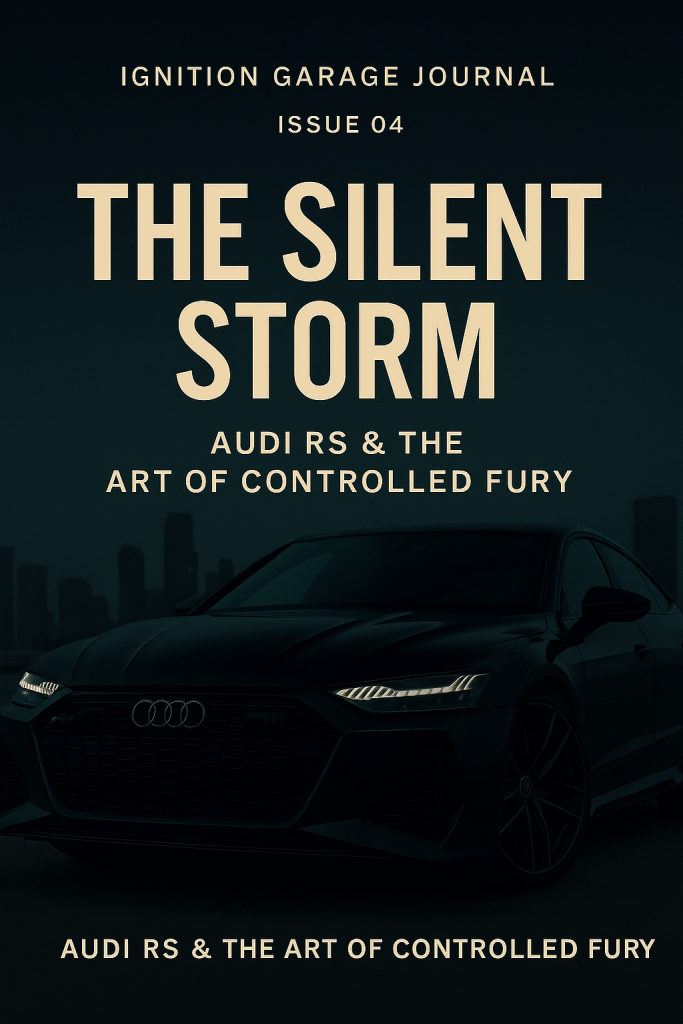
Ignition Garage Journal | Issue 04 | The Silent Storm – Audi RS & the Art of Controlled Fury

🏁 Ignition Garage Journal – Edition 04


In the world of performance sedans and super wagons, few badges evoke quiet respect and explosive performance like RS. Born from rally-bred roots, refined through German engineering, and wrapped in shadowy sophistication — Audi RS cars are not here to shout. They arrive like a storm: calm, precise, and devastating.

And when Christian Grey slipped into an Audi RS7 Sportback in Fifty Shades Freed, the message was clear: this car doesn’t need to prove anything. It is the proof.


🔶 🛠️ The Origins of RS – Racing Spirit for the Road

The RS lineage began with a cult legend: the RS2 Avant in 1994. Co-developed with Porsche, it was the first to show what a fast Audi really meant — a sleeper wagon that humbled sports cars.

“RS” stands for RennSport — “racing sport” in German. But over time, the RS brand has become more than motorsport. It stands for:

Quattro dominance

Everyday usability with track-ready capability

Surgical styling meets brute-force performance


⚙️ Key RS Icons Through the Years

🔸 RS2 Avant (1994)

Porsche-fettled turbo inline-5

0–100 in 4.8 seconds — in a wagon

Blue oval mirrors from the 964 Turbo. A true unicorn.


🔸 RS4 B5 (2000)

2.7L Biturbo V6

The sleeper assassin of the early 2000s

Manual-only. No compromise.


🔸 RS6 C6 (2008)

Lamborghini-derived 5.0L V10

Supercar engine in a family suit

AWD launch-control lunacy


🔸 RS7 C7/C8 (2013–present)

Twin-turbo 4.0L V8

Up to 621 hp in RS7 Performance

Styling so elegant, it hides its fangs until provoked


🔶 🎬 Cinematic Silence – The Fifty Shades Connection

In Fifty Shades Freed, Christian Grey’s RS7 is more than a car — it’s a symbol.
Black-on-black, sitting low, sleek, and confident.
No roaring start-up. No flashy wings.
Just cold efficiency, purpose, and power under control.

> “Some cars scream wealth. The RS7 whispers: I’m in control.”


Audi’s placement in the film was strategic — it made a statement:
Power, without noise. Status, without show.


🧠 Engineering Dominance – What Makes an RS Car, RS?

🔧 Engine & Powertrain:

4.0L Twin-Turbo V8 (found in RS6/RS7/C8-gen RS models)

591–621 hp depending on trim

0–100 km/h in under 3.4 seconds

Audi Sport-tuned exhausts for balanced aggression


🛞 Quattro All-Wheel Drive:

Legendary grip

Rear-biased setups in recent RS cars allow tail rotation

Ideal for both snowy alps and autobahn blasts


⚙️ Suspension & Handling:

Dynamic Ride Control (DRC)

Adaptive dampers, air suspension options

All-wheel steering (C8 RS7) improves agility


🧩 Design:

Widebody stance, honeycomb grilles, matrix LED lights

Subtle badging, but unmistakable presence

A silhouette that combines executive subtlety with predator energy


🕶️ Cultural Symbolism – Executive Power, Refined Fury

✅ The choice of the modern power player

✅ Respected in silence – no wild spoilers, no shouty design

✅ Hollywood-approved – not for the show-offs, but for the strategists


The RS7 in Fifty Shades was no accident.
It was the car of a man who doesn’t yell — because he doesn’t have to.


🏆 Ignition Garage Verdict

> “The Audi RS cars are not loud kings. They are silent emperors. Fast, composed, beautiful — and perfectly lethal.”


In a world full of chaos and noise, RS cars offer a different kind of power:
Quiet domination.


🟠 Why RS Still Reigns

✅ Unshakable Quattro grip
✅ Understated yet violent performance
✅ Everyday comfort with track-born DNA
✅ Timeless design with aggressive restraint
✅ Cultural cachet built on confidence, not clout


📣 Your Turn

Which RS is your ultimate machine of choice?
🚀 The RS6 Avant family rocket?
🖤 The Fifty Shades RS7 villain machine?
💬 Let us know below. RS fans, drop your spec!

📖 Full Journal now live on @ignitiongarageinc
🔗 Read the full story — The Silent Storm — only at Ignition Garage.


📌 Tags

#AudiRS #RS7 #TheSilentStorm #FiftyShadesFreed #IgnitionGarage #CarJournal #GermanEngineering #QuattroPower #EverydaySupercar #UnderstatedBrutality #AudiSport #CarCulture #RSLife #PerformanceElegance
✨ Golden Classics Finale: Hindustan Contessa – India’s Muscle Luxury


🔶 🌟 Introduction

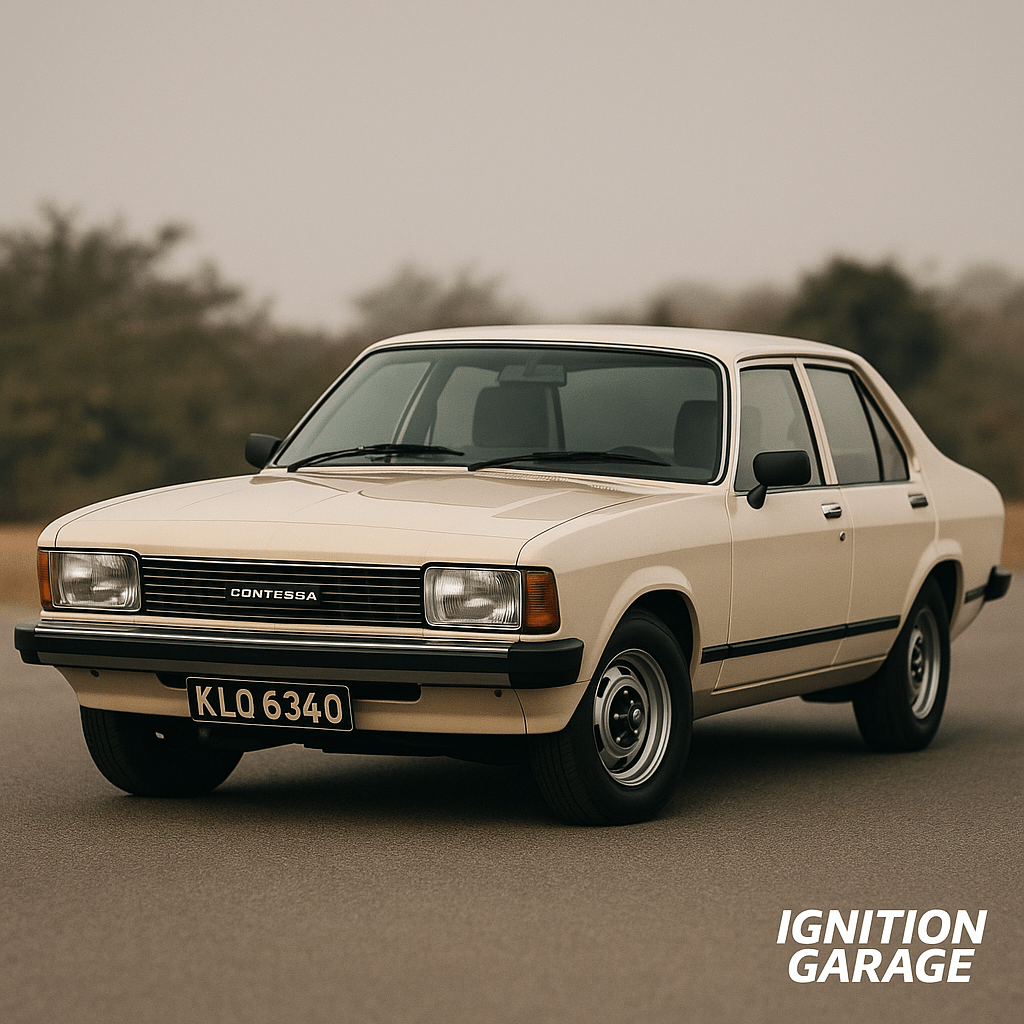
We end our Golden Classics journey with the king of Indian roads – the Hindustan Contessa. Synonymous with power, prestige, and sheer street presence, the Contessa remains an evergreen dream for car lovers across generations.


🔶 🛠️ Birth & Origin

Launched by: Hindustan Motors in 1984

Based on the Vauxhall VX Series (UK), re-engineered for Indian roads

Initially launched with Ambassador’s 1.5L BMC engine before upgrading to the Isuzu 1.8L petrol and diesel engines


🔶 ⚙️ Engine & Performance (Summary)

Engine Options:

1.5L petrol (initial) – underpowered

1.8L Isuzu petrol – ~75 bhp, smooth highway cruiser

2.0L diesel (later models) for efficiency


Transmission: 5-speed manual with smooth gear shifts

Drive: Rear-wheel drive for classic sedan feel


🔶 🎨 Design & Styling

Long, muscular bonnet with square-edged sedan body

Wide chrome grille and rectangular headlamps

Plush interiors with reclining seats, wood finish panels, and power windows in higher trims

True luxury sedan status symbol of the 80s and 90s


🔶 🚘 Usage & Cultural Impact

The preferred ride of politicians, film stars, and business tycoons

Bollywood’s ultimate villain car, adding to its powerful image

Remains a sought-after modification platform today, often built into American-style muscle replicas


🔶 ❤️ Why It’s The Perfect Finale ✅ Represents the golden era of Indian sedans
✅ Powerful stance unmatched by any other Indian classic
✅ Nostalgic value and cult status in car communities


Our Verdict

The Hindustan Contessa Classic isn’t just a car – it’s a statement of power, grace, and Indian automotive ambition. A timeless legend that truly deserves its place in our Golden Classics hall of fame.


👉 Thank you for joining our Golden Classics journey. Which was your favourite – Morris, Ambassador, Padmini, Willys, Austin, or Contessa? Tell us below.

🔖 Follow @goldenclassics and @ignitiongarage for more timeless reviews and upcoming restoration projects.

The Last of the Fast: India’s Power Hatch Legends Compared

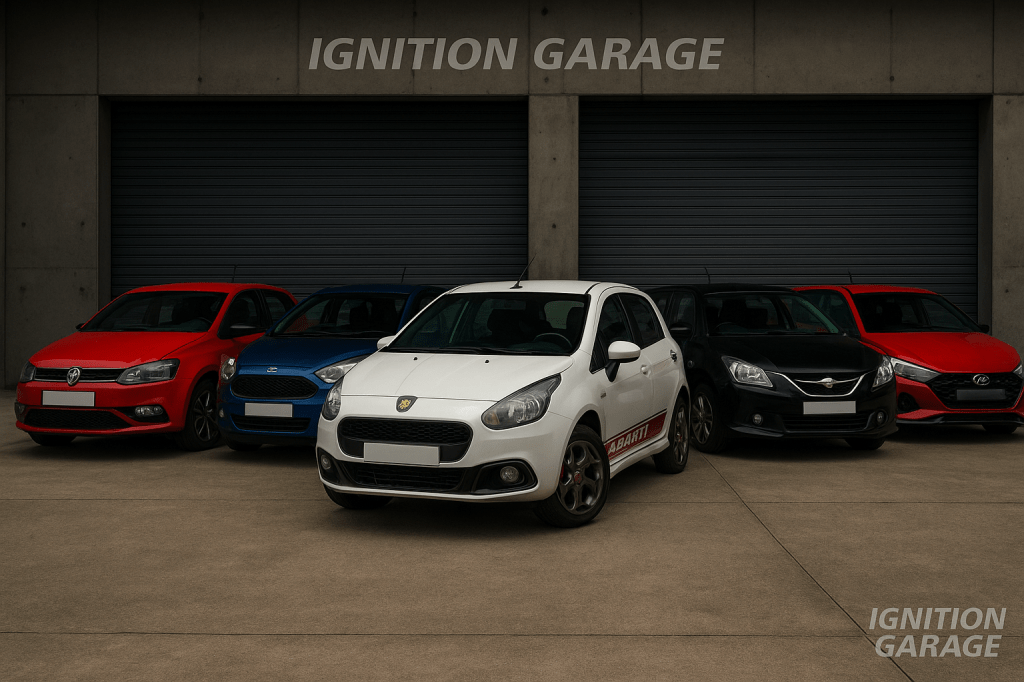
Concept Image – Hot Hatches in the Garage

Volkswagen Polo GT TSI

Maruti Suzuki Baleno RS

Fiat Abarth Punto

Ford Figo S 1.5

Hyundai i20 N Line


This comparison breaks down the Power, Performance, Design, and Pricing, followed by a table of specs.


🚦 Ignition Garage Hot Hatch Showdown


The Real Power Hatch Contenders of India

India didn’t see many hot hatches — but when it did, they all left a mark. These cars went beyond mileage and practicality. They were about soul, response, and excitement. While each brand approached the “power hatch” idea differently, only a few executed it with true intent.

Let’s settle it — which one defined India’s true performance hatchback experience?


1. Engine Power & Response

Abarth Punto is the clear winner on raw horsepower. 145 PS and 212 Nm of torque pushed it into full hot hatch territory. Its aggressive turbo spool made it feel wild and alive.

Figo S 1.5 offered a high-revving NA engine with superb throttle response — linear but thrilling. The hydraulic steering added feel no modern EPS can match.

Polo GT TSI with its 1.2L turbo and DSG combo was efficient, peppy, and refined, though softer than true performance benchmarks.

Baleno RS leaned toward balance and efficiency — the 1.0 Boosterjet was fun in short bursts but never aggressive.

i20 N Line blends modern turbo with DCT or iMT. It’s the most refined, but also the least raw in feel — perfect for dual-purpose drivers.


2. Driving Dynamics & Chassis Feel

Figo S and Abarth Punto dominate here. The Figo’s hydraulic steering and taut suspension gave it unmatched cornering confidence. Punto felt heavy but planted — excellent at high-speed driving.

Polo GT offered predictable manners but was not as communicative.

i20 N Line improved significantly with suspension tweaks but still leaned toward comfort.

Baleno RS felt light and agile, but lacked depth in handling precision.


3. Design & Presence

i20 N Line wins modern style points. Sharp lines, dual-tip exhaust, red accents.

Abarth Punto stood tall with scorpion stripes and bold dual-tone kits.

Polo GT was minimalistic, sharp and well-built.

Baleno RS had subtle sportiness, but felt too close to the standard version.

Figo S was stealthy — aggressive in detail, calm in silhouette.


4. Features & Interior Tech

i20 N Line crushes others with its screen, Bose audio, sunroof, and connected tech.

Polo GT was dated but solid.

Baleno RS had basics covered, good infotainment.

Figo S was minimal.

Abarth Punto? Function over flair — pure driving, not gadgets.

Model Original Ex-Showroom Price Status
Volkswagen Polo GT TSI ₹9.2–9.6 Lakh Discontinued
Maruti Suzuki Baleno RS ₹8.6–9.0 Lakh Discontinued
Fiat Abarth Punto ₹10.3–10.5 Lakh Discontinued
Ford Figo S 1.5 ₹7.8–8.2 Lakh Discontinued
Hyundai i20 N Line ₹10.0–12.4 Lakh Available

Raw Performance: Abarth Punto – 145 PS, wildest delivery, built to thrill.

Handling: Figo S 1.5 – NA response + hydraulic steering = pure feel.

Daily Drive Mix: i20 N Line – Comfort + style + usability.

Best Balance: Polo GT TSI – Great build, DSG convenience, decent power.

Value Choice: Baleno RS – Efficient, rare, still usable.

Enthusiast’s Pick: Abarth or Figo – Depends if you want turbo thrill or NA sharpness.

Full Spec Comparison Table

Model Engine Power Torque 0–100 km/h Top Speed Transmission Fuel Efficiency Brakes Price (New)
Polo GT TSI 1.2L Turbo Petrol 105 PS 175 Nm ~9.7 sec 190 km/h 7-speed DSG 17.2 km/l Front Disc, Rear Drum ₹9.2–9.6 Lakh
Baleno RS 1.0L Boosterjet Turbo 102 PS 150 Nm ~10.3 sec 185 km/h 5-speed Manual 21.1 km/l All 4 Disc Brakes ₹8.6–9.0 Lakh
Abarth Punto 1.4L T-Jet Turbo Petrol 145 PS 212 Nm ~8.8 sec 190+ km/h 5-speed Manual 16.3 km/l All 4 Disc Brakes ₹10.3–10.5 Lakh
Figo S 1.5 1.5L NA Petrol 110 PS 136 Nm ~10.2 sec 190 km/h 5-speed Manual 18.2 km/l Front Disc, Rear Drum ₹7.8–8.2 Lakh
i20 N Line 1.0L Turbo GDi Petrol 120 PS 172 Nm ~9.9 sec 190 km/h iMT / 7-speed DCT 20 km/l All 4 Disc Brakes ₹10.0–12.4 Lakh

✨ Golden Classics: Mahindra MM540 – The Muscle Behind India’s Off-Road Revolution


🚙 Golden Classics Series


🔰 Introduction – The Beginning of the Legend

Before the Thar made headlines and lifestyle SUVs became aspirational, there was the Mahindra MM540 — a pure-blooded 4×4, engineered for utility but secretly loved for its attitude.

Launched in the early 1980s, the MM540 modernized the rugged CJ Jeep lineage into something more usable, reliable, and road-worthy, without losing its off-road spirit. It was India’s true off-road workhorse, loved by farmers, forest officers, police, military, and eventually — enthusiasts.


🛠 Engine & Transmission

2.1L Peugeot XD3P diesel engine

Power: 62 bhp

Torque: ~120 Nm

Transmission: 4-speed manual gearbox

Drive Type: Part-time 4×4 with manual transfer case


It wasn’t quick — but it didn’t need to be. The engine delivered steady torque, and paired with solid gearing, it could climb rocks, tackle riverbeds, and pull loads without a fuss.


🧱 Chassis, Suspension & Off-Road Soul

Ladder-frame chassis

Leaf-spring suspension all around

Short overhangs for approach/departure angles

Ground clearance: ~210 mm


Where it shined was simplicity — no electronics, no sensors, just mechanical control. Manual 4×4 engagement and low range gearing let it tackle India’s worst terrains. The MM540 became the backbone of many 4×4 expeditions across Leh, Spiti, Sikkim, and the Sahyadris.


🛞 Exterior Design – Raw, Real, Rugged

Longer than CJ340, more stable on roads

Distinct 7-slat Mahindra grille

Round headlamps

Steel wheels, rear-mounted spare

Available in hard-top, soft-top, or open-top formats


It wasn’t flashy — it was functional, and that’s what made it iconic. It was a statement — if you drove an MM540, you weren’t afraid of rough roads.


🪑 Interior – Just Enough for the Job

Bare-metal dashboard with analog meters

Vinyl or fabric bucket seats

Floor-mounted 4×4 lever

No AC, no infotainment — just the essentials

Removable canvas top or hard-roof option


This was not a car you sat in for comfort — you sat on it like a tractor, commanding your way through jungles, mountains, or work sites.


🌄 Cultural Footprint

The MM540 bridged the gap between civilian Jeep users and the emerging enthusiast community. It became the platform for:

Custom off-road builds

Early rally and motorsport entries (Desert Storm, Raid de Himalaya)

Base for Mahindra Classic, Thar DI, and even Armada


It introduced India to the idea that 4×4 wasn’t just for work — it could be for passion.


⚙️ Quick Spec Sheet


SpecificationMahindra MM540


Engine2.1L Peugeot XD3P Diesel

   
Power62 bhp

   
Torque~120 Nm

   
Gearbox4-speed Manual

   
Drive TypePart-time 4WD

   
Top Speed~100 km/h

   
Ground Clearance~210 mm

   
SuspensionLeaf Springs (F/R)

   
Body StyleSoft-top / Hard-top


🏁 Ignition Garage Verdict

The Mahindra MM540 was the evolution of India’s military-style jeeps — built stronger, longer, and more refined, yet rugged to its bones. It paved the road for modern Mahindra off-roaders, and even decades later, it remains a cult classic among collectors and restorers.

If you see one on the road today — with lifted suspension, off-road tyres, and maybe a snorkel — don’t be surprised. That’s a warrior from another era, still roaring.

Mahindra MM540 – The Off-Road Classic That Carried India Forward.

🔧 Legends of Power – Edition 02


Bulletproof Legends – Cars That Refused to Die

The Machines That Were Built to Outlive Time Itself


While the modern world praises convenience and digital features, there once existed a class of machines engineered with obsession. Not for the next five years. But for the next five owners. These were not just cars — they were rolling proof that quality > planned obsolescence.

This is a tribute to the most overbuilt, under-stressed, and virtually unkillable vehicles ever made.


🔩 What Makes a Car “Bulletproof”?

Understressed engines with simple, durable design

Heavy-duty drivetrains and suspensions

Thick-gauge steel bodies, basic electronics, and minimal “smart” tech

Proven reliability in harsh conditions across decades and continents

The ability to take abuse — and come back for more


🛡️ The Legends


🔹 Toyota Land Cruiser J80 / J100 (1990–2007)

> “If civilization ends, these will still be running.”


Inline-6 diesel (1HZ / 1HD-T) or petrol V8 (J100)

Legendary in Australia, Africa, the Middle East

Solid axles, full-time 4WD, and mechanical simplicity

400,000 km is a warm-up. Some push a million.


🛠️ Why It Refused to Die:
Built like military-grade tanks with Toyota’s highest engineering standards — no cost-cutting, no compromise.


🔹 Mercedes-Benz W140 S-Class (1991–1998)

> “So overengineered, it nearly bankrupted Mercedes.”


M104 I6, M119 V8, and the 6.0L V12

Soft-close doors, double-glazed windows, self-lowering antenna

Weighed nearly 2 tons – because everything was real metal


🛠️ Why It Refused to Die:
Massive build quality. Electronics kept to a minimum. Its wiring looms are thick enough to power a battleship. Still used by diplomats and CEOs in emerging nations.


🔹 Volvo 240 / 940 (1974–1998)

> “Boxy but bulletproof.”


Redblock inline-4s that ran cold and strong

RWD, forged internals, and basic Bosch injection

Seen surviving winters in Sweden and deserts in the Middle East


🛠️ Why It Refused to Die:
Volvo’s tank-like body structure, simple mechanicals, and commitment to reliability over performance. They were built to protect and endure.


🔹 Lexus LS400 (1989–1994)

> “Japan’s answer to Mercedes — and it scared them.”


1UZ-FE 4.0L V8 – a 260 hp masterpiece

Smooth as silk, balanced like a Swiss watch

Minimal electronics, flawless build quality, zero drama


🛠️ Why It Refused to Die:
Toyota spent $1 billion perfecting it. These cars ran quiet, smooth, and forever. Many still operate today with over 500,000 km on the clock — untouched engines.


🔹 Peugeot 504 (1968–1983+)

> “Africa’s unbreakable steed.”


Diesel-powered legends that ran forever in remote villages

Soft suspension, high ground clearance

Could be fixed with string, metal wire, and pure will


🛠️ Why It Refused to Die:
The French may not be known for durability, but the 504 was the exception. In many African towns, the 504 isn’t a classic — it’s still a daily tool.


🔧 The Philosophy That Died With Them

Today’s vehicles are faster, smarter, more connected. But they rarely last like these.
Why? Because:

They weren’t made for forever.

Software replaced steel.

Repair was replaced by replacement.


These bulletproof legends were designed to be fixed with a wrench — not plugged into a laptop.


🏆 Ignition Verdict: Eternal Warriors

> “True power isn’t about speed or badges. It’s about surviving every test, and still asking for more. These cars weren’t just built. They were forged.”


🟠 Why They Still Run

✅ Overbuilt engines & underworked internals
✅ Simple mechanical design & repairability
✅ Proven in extreme conditions
✅ Mechanical > electronic = longevity
✅ They earned loyalty — and kept it


🔚 Still Out There Today

🚙 Used as taxis in rural Asia and Africa

🛠️ Owned by DIY purists in Eastern Europe

🏆 Displayed in museums of durability

❤️ Daily-driven by those who know what real engineering feels like


📣 Tell Us

Which car do you consider a bulletproof legend? Drop it in the comments and let the reliability wars begin 💬


📌 Tags

#LegendsOfPower #BulletproofCars #ReliabilityIcons #ToyotaLandCruiser #W140 #Volvo940 #LS400 #Peugeot504 #EngineeringOverObsolescence #CarLegends #OldMoneyCars #OverbuiltNotOverdone #IndestructibleMachines #IgnitionGarage

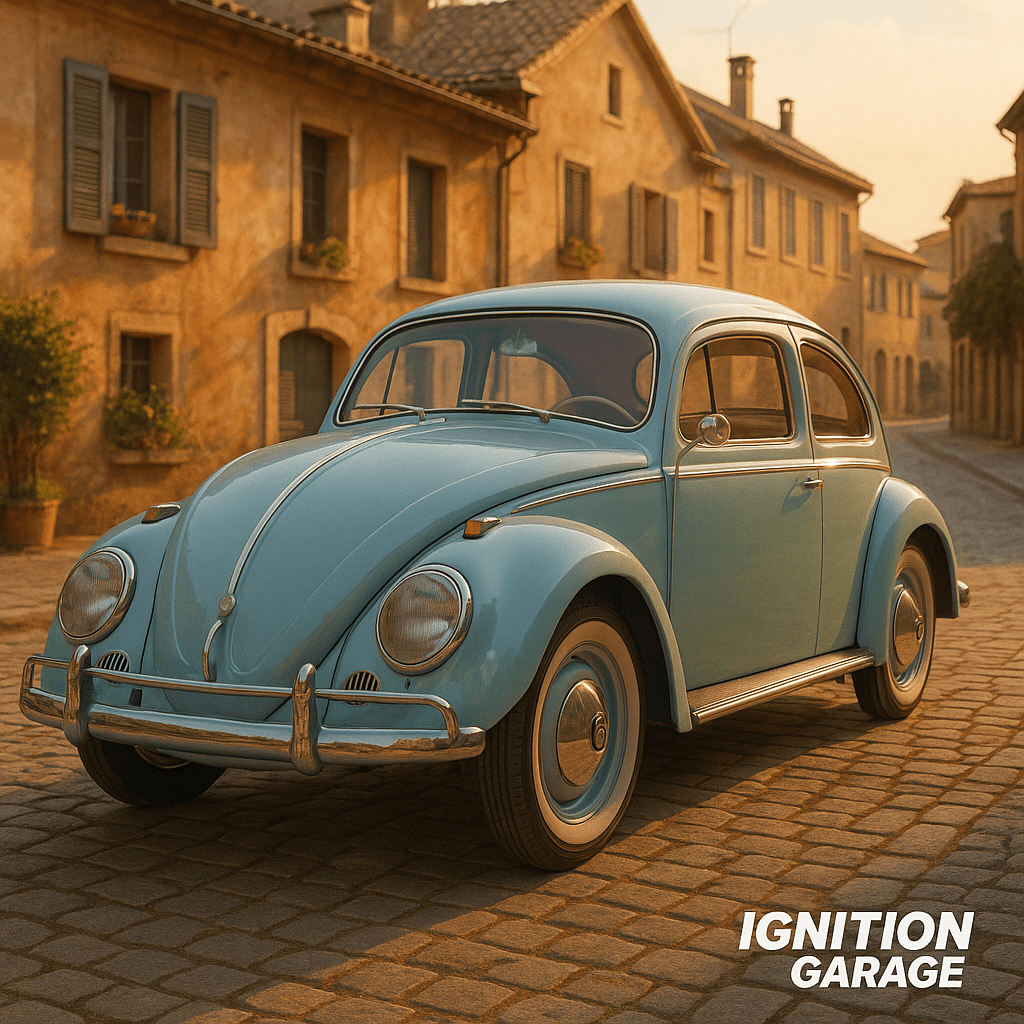
The Car that Smiled through History: Volkswagen Beetle Review

Volkswagen Beetle

Category: People’s Favourite Classics | Segment: Global Icons

Volkswagen Beetle

🔥 Introduction

Before turbochargers, touchscreen dashboards, and carbon-fiber spoilers, there was a simple car with a round shape and a big heart. The Volkswagen Beetle wasn’t just a car—it was a companion, a cultural revolution on wheels. From war-torn Europe to surf-lined California, it became the face of mobility for generations.

📜 The Origin Story

Born in 1938 Germany, the Beetle was designed by Ferdinand Porsche as the “Volkswagen Type 1” or “People’s Car.” After World War II, it rose from a broken factory under British control to become a symbol of hope, reliability, and post-war reconstruction.

💰 Built to Be Driven by Everyone

The Beetle was cheap, repairable, and forgiving. It didn’t matter who you were—a student, a farmer, or a rockstar—the Beetle welcomed you with open wheels. It truly democratized driving.

⚙️ Specifications (1938–1960s)

Engine1.0L – 1.3L air-cooled flat-4
Power25–50 hp
Top Speed~100 km/h (62 mph)
Transmission4-speed manual
DrivetrainRear-engine, RWD
Weight800–900 kg

🎨 Iconic Design

Its round fenders, curved roofline, and bug-eyed headlights made the Beetle instantly recognizable. A friendly design that stood apart from everything else on the road—then and now.

🔍 Detailed Review

More than a mode of transport, the Beetle was a dependable companion. It had a simple dashboard, easy-to-service engine, and a driving feel that built deep emotional connections. Durable, minimalistic, and unpretentious.

✨ What Made It Special

  • Approachable design and charm
  • Legendary reliability
  • Massive global parts support
  • Endless customization potential
  • Iconic cultural identity

💎 A People’s Car Turned Premium

As time passed, the Beetle earned classic status. Collectors sought early split-window models, while modern builds featured everything from roof racks to leather interiors. It grew from practical to prestigious without losing its roots.

🎬 Herbie and Hollywood

The Beetle gained global stardom through Disney’s Herbie the Love Bug series. With a personality of its own, Herbie introduced the car to generations of fans. From Footloose to Cars, the Beetle never left the screen.

🌍 Global Reception

Produced in over 20 countries and sold in more than 150, the Beetle became one of the world’s most loved vehicles. It held the record for the most cars sold of a single platform until overtaken by the VW Golf.

🧸 Toys, Hot Wheels, and Legacy

From toy shelves to collector garages, the Beetle’s form is still adored. Whether die-cast or digital, its design lives on as one of the most recognizable in automotive history.

🏢 Volkswagen’s Legacy

Volkswagen protected the Beetle’s spirit across decades. From Kombis to Golfs, the DNA stayed strong—function, form, and friendliness. The Beetle wasn’t just a car. It was the beginning of the VW way.

🏁 Ignition Garage Verdict

“The Beetle didn’t chase greatness. It rolled into it, smiling.”

The Volkswagen Beetle is more than history—it is heritage. A car that belonged to the people, represented the masses, and continues to live on in spirit, sound, and silhouette.

⭐ Final Rating

Ignition Garage Score: 9.7/10
Officially part of our People’s Favourite Classics series.

Tags: Volkswagen, Beetle, Classic Cars, People’s Cars, Herbie, VW Legacy

Date: July 11, 2025

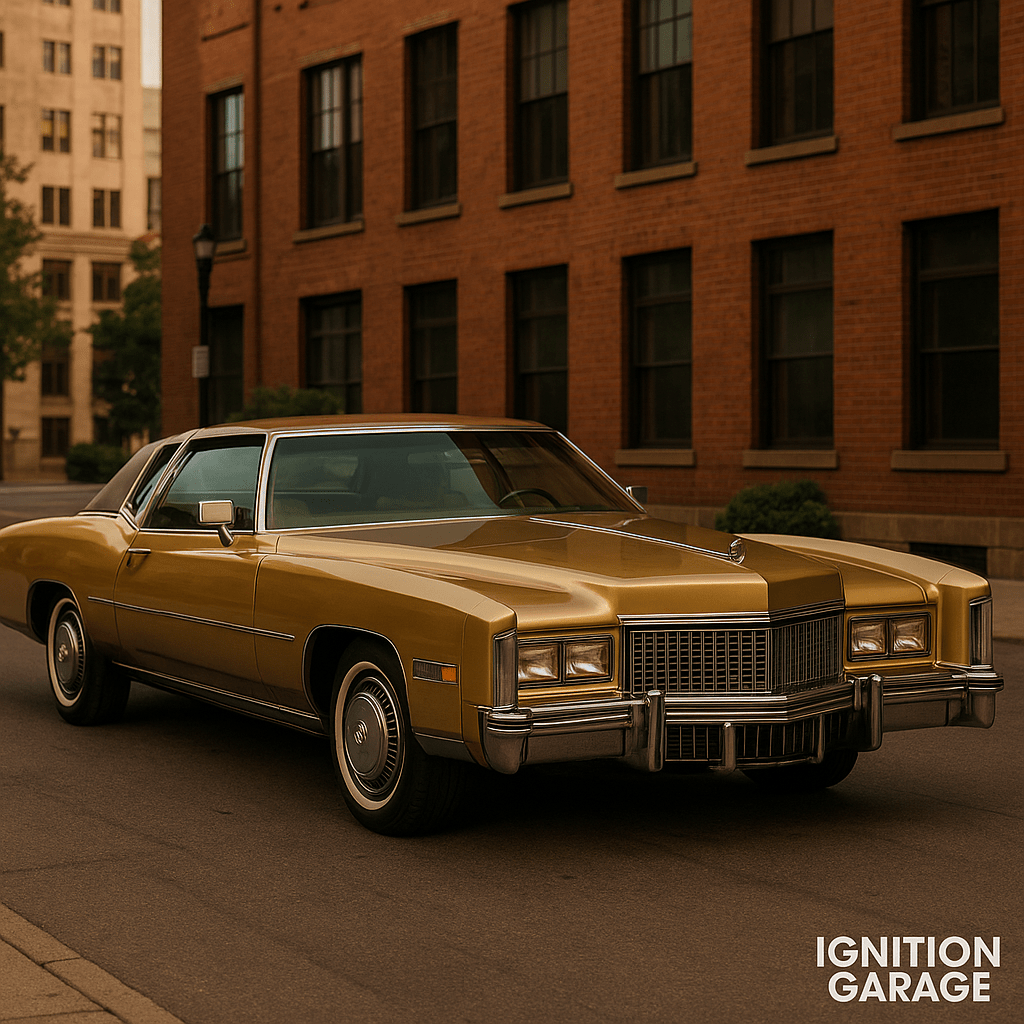
Cadillac Eldorado V8 – American Thunder in a Tuxedo

Category: American Luxury Coupes | Segment: Classic V8 Icons

.

🔥 Introduction

.

In the golden age of personal luxury, few cars captured American boldness like the
Cadillac Eldorado V8. A car so massive, it didn’t glide—it
sailed. Powered by one of the largest production V8s ever built, the
Eldorado was Detroit’s answer to elegance with thunder.

.

⚙️ Engine & Performance

    .

  • Engine: 8.2L (500 cu in) V8
  • Power: 365 hp (early models)
  • Torque: 525 lb-ft
  • Transmission: 3-speed Turbo-Hydramatic automatic
  • Drivetrain: Front-Wheel Drive

.

This wasn’t just an engine—it was a land-moving unit. Even when
emissions choked the horses, torque never stopped doing its job.

.

🖌️ Design & Presence

.

With its long hood, hidden headlamps, and sweeping tail, the Eldorado
turned roads into red carpets. Fender skirts, opera windows, padded Landau roofs, and
the Cadillac crest made sure this car didn’t whisper luxury—it shouted it.

.

  • Hidden headlamps (1970s)
  • Fender skirts over rear wheels
  • Opera windows
  • Wire wheels
  • Cadillac crest and chrome detailing

.

🛋️ Interior & Comfort

.

Step inside and it’s clear: this wasn’t a car, it was a leather lounge on wheels.
Cadillac built this for those who expected nothing less than indulgence.

  • Power seats, windows, trunk, and antenna
  • Swivel bucket seats with memory
  • Wood grain appliqué dashboard
  • Optional CB radio & digital dash (later years)
  • Thick carpets, velour or premium leather seats

.

🌆 Ride Quality

.

With a soft suspension and long wheelbase, the Eldorado glided across
highways with serenity. Light steering and low road noise turned every ride into a
rolling spa session. It was less about speed and more about
dominating the road in comfort.

.

🎬 In Culture

.

The Eldorado didn’t just make a statement on the road—it was a fixture in pop culture.
A favorite among musicians, moguls, and movie characters, it came to
symbolize a very specific kind of American success story.

.

  • Scarface (1983) – Tony Montana’s rise to power, Cadillac style
  • Casino (1995) – Symbol of Vegas luxury excess
  • Mentioned in songs by Bruce Springsteen, Chuck Berry, and more

.

🏁 Ignition Garage Verdict

.

“When comfort met confidence, it was wearing a Cadillac badge.”

.

The Eldorado was more than a car. It was a rolling empire of Detroit
dominance. It fused front-wheel innovation with rear-wheel muscle vibes, wrapped in
unmistakable Cadillac class.

.

For those who understood the art of excess and elegance, the Eldorado isn’t
just a classic—it’s a Cadillac.

.

⭐ Final Rating

.

Ignition Garage Score: 9.1/10

Let us know in the comments: Would you cruise the boulevard in one today?

Tags: Cadillac, Eldorado, Classic Cars, V8 Icons, American Coupes, Ignition Garage

Author: Ignition Garage Team | Date: July 11, 2025

✨ Golden Classics: Mahindra CJ Series – The Original Trailblazer of India

🚙 Golden Classics Series


📜 Legacy Born in Simplicity

Before India had SUVs with touchscreens and driving modes, it had something far more elemental — the Mahindra CJ. Built under license from Willys, the CJ340 and CJ500 series weren’t just vehicles; they were survival tools, trusted from the Himalayas to the Thar desert. Whether it was police forces, army convoys, or remote farmers — if there was a path to be made, the CJ could carve it.

This wasn’t luxury. This wasn’t marketing. This was purpose on four wheels.


🔧 Engine & Mechanicals

CJ340
– 2.1L Peugeot XD88 diesel engine
– ~62 bhp
– 4-speed manual gearbox
– 4×4 with manual locking hubs

CJ500D / CJ500D Plus
– 2.5L B275 diesel engine
– ~38–50 bhp (low-revving torque king)
– Legendary durability


These CJs were not about speed — they were about crawling through terrains where roads ended and rivers began.


🛞 Chassis & Off-Road Ability

Ladder-frame chassis with leaf spring suspension

Short wheelbase (CJ340) for tight trails

High ground clearance and ultra-low gearing

Water fording? No problem. Mud pits? Bring it on.


There was no ABS, no traction control, no sensors — only manual 4×4, driver skill, and mechanical honesty.


🧭 Design That Worked

The Mahindra CJ Series borrowed the timeless Jeep silhouette:

Flat fenders

7-slat grille

Round headlamps

Fold-down windscreen

Exposed fuel caps, side-mounted spare wheels


It had zero pretension, just pure form-following-function. Many were customized with jerry can holders, fog lamps, winches — even rifle mounts in armed service versions.


🛋 Interiors

Bench or bucket seats

No dashboard plastics, only metal and meters

Manual everything

Optional canvas tops or open-air driving


If it rained, you wore a poncho. If it broke, you fixed it with a wrench. The CJ didn’t pamper you — it built you.


🌄 Cultural Relevance

The CJ Series is the reason Mahindra is today synonymous with rugged off-roaders in India. It wasn’t just a vehicle; it was India’s Land Rover Defender, its American Willys, its go-anywhere workhorse.

Whether it was on plantations, dam sites, national parks, or village trails — a Mahindra CJ meant you’d get there.


⚙️ Quick Spec Sheet

                                       
SpecificationMahindra CJ340Mahindra CJ500
Engine2.1L Peugeot XD882.5L B275 Diesel
Power62 bhp (approx)38–50 bhp
Gearbox4-speed manual4-speed manual
Drive Type4×4 (Manual Hubs)4×4
Top Speed90–100 km/h~80 km/h
SuspensionLeaf Spring (F/R)Leaf Spring (F/R)
Body StyleSoft-top JeepSoft-top Jeep


🛑 Why It Deserves Golden Classic Status

Pioneer of India’s civilian 4×4 space

Cult symbol in rural and rugged India

Mechanical simplicity that outlived generations

Ancestral root of the Thar, Commander, and MM series

Still lovingly restored or used in off-road events and vintage drives


🏁 Ignition Garage Verdict

The Mahindra CJ was not just a vehicle — it was a national tool, a rural warrior, and a timeless 4×4 archetype. From its Willys DNA to Indian-built grit, it survived everything the land threw at it.

In today’s era of lifestyle SUVs and electronic assists, the CJ reminds us of a time when driving was raw, rugged, and real.

Mahindra CJ Series – The Classic Jeep That India Made Its Own.

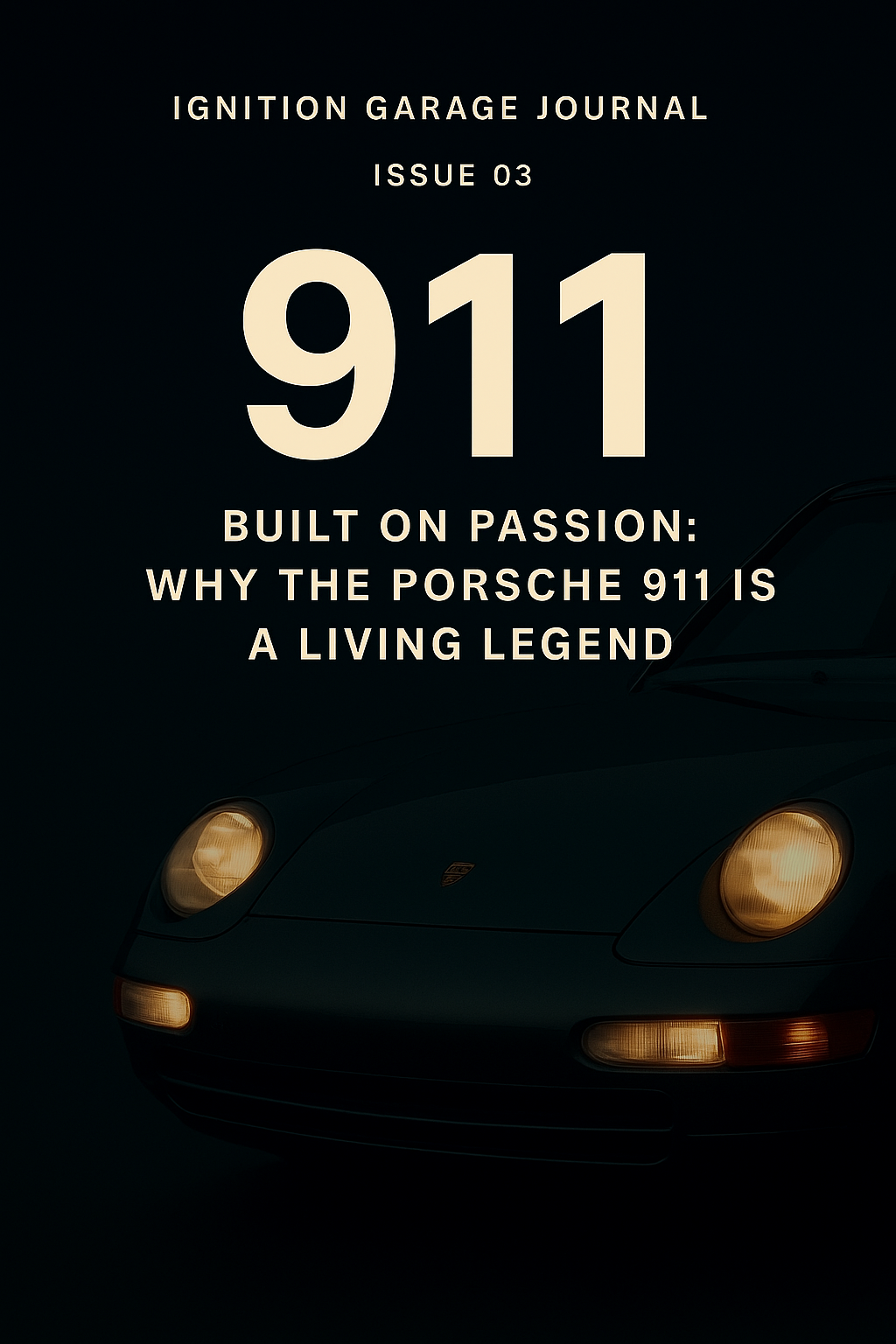
Ignition Garage Journal | Issue 03 🏁 Built on Passion – Why the Porsche 911 Is a Living Legend


Against the Wind | The Sports Car That Grew Up Without Growing Old


When you talk about icons that transcended time, the Porsche 911 stands alone — a machine born from purpose, refined by passion, and guided by a relentless obsession for perfection. It’s not just a car. It’s a commitment. A legacy of rear-engined defiance, a silhouette unchanged yet always evolving — and perhaps the greatest sports car ever made.


🔶 🛠️ The Birth of an Icon

In 1964, Porsche unveiled the 911 — originally designated the “901,” but quickly renamed due to Peugeot’s trademark on 0-centered numerals. What followed was a story few could’ve predicted: a car that would survive, evolve, and outperform for over six decades without losing its soul.

Built as a successor to the 356, the 911 kept the rear-engine configuration, a choice that would go against every logical engineering instinct — but ultimately define Porsche’s DNA.

> “The 911 is the only car you could drive in the African desert, on the Autobahn, to the opera, and in Le Mans — and feel at home in all of them.” — Ferdinand Alexander Porsche


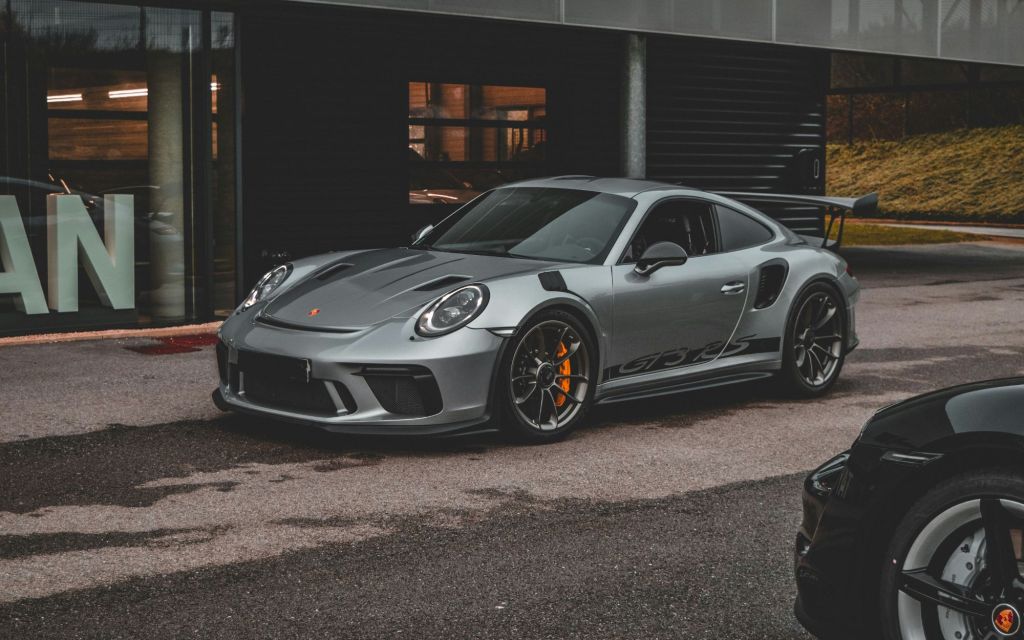
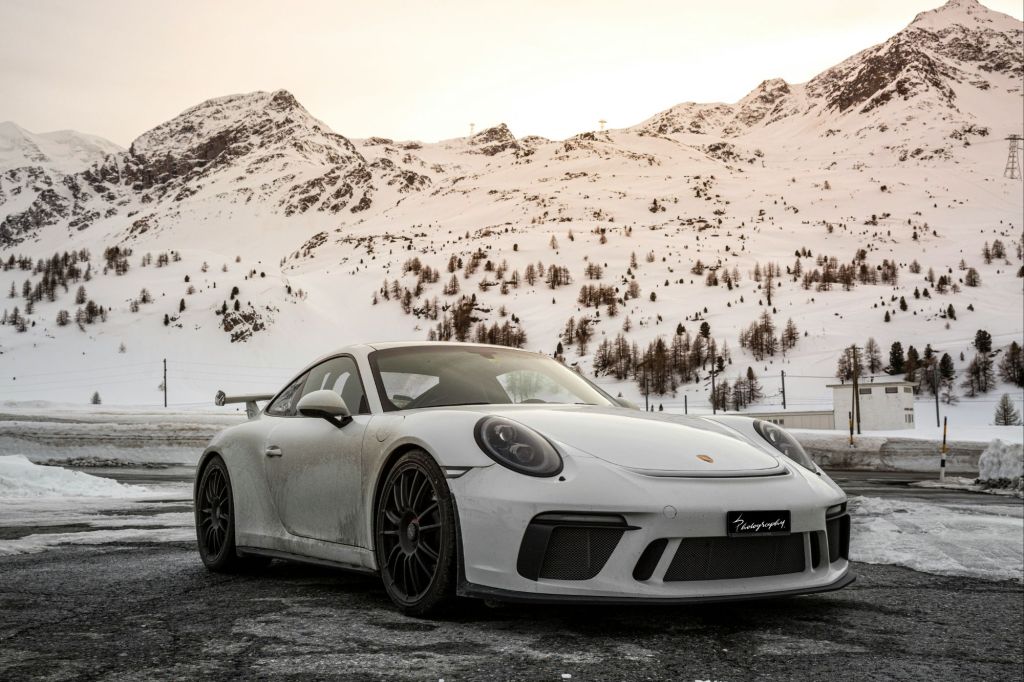
Image Source : Unsplash


⚙️ Against the Wind – The Layout That Shouldn’t Have Worked

Rear-engine, rear-wheel drive. Physics said “No.” Porsche said “Try us.”

The 911 shouldn’t have handled well. Its weight distribution was tail-heavy. But Porsche didn’t change the core — they perfected it. With decades of engineering, suspension tuning, and power delivery refinement, the 911 tamed the impossible. It became a masterclass in how to turn weakness into character.

🔧 Engineering Milestones:

Flat-6 Engine: Air-cooled until 1998, water-cooled thereafter

Suspension: Evolved from torsion bars to advanced multi-link setups

Steering: Hydraulic feedback perfection → modern electric systems with soul retained

Weight Distribution: Constantly refined for perfect turn-in & rear traction

Braking Systems: Introduced carbon-ceramic options in high-performance trims


🚗 The Sports Car That Grew Up Without Growing Old

Through generations, the 911 changed — but never compromised.


🔸 911 Classic (1964–1989)

The raw, pure essence.

Air-cooled flat-6s (2.0L to 3.2L)

Lightweight, minimalist, pure driving joy

Notable: 911S, Carrera RS 2.7 (the holy grail)


🔸 964 (1989–1994)

Modern tech enters the chat.

ABS, AWD (Carrera 4), and power steering debut

3.6L air-cooled flat-6

Iconic whale tail spoilers and subtle design tweaks


🔸 993 (1995–1998)

The last air-cooled — and to many, the best.

272–285 hp from refined flat-6

Aluminum multi-link rear suspension

Now a collector’s dream.


> “The 993 was Porsche’s love letter to analog perfection.”


🔸 996 (1999–2004)

Controversial but necessary.

First water-cooled 911

3.4L → 3.6L flat-6s, 300+ hp

Headlight design split opinions, but GT3, Turbo, and GT2 re-established dominance


🔸 997 (2005–2012)

Balance of modern and classic.

Return to round headlights

GT3 RS 4.0, Turbo S – track-ready weapons

Tech + emotion coexisted in harmony


🔸 991 & 992 (2012–Today)

Brutal performance with daily usability.

Twin-turbo Carreras (from 991.2 onwards)

Rear-wheel steering, dynamic suspension, active aero

GT3 Touring, Dakar, Sport Classic – instant future classics


🎬 Hollywood’s Choice – The 911 in Pop Culture

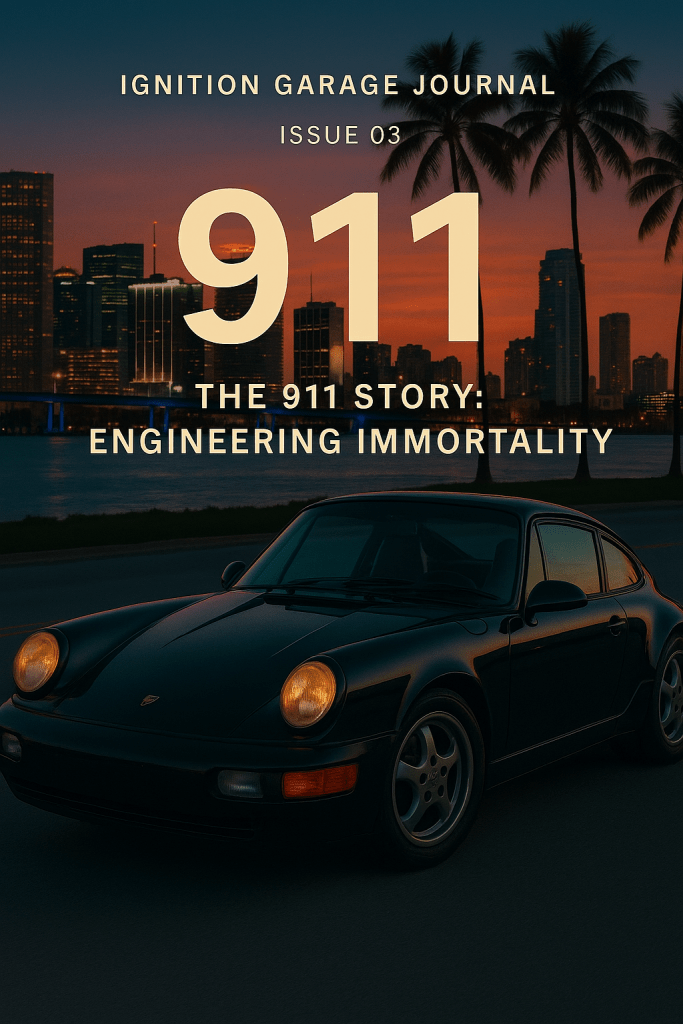
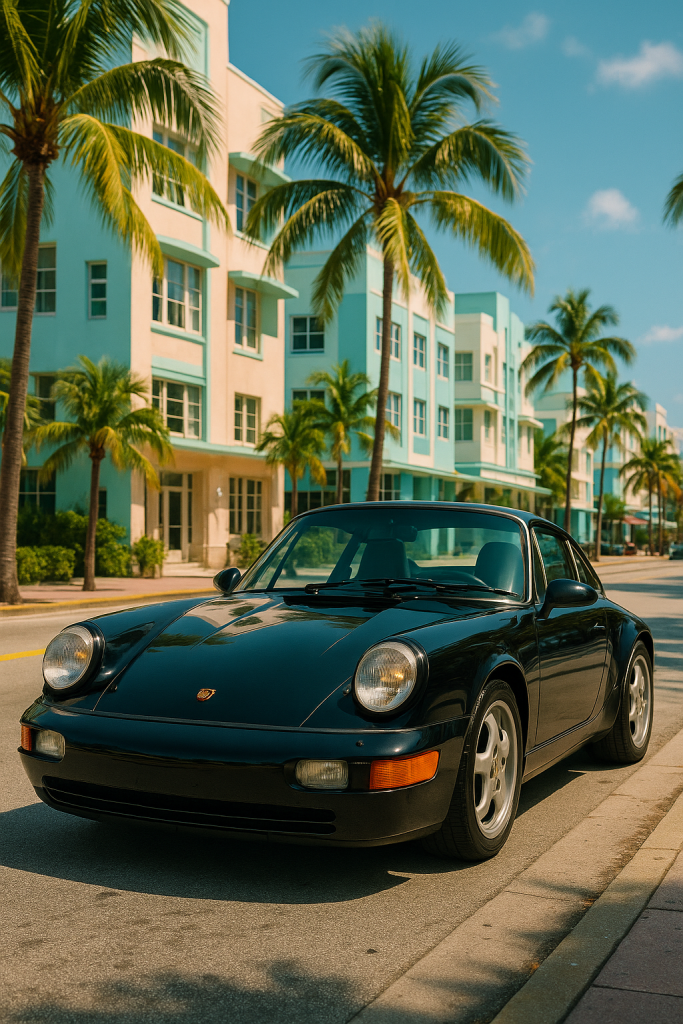
A black 964 Porsche 911 Carrera 2 ripping through the streets of Miami in Bad Boys (1995). Will Smith behind the wheel. Martin Lawrence screaming in the passenger seat. Instant cinema history.

That one scene defined the 911 as a symbol of cool — understated but unshakably powerful. Whether it was Steve McQueen in Le Mans, or street racers in Need for Speed, the 911 became a quiet flex. Wealthy, but not loud. Fast, but refined. Stylish, but never trying too hard.


Image Source: Unsplash

🧠 Engineered to Perfection – A Machine of Obsession

The 911 was never about horsepower wars. It was about balance. Porsche’s philosophy: “Every part matters. Every gram counts. Every rev must speak.”

🔧 Engine Details:

Flat-6 design lowers the center of gravity

NA models known for razor-sharp throttle response

Turbocharged variants blend monstrous power with reliability

GT-series engines rev to 9,000 rpm with surgical precision


🛞 Suspension & Handling:

Front MacPherson struts, evolved over time

Rear suspension: early trailing arms → modern multi-link genius

Porsche Active Suspension Management (PASM) adapts in milliseconds

Rear-axle steering improves high-speed stability and low-speed agility


💡 Details That Show Obsession:

Every bolt torqued with aerospace precision

Each steering rack tuned by feel, not numbers

Seam welds across chassis for stiffness

Sound design tuned for induction howl, not synthetic drama


🕶️ Cultural Immortality – The Aura of the 911

✅ The collector’s grail (993 Turbo, 964 RS, GT3 Touring)

✅ The track-day king that can wear a suit and tie

✅ The rebel’s luxury — understated cool without shouty badges

✅ An investment car that actually delivers joy


To drive a 911 is to become part of a secret society — not of wealth, but of understanding. People don’t just buy them. They keep them. Restore them. Pass them on.


🏆 Ignition Garage Verdict


> “The 911 isn’t simply Porsche’s finest creation. It’s a declaration of what passion, discipline, and obsession can achieve. While others chase trends, the 911 remains itself — evolving only to get better, never to be someone else.”


🟠 Why the 911 Still Rules the Roads

✅ Rear-engine layout turned genius
✅ Daily-driver reliability meets race-track thrills
✅ Flat-6 engine with character in every note
✅ Iconic silhouette and design language
✅ Built to be driven — hard, fast, and often


🏁 Final Words

No matter which generation you love — from the air-cooled purity of the 993, to the ballistic 992 Turbo S, or the movie-star cool of Will Smith’s 964 — the 911 doesn’t just exist in the world of cars. It defines it.


📣 Your Turn

🗨️ What’s your ultimate 911? The classic Carrera RS? The GT3 Touring? The Turbo S missile? Share your thoughts — we want to hear from the tribe.

📸 Got a 911? Tag @ignitiongarageinc and use #PorschePulse to be featured.


📌 Tags

#Porsche911 #BuiltOnPassion #FlatSixForever #AirCooledIcons #GT3Dreams #EngineeredToLast #BadBoysCar #PorscheLegacy #AgainstTheWind #911Life #IgnitionGarage #EverydaySupercar #90sDreamMachine

🗓️ Ignition Garage | Daily Rev Up – July 10, 2025

Where the engine of news never cools down.


🚗 Today’s Top Headlines

🇮🇳📦 India Shifts Gears in Global Auto Exports

Maruti Suzuki’s Jimny and Honda’s WR-V, built in India, are now heading to Japan. This marks a major milestone—India is no longer just assembling, but exporting fully-built cars to developed markets. A proud moment for Indian auto manufacturing.

⚡ BMW iX2 Debuts in Asia

BMW’s all-electric iX2 arrives with sharp coupe SUV styling, offering 313 hp and all-wheel drive. It’s made for the next-gen premium EV crowd, combining tech, performance, and bold aesthetics.

🛠️ Mahindra May Revive the “Armada” Name

The much-awaited 5-door Thar could carry the Armada nameplate—a legendary moniker from Mahindra’s past. Blending old-school toughness with modern appeal, this SUV is expected in early 2026.

🏎️ Toyota MR2 Revival: Still a Dream

Despite fan hype, Toyota remains silent on bringing back the MR2. The mid-engine coupe remains an icon, but for now, it stays parked in concept land.

📉 Used Car Market Slows Down

India’s used car sales have plateaued post-COVID boom. Online platforms still dominate, but buyer demand has stabilized. It’s a good time for smart deals on pre-owned vehicles.


🔧 Quick Garage Bits

  • Hyundai Creta EV seen testing with production panels.
  • Porsche 911 ST officially sold out worldwide.
  • Isuzu MU-X facelift expected in Q4 2025.

🏁 Ignition Thought of the Day

“Some cars move. Others leave a trail. Pick your legacy.”


Design a site like this with WordPress.com
Get started