
Posted by Ignitiongarageinc
🔶 🌟 Introduction
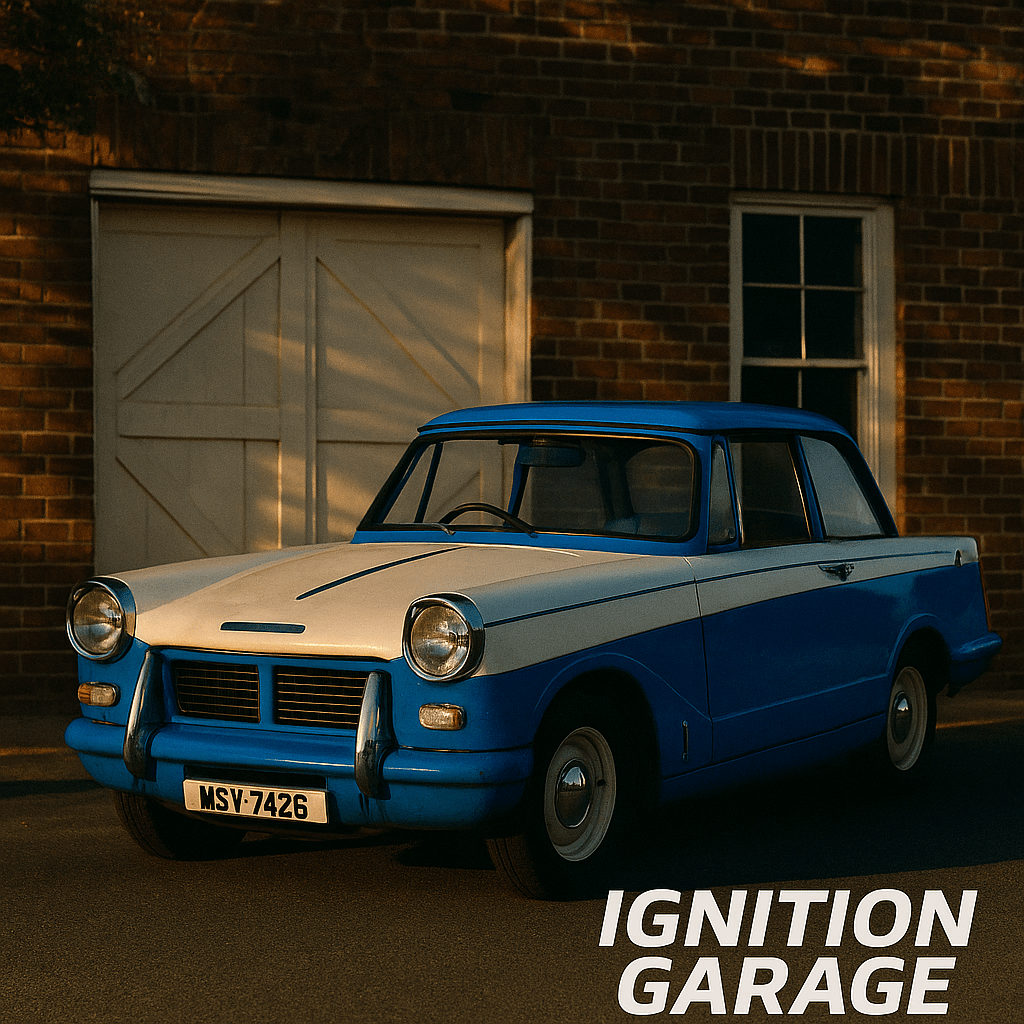
Before India fell in love with Marutis and Ambassadors, there was a dashing little British saloon that offered something different—style, sophistication, and individuality. The Standard Herald, produced by Standard Motors India, was India’s own take on the Triumph Herald. With its distinctive styling, sporty character, and unforgettable presence, it became a cult classic among enthusiasts who dared to be different.
—
🔶 🛠️ Birth & Origin
Original Model: Triumph Herald (UK)
Designed by: Giovanni Michelotti (Renowned Italian designer)
Indian Production: 1961–1971 by Standard Motor Products of India Ltd., Chennai (Madras)
Key Difference: Re-engineered to suit Indian roads and manufacturing realities.
Built on a separate chassis frame, rare for small cars of its era.
—
🔶 ⚙️ Engine & Mechanical Specs
📌 Early Standard Herald (1961–1965):
Engine: 948cc 4-cylinder OHV petrol
Power: ~35–40 bhp
Gearbox: 4-speed manual
Drivetrain: Rear-wheel drive
Chassis: Separate ladder frame with independent front suspension
Top Speed: ~110 km/h
📌 Standard Herald Mark II (1966–1971):
Engine: 1147cc Standard-Triumph petrol engine
Power: ~45–50 bhp
Improved gearbox and smoother clutch
Available in 2-door and 4-door variants, rare for the time
—
🔧 Mechanical Highlights
✅ Turning radius of just 25 feet – exceptional maneuverability
✅ Independent front suspension gave it nimble handling
✅ Unique bonnet opened forward, offering easy engine access
✅ Loved by mechanics for its modular layout
✅ Relatively light body offered good fuel economy for its time
—
🔶 🎨 Design & Styling
Designed by the legendary Giovanni Michelotti, the Herald had European flair rarely seen in Indian cars of that era:
Long, elegant bonnet with forward-hinged clamshell hood
Pronounced rear fins and chrome touches
Dual-tone color schemes that made it pop
Two-door variants had a sporty, coupé-like feel
Later four-door models introduced for family buyers
Interiors:
Wood-finished dashboard and metallic trim (in premium variants)
Bucket seats at front, bench at rear
Large steering wheel with classic instrumentation
Surprisingly roomy for a compact footprint
—
🔶 🚘 Reception & Cultural Impact
A car for the elite, enthusiasts, and the individualist
Popular among film stars, doctors, and government officers in the 1960s
Considered a “driver’s car” at a time when most Indian cars were utilitarian
Became a cult icon in Chennai and Mumbai
Seen in several black-and-white Indian films of the ’60s
Later overshadowed by Ambassador, Premier Padmini, and Maruti 800
—
🔶 ❤️ Why It’s a Classic Today
✅ European design pedigree in an Indian badge
✅ Rare and collectible due to low surviving numbers
✅ Perfect for restomod or vintage restoration projects
✅ One of the few Indian classics with true driving appeal
✅ Its sharp turning, sporty ride, and unique shape still turn heads
Ignition Garage Verdict
The Standard Herald was not just another car — it was a statement. In a sea of boxy sedans, it stood out with grace and attitude. Built on a Triumph legacy and reborn in Indian spirit, it gave our streets a taste of Michelotti’s genius and British mechanical charm.
Today, it’s a rare gem—a reminder that India once built cars that were as much about character as they were about transport. For collectors, the Herald remains one of the most underrated icons of India’s automotive story.
—
👉 What forgotten gem should we feature next? Tell us in the comments!
🔖 Follow @goldenclassics for more stories that celebrate India’s motoring legacy.
 Ignition Garage